
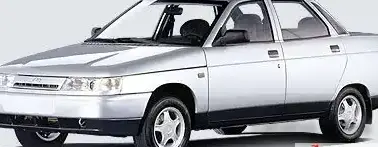
Technical Specifications
| Brand | Lada |
| Model | 2110 |
| Generation | 21103 |
| Type (Engine) | 1.5 i (94 Hp) |
| Start of production | 1997 |
| End of production | 2004 |
| Powertrain Architecture | Internal Combustion engine |
| Body type | Sedan |
| Fuel Type | Petrol (Gasoline) |
| Power | 94 Hp @ 5600 rpm |
| Power per litre | 62.7 Hp/l |
| Torque | 128 Nm @ 3600 rpm |
| Torque (lb.-ft.) | 94.41 lb.-ft. @ 3600 rpm |
| Engine layout | Front, Transverse |
| Engine displacement | 1500 cm3 |
| Engine displacement (cu. in.) | 91.54 cu. in. |
| Number of cylinders | 4 |
| Engine configuration | Inline |
| Cylinder Bore | 82 mm |
| Cylinder Bore (in.) | 3.23 in. |
| Piston Stroke | 71 mm |
| Piston Stroke (in.) | 2.8 in. |
| Compression ratio | 9.5:1 |
| Number of valves per cylinder | 4 |
| Fuel injection system | Multi-port manifold injection |
| Engine aspiration | Naturally aspirated engine |
| Valvetrain | DOHC |
The Lada 21103 1.5i, produced from 1997 to 2004, represents a significant evolution of the Lada 2110 series, a mainstay of the Russian automotive market during the post-Soviet era. This variant, equipped with a 1.5-liter inline-four engine producing 94 horsepower, served as a core model within the 2110 range, offering a balance of affordability and practicality for a broad customer base. It was positioned as the entry-level engine option, appealing to buyers prioritizing economy over outright performance. The 2110 series itself was based on the aging but robust 2107 platform, a heavily modified version of the original Fiat 124, and aimed to modernize Lada’s offerings while maintaining a familiar and repairable mechanical layout.
Powertrain & Engine Architecture
The heart of the 21103 1.5i is the VAZ-2111 engine, a 1.5-liter inline-four cylinder unit. This engine represented a significant upgrade over the older 1.5 and 1.6-liter engines previously used in the 2107 and early 2110 models. It featured a dual overhead camshaft (DOHC) valvetrain, operating four valves per cylinder, which improved breathing and allowed for increased power output compared to older pushrod designs. Fuel delivery was handled by a multi-port fuel injection system, a move away from the carburetor setups of earlier Lada models. While not particularly sophisticated by Western standards, this system provided improved fuel efficiency and smoother operation. The engine’s block was cast iron, known for its durability, while the cylinder head was aluminum. The 21103 typically came equipped with a four or five-speed manual transmission, but a four-speed automatic transmission was also offered, albeit less commonly. The automatic transmission was sourced from Japan, adding a degree of refinement, but also increasing the vehicle’s cost. This Japanese-sourced automatic, while offering convenience, wasn’t known for its cutting-edge technology, but provided a relatively reliable automatic option for the Lada platform.
Driving Characteristics
The 21103 1.5i, particularly in automatic transmission guise, was not known for its blistering performance. With 94 horsepower and 94 lb-ft of torque, acceleration was modest, and overtaking required careful planning. The automatic transmission, while offering convenience, further dulled performance due to its relatively conservative gear ratios. The four-speed automatic lacked the close ratios of more modern transmissions, resulting in noticeable engine drone at highway speeds. However, the engine proved to be reasonably tractable, offering sufficient power for everyday driving in urban and rural environments. The suspension, while basic, provided a comfortable ride, absorbing bumps and imperfections in the road reasonably well. Steering was light but lacked precision, typical of vehicles in this class. Compared to the 1.6-liter versions of the 2110, the 1.5i offered slightly better fuel economy but noticeably less power. The manual transmission variants provided a more engaging driving experience and slightly improved performance. The automatic’s shift points were programmed for economy, prioritizing fuel savings over responsiveness.
Equipment & Trim Levels
The 21103 1.5i was generally offered in fairly basic trim levels, reflecting its position as an entry-level model. Standard equipment typically included cloth upholstery, a simple dashboard layout with analog gauges, and manual windows and door locks. Power steering was often an optional extra, as were features like central locking and an upgraded audio system. Higher trim levels, such as the “Lux” variant, added features like electric windows, upgraded interior trim, and alloy wheels. Air conditioning was also available as an option, but was not standard even on higher trims. The interior design was functional but lacked the aesthetic appeal of more modern vehicles. The focus was on durability and practicality rather than luxury. The base models often featured vinyl flooring and minimal sound insulation, while the “Lux” trim offered a more refined experience with carpeting and improved trim materials.
Chassis & Braking
The Lada 21103 utilized a relatively simple chassis design, based on the aging 2107 platform. The suspension consisted of MacPherson struts at the front and a twist-beam axle at the rear. Braking was typically accomplished with disc brakes at the front and drum brakes at the rear. Anti-lock braking system (ABS) was not standard, even on higher trim levels, and was rarely fitted. The steering system was a recirculating ball type, providing light steering effort but limited feedback. The chassis was robust and capable of handling the demands of rough road conditions, a key consideration for the Russian market. Stabilizer bars were fitted to improve handling, but the overall driving experience remained focused on comfort and practicality rather than sporty dynamics. The rear drum brakes, common on the base models, offered adequate stopping power for typical use but lacked the performance of disc brakes.
Market Reception & Comparison
The Lada 21103 1.5i was generally well-received in the Russian market due to its affordability and reliability. It offered a practical and economical transportation solution for a large segment of the population. Critics often pointed to its outdated design and lack of modern features, but acknowledged its value for money. Compared to other vehicles in its class, such as the Renault Logan and Hyundai Accent, the 21103 offered a lower price point but lacked the refinement and features of its competitors. Fuel economy was reasonable, averaging around 30-35 mpg in mixed driving conditions. Reliability was generally good, although the quality of components could vary. The automatic transmission variants were often criticized for their sluggish performance and lower fuel economy compared to the manual transmission models. Many buyers opted for the manual transmission to maximize fuel efficiency and performance.
Legacy
The Lada 21103 1.5i, while now largely superseded by newer models, remains a common sight on Russian roads. Its simple mechanical design and readily available spare parts contribute to its continued longevity. The VAZ-2111 engine, while not a technological marvel, proved to be a durable and reliable powerplant. In the used car market, the 21103 1.5i is valued for its affordability and ease of maintenance. While not a collector’s item, it represents a significant chapter in the history of the Russian automotive industry, embodying a period of transition and modernization. The automatic transmission variants, while less desirable due to their performance limitations, offer a convenient and affordable entry point into classic Lada ownership. The 21103’s enduring presence is a testament to its robust construction and the practicality it offered to a generation of Russian drivers.
