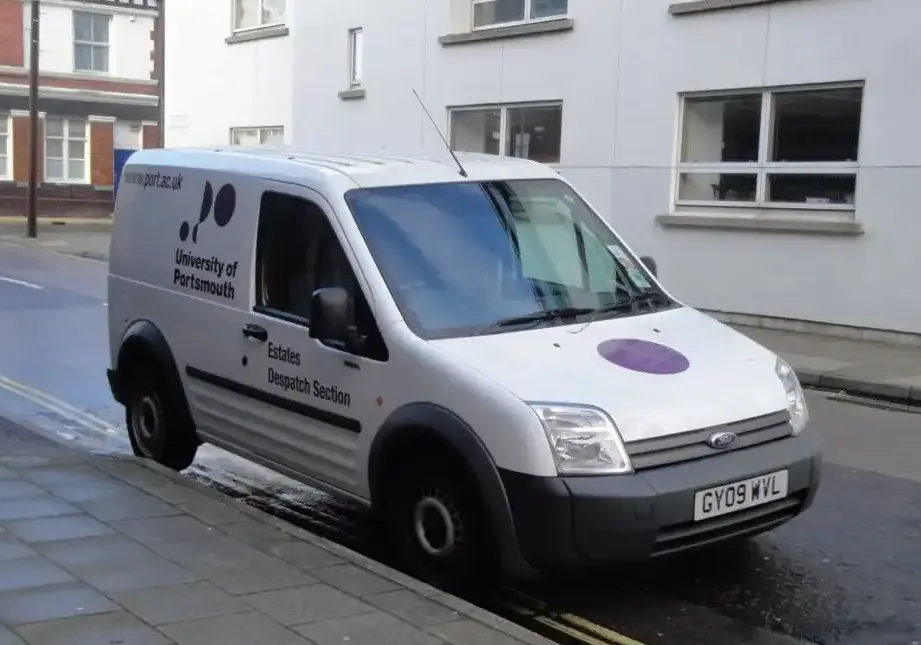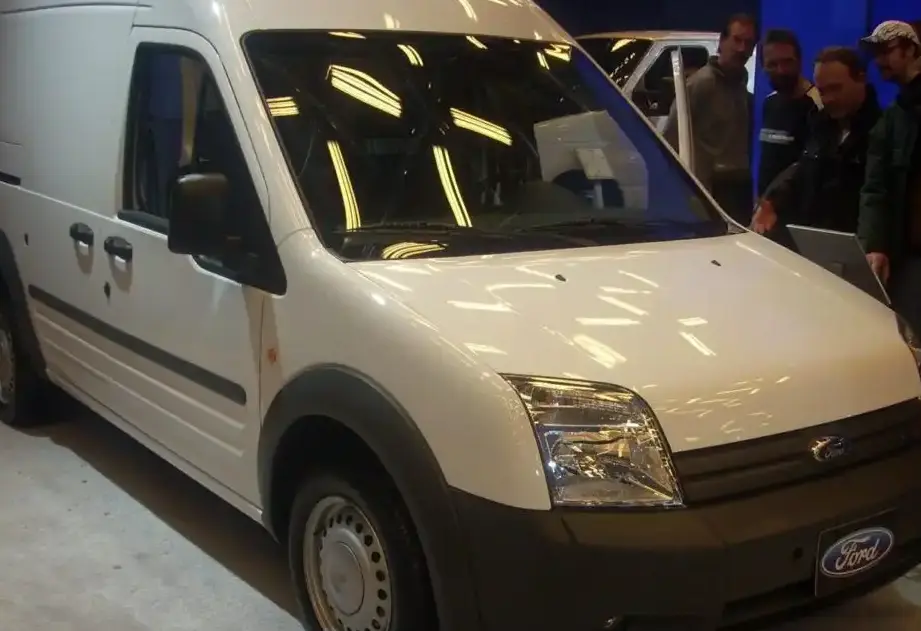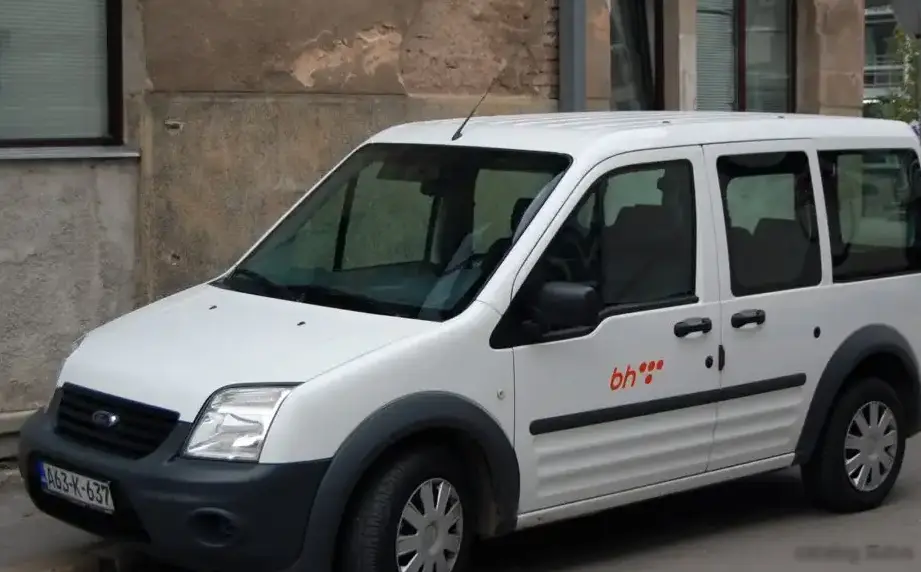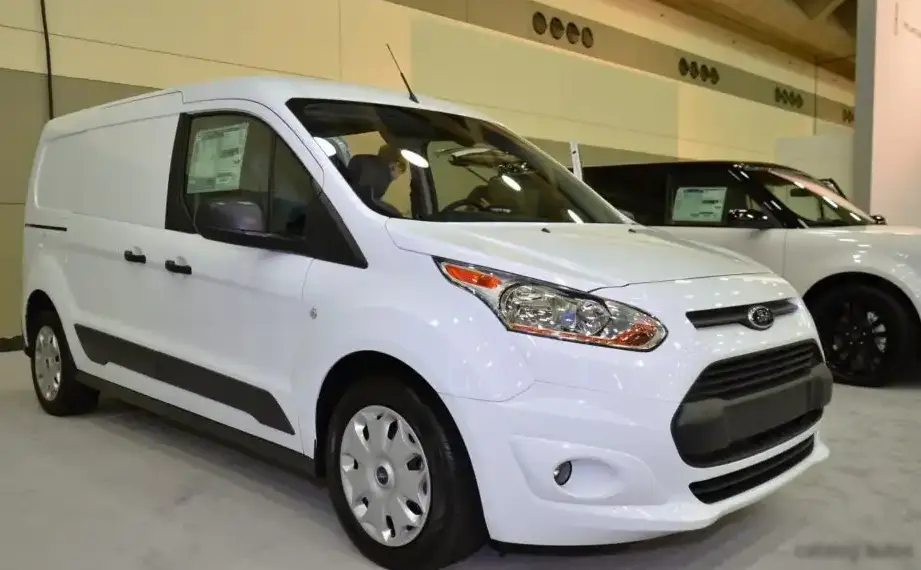
The Ford Transit Connect II Panel Van L2 1.5 TDCi, producing 100 horsepower, was a key variant in the second generation of Ford’s popular compact commercial vehicle. Introduced in 2015 and continuing through 2018 model years, this version occupied a significant position in the European and, increasingly, North American small van market. Built on the Ford global C/B platform, it offered a practical and fuel-efficient solution for businesses and tradespeople needing a versatile cargo carrier. The L2 designation indicates the long wheelbase version, providing increased cargo capacity compared to the standard length model. This particular engine and transmission combination aimed to balance affordability with reasonable performance and economy.
Technical Specifications
| Brand | Ford |
| Model | Transit Connect |
| Generation | Transit Connect II Panel Van L2 |
| Type (Engine) | 1.5 TDCi (100 Hp) |
| Start of production | 2015 year |
| End of production | 2018 year |
| Powertrain Architecture | Internal Combustion engine |
| Body type | Minivan |
| Seats | 2-3 |
| Doors | 4-5 |
| Fuel consumption (economy) – urban (NEDC) | 5.4 l/100 km (43.6 US mpg, 52.3 UK mpg, 18.5 km/l) |
| Fuel consumption (economy) – extra urban (NEDC) | 4.4 l/100 km (53.5 US mpg, 64.2 UK mpg, 22.7 km/l) |
| Fuel consumption (economy) – combined (NEDC) | 4.8 l/100 km (49 US mpg, 58.9 UK mpg, 20.8 km/l) |
| CO2 emissions (NEDC) | 124 g/km |
| Fuel Type | Diesel |
| Emission standard | Euro 6 |
| Weight-to-power ratio | 13.9 kg/Hp, 72.2 Hp/tonne |
| Weight-to-torque ratio | 5.5 kg/Nm, 180.4 Nm/tonne |
| Power | 100 Hp |
| Power per litre | 66.7 Hp/l |
| Torque | 250 Nm @ 2000-2500 rpm (184.39 lb.-ft. @ 2000-2500 rpm) |
| Engine layout | Front, Transverse |
| Engine Model/Code | Duratorq / XVGA, XVGB |
| Engine displacement | 1499 cm3 (91.47 cu. in.) |
| Number of cylinders | 4 |
| Engine configuration | Inline |
| Cylinder Bore | 73.5 mm (2.89 in.) |
| Piston Stroke | 88.3 mm (3.48 in.) |
| Number of valves per cylinder | 2 |
| Fuel injection system | Diesel Commonrail |
| Engine aspiration | Turbocharger, Intercooler |
| Valvetrain | SOHC |
| Engine oil capacity | 6.2 l (6.55 US qt | 5.46 UK qt) |
| Coolant | 6 l (6.34 US qt | 5.28 UK qt) |
| Kerb Weight | 1386-1425 kg (3055.61 – 3141.59 lbs.) |
| Max. weight | 2125-2395 kg (4684.82 – 5280.07 lbs.) |
| Max load | 739-970 kg (1629.22 – 2138.48 lbs.) |
| Trunk (boot) space – minimum | 3220 l (113.71 cu. ft.) |
| Trunk (boot) space – maximum | 4400 l (155.38 cu. ft.) |
| Fuel tank capacity | 60 l (15.85 US gal | 13.2 UK gal) |
| Permitted trailer load with brakes (12%) | 1300 kg (2866.01 lbs.) |
| Permitted trailer load without brakes | 740 kg (1631.42 lbs.) |
| Length | 4818 mm (189.69 in.) |
| Width | 1835 mm (72.24 in.) |
| Width including mirrors | 2137 mm (84.13 in.) |
| Height | 1862 mm (73.31 in.) |
| Wheelbase | 3062 mm (120.55 in.) |
| Front track | 1568 mm (61.73 in.) |
| Rear (Back) track | 1584-1585 mm (62.36 – 62.4 in.) |
| Front overhang | 878 mm (34.57 in.) |
| Rear overhang | 878 mm (34.57 in.) |
| Ride height (ground clearance) | 159 mm (6.26 in.) |
| Minimum turning circle (turning diameter) | 12.5 m (41.01 ft.) |
| Drivetrain Architecture | The Internal combustion engine (ICE) drives the front wheels of the vehicle. |
| Drive wheel | Front wheel drive |
| Number of gears and type of gearbox | 5 gears, manual transmission |
| Front suspension | Independent, type McPherson with coil spring and anti-roll bar |
| Rear suspension | Coil spring, Torsion |
| Front brakes | Ventilated discs, 300 mm |
| Rear brakes | Disc, 280 mm |
| Assisting systems | ABS (Anti-lock braking system) |
| Steering type | Steering rack and pinion |
| Power steering | Electric Steering |
| Tires size | 205/60 R16 |
| Wheel rims size | 6.5J x 16 |
INTRODUCTION
The Ford Transit Connect II, launched in 2013, represented a significant step forward for Ford’s compact van offerings. The L2 long-wheelbase version, and specifically the 1.5 TDCi 100 horsepower variant, was introduced in 2015. This model aimed to provide a balance between fuel efficiency, practicality, and affordability, targeting small business owners, delivery services, and tradespeople. It was a popular choice in Europe, where compact vans are highly valued, and gained traction in North America as a more manageable alternative to full-size vans. The 1.5 TDCi engine was a key component of Ford’s efforts to meet increasingly stringent emissions standards while maintaining acceptable performance.
Powertrain & Engine Architecture
The heart of this Transit Connect variant is the 1.5-liter Duratorq TDCi diesel engine, identified by engine codes XVGA or XVGB. This engine is a four-cylinder, inline configuration, utilizing a single overhead camshaft (SOHC) valvetrain with two valves per cylinder. It employs a turbocharger with an intercooler to boost power and efficiency. The fuel injection system is a common rail direct injection system, allowing for precise fuel delivery and optimized combustion. This engine produces 100 horsepower and 250 Nm (184 lb-ft) of torque between 2000 and 2500 rpm. The engine is transversely mounted in the front of the vehicle. The 1.5 TDCi engine was a relatively new design for Ford at the time, representing a move towards smaller displacement, turbocharged engines. The engine oil capacity is 6.2 liters, and it requires a specific oil specification (refer to the owner’s manual for details). The engine also incorporates a diesel particulate filter (DPF) to reduce emissions, a standard feature for Euro 6 compliant vehicles.
Driving Characteristics
The 100 horsepower output, coupled with the five-speed manual transmission, provides adequate, though not exhilarating, performance. Acceleration is modest, and the van is best suited for urban and suburban driving rather than high-speed highway work. The torque curve is relatively flat, providing usable power across a broad range of engine speeds. Compared to higher-output versions of the Transit Connect, such as those with the 1.6-liter EcoBoost gasoline engine, the 1.5 TDCi feels noticeably slower, particularly when fully loaded. However, the diesel engine’s superior fuel economy and lower-end torque make it a more practical choice for many applications. The five-speed gearbox is well-matched to the engine’s characteristics, offering smooth shifts and reasonable gear spacing. The gear ratios are optimized for fuel efficiency and everyday drivability.
Equipment & Trim Levels
The 1.5 TDCi 100 horsepower variant typically came with a fairly basic level of equipment, reflecting its position as an entry-level or mid-range offering. Standard features generally included power windows, central locking, a basic audio system, and driver and passenger airbags. The interior upholstery was typically durable cloth. Optional extras included air conditioning, a more advanced audio system with Bluetooth connectivity, parking sensors, and upgraded trim materials. Trim levels varied depending on the market, but generally offered progressively more features as you moved up the range. The L2 long-wheelbase version prioritized cargo space over luxurious appointments.
Chassis & Braking
The Transit Connect II utilizes an independent McPherson strut suspension at the front, providing a comfortable ride and good handling characteristics. The rear suspension employs a coil spring and torsion beam setup, which is a cost-effective and space-efficient solution. The braking system consists of ventilated discs at the front and solid discs at the rear. Anti-lock Braking System (ABS) is standard. The steering is rack and pinion with electric power assistance, providing light and precise steering feel. The standard tire size is 205/60 R16, mounted on 6.5J x 16 inch steel or alloy wheels.
Market Reception & Comparison
The Ford Transit Connect II 1.5 TDCi 100 horsepower variant was generally well-received by critics and customers alike. It was praised for its fuel efficiency, practicality, and competitive pricing. Compared to other small vans in its class, such as the Volkswagen Caddy and the Citroën Berlingo, the Transit Connect offered a compelling combination of features and value. The 1.5 TDCi engine was considered a good compromise between performance and economy, although some reviewers noted that it could feel underpowered when fully loaded. The manual transmission was generally preferred over the optional automatic, as it offered better fuel economy and more responsive performance.
Legacy
The 1.5 TDCi engine, while not without its issues (like potential DPF problems if not properly maintained), proved to be a relatively reliable powertrain when serviced according to Ford’s recommendations. On the used car market, these Transit Connects are often sought after for their affordability and practicality. They represent a good value for businesses and individuals needing a versatile and fuel-efficient cargo van. The second-generation Transit Connect established Ford as a major player in the compact van segment, and the 1.5 TDCi 100 horsepower variant played a key role in its success.