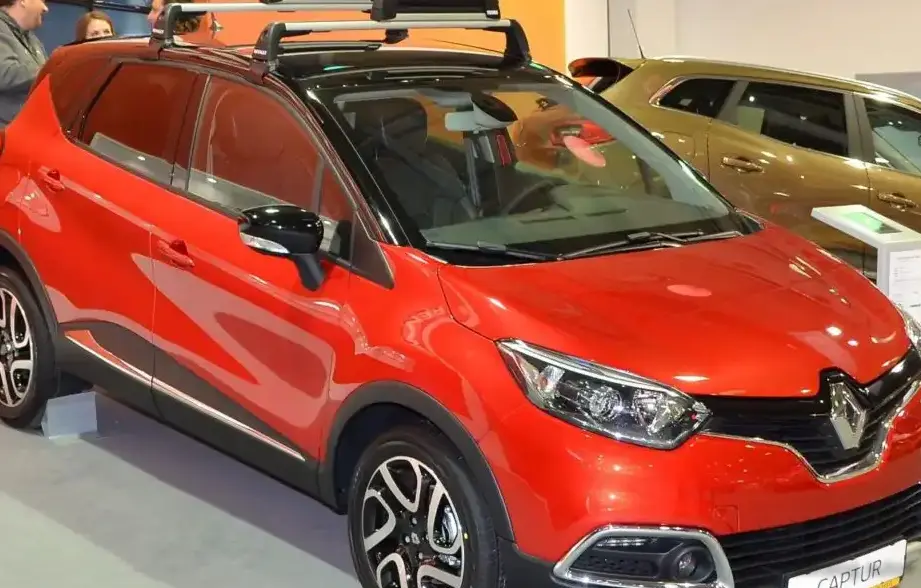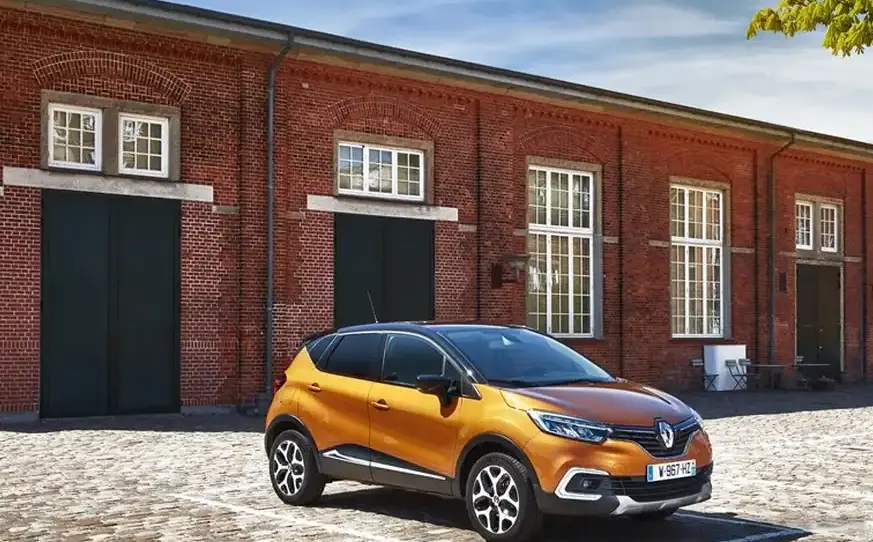
The Renault Captur 1.5 dCi (110 hp) Start & Stop, produced from 2017 to August 2018, represents a significant iteration of Renault’s popular subcompact crossover. This variant was part of the facelifted first-generation Captur (also known as the Captur II in some markets), built on the 1HX0/A3 platform. Positioned as a mid-range offering, it aimed to balance fuel efficiency with acceptable performance for everyday driving, appealing to buyers seeking a practical and economical urban vehicle. The introduction of the Start & Stop system further emphasized its focus on reducing emissions and improving fuel economy.
Technical Specifications
| Brand | Renault |
| Model | Captur |
| Generation | Captur (facelift 2017) |
| Type (Engine) | 1.5 dCi (110 Hp) Start & Stop |
| Start of production | 2017 |
| End of production | August, 2018 |
| Powertrain Architecture | Internal Combustion engine |
| Body type | Crossover |
| Seats | 5 |
| Doors | 5 |
| Fuel consumption (urban) | 4 l/100 km (58.8 US mpg, 70.6 UK mpg, 25 km/l) |
| Fuel consumption (extra urban) | 3.6 l/100 km (65.3 US mpg, 78.5 UK mpg, 27.8 km/l) |
| Fuel consumption (combined) | 3.7 l/100 km (63.6 US mpg, 76.3 UK mpg, 27 km/l) |
| CO2 emissions | 98 g/km |
| Fuel Type | Diesel |
| Acceleration 0 – 100 km/h | 11.4 sec |
| Acceleration 0 – 62 mph | 11.4 sec |
| Acceleration 0 – 60 mph | 10.8 sec |
| Maximum speed | 182 km/h (113.09 mph) |
| Emission standard | Euro 6b |
| Weight-to-power ratio | 10.8 kg/Hp, 92.4 Hp/tonne |
| Weight-to-torque ratio | 4.6 kg/Nm, 218.5 Nm/tonne |
| Power | 110 Hp @ 4000 rpm |
| Power per litre | 75.3 Hp/l |
| Torque | 260 Nm @ 1750 rpm (191.77 lb.-ft. @ 1750 rpm) |
| Engine layout | Front, Transverse |
| Engine Model/Code | K9K 646 |
| Engine displacement | 1461 cm3 (89.16 cu. in.) |
| Number of cylinders | 4 |
| Engine configuration | Inline |
| Number of valves per cylinder | 2 |
| Fuel injection system | Diesel Commonrail |
| Engine aspiration | Turbocharger, Intercooler |
| Engine oil capacity | 4.5 l (4.76 US qt | 3.96 UK qt) |
| Coolant capacity | 5 l (5.28 US qt | 4.4 UK qt) |
| Kerb Weight | 1190 kg (2623.5 lbs.) |
| Max. weight | 1743 kg (3842.66 lbs.) |
| Max load | 553 kg (1219.16 lbs.) |
| Trunk (boot) space – minimum | 455 l (16.07 cu. ft.) |
| Trunk (boot) space – maximum | 1235 l (43.61 cu. ft.) |
| Length | 4122 mm (162.28 in.) |
| Width | 1778 mm (70 in.) |
| Height | 1556 mm (61.26 in.) |
| Wheelbase | 2606 mm (102.6 in.) |
| Front track | 1531 mm (60.28 in.) |
| Rear track | 1516 mm (59.69 in.) |
| Front overhang | 866 mm (34.09 in.) |
| Rear overhang | 650 mm (25.59 in.) |
| Ride height (ground clearance) | 170 mm (6.69 in.) |
| Minimum turning circle | 10.42 m (34.19 ft.) |
| Drivetrain Architecture | Front wheel drive |
| Number of gears | 6 gears, manual transmission |
| Front suspension | Independent, type McPherson with coil spring and anti-roll bar |
| Rear suspension | Elastic beam |
| Front brakes | Ventilated discs |
| Rear brakes | Drum |
| Assisting systems | ABS (Anti-lock braking system) |
| Steering type | Steering rack and pinion |
| Tires size | 205/60 R16; 205/55 R17 |
| Wheel rims size | 16; 17 |
Powertrain & Engine Architecture
At the heart of the Captur 1.5 dCi (110) lies the K9K 646 engine, a 1.5-liter inline-four diesel engine. This engine is a member of the K9K family, widely used by Renault and Nissan. It features a turbocharger with an intercooler to boost power and efficiency. The engine utilizes a diesel commonrail direct injection system, delivering fuel directly into the combustion chamber at high pressure for improved combustion and reduced emissions. The engine produces 110 horsepower at 4000 rpm and 260 Nm (191.77 lb-ft) of torque at 1750 rpm. This torque output, available at relatively low engine speeds, contributes to good drivability in urban environments. The engine is paired with a six-speed manual transmission, which was the standard offering for this variant. While an automatic transmission was available on other Captur models, it wasn’t offered with this specific engine and power output.
Driving Characteristics
The 1.5 dCi (110 hp) Captur offered a balanced driving experience. While not particularly sporty, the engine provided sufficient power for everyday commuting and highway cruising. The six-speed manual transmission allowed drivers to keep the engine in its optimal power band. Acceleration from 0 to 100 km/h (0-62 mph) took around 11.4 seconds, which was typical for a vehicle in this class. The gear ratios were tuned for fuel efficiency, with taller gearing in higher gears to reduce engine speed at cruising speeds. Compared to the more powerful 1.2 TCe gasoline engine options, the dCi offered better fuel economy but less outright performance. Compared to other diesel variants, like the 90 hp version, the 110 hp model provided a noticeable improvement in responsiveness and overall driving enjoyment.
Equipment & Trim Levels
The 1.5 dCi (110 hp) Start & Stop Captur typically came equipped with features such as air conditioning, a touchscreen infotainment system with Bluetooth connectivity, power windows, and power door locks. Safety features included ABS, electronic stability control, and multiple airbags. Higher trim levels offered additional features like alloy wheels, rear parking sensors, a rearview camera, and automatic climate control. Interior upholstery was typically cloth, with options for upgraded materials on higher trims. The dashboard layout was modern and functional, with a focus on ergonomics and ease of use.
Chassis & Braking
The Captur’s chassis featured a McPherson strut front suspension and an elastic beam rear suspension. This setup provided a comfortable ride quality, well-suited for urban roads. The front brakes were ventilated discs, while the rear brakes were drums. This configuration was common for vehicles in this weight class and provided adequate stopping power for everyday driving. The steering was a rack and pinion system, offering precise and responsive handling. The vehicle’s relatively lightweight construction contributed to its agility and fuel efficiency.
Market Reception & Comparison
The Renault Captur 1.5 dCi (110 hp) Start & Stop was generally well-received by automotive critics. It was praised for its fuel efficiency, comfortable ride, and practical interior. However, some critics noted that the engine could be somewhat noisy and that the performance was not particularly exciting. Compared to its rivals, such as the Peugeot 2008 and the Opel/Vauxhall Crossland X, the Captur offered a competitive combination of features, fuel economy, and price. The diesel variant was particularly popular in Europe, where diesel fuel was often cheaper than gasoline and where there was a greater emphasis on fuel efficiency.
Legacy
The K9K engine family, including the K9K 646, has a reputation for being relatively reliable, although diesel engines in general can be more prone to issues related to the fuel injection system and particulate filter. The Captur 1.5 dCi (110 hp) Start & Stop remains a popular choice in the used car market, particularly for buyers seeking an economical and practical crossover. Regular maintenance, including timely oil changes and filter replacements, is crucial for ensuring the long-term reliability of this powertrain. The Captur’s success helped establish Renault as a major player in the subcompact crossover segment, and it paved the way for future generations of the model.