
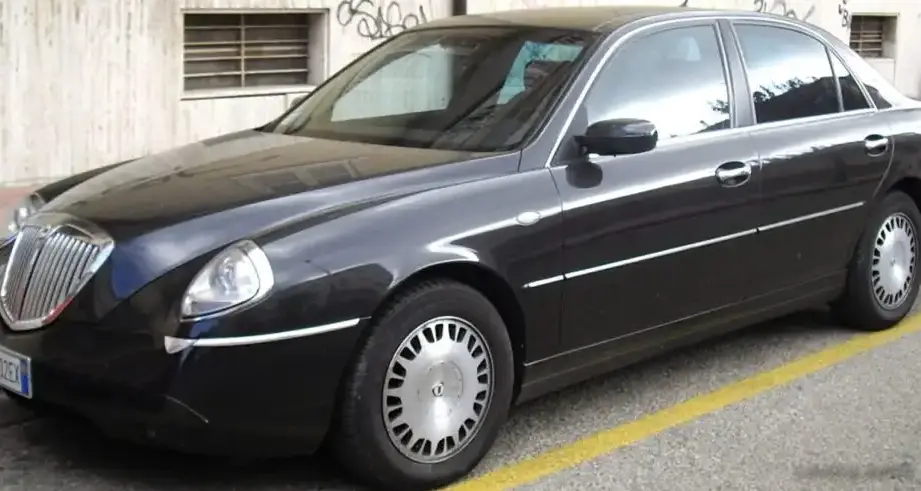
The Lancia Thesis 2.0 20V Turbo, produced from March 2002 to September 2007, represented a significant offering in the upper-midsize luxury sedan segment for the Italian automaker. Positioned as a step up from the more common 2.4L five-cylinder models, the 2.0 Turbo aimed to provide a blend of performance and refinement, appealing to buyers seeking a more dynamic driving experience. It was built on the 841 platform, shared with other Fiat Group vehicles, and represented Lancia’s attempt to recapture a sense of prestige and technological innovation. The Thesis, in general, was intended to be a flagship model, showcasing Lancia’s engineering capabilities and design flair, though sales remained limited compared to German competitors.
Technical Specifications
| Brand | Lancia |
| Model | Thesis |
| Generation | Thesis |
| Type (Engine) | 2.0 20V Turbo (185 Hp) |
| Start of production | March, 2002 |
| End of production | September, 2007 |
| Powertrain Architecture | Internal Combustion engine |
| Body type | Sedan |
| Seats | 5 |
| Doors | 4 |
| Fuel consumption (urban) | 15.2 l/100 km (15.5 US mpg, 18.6 UK mpg, 6.6 km/l) |
| Fuel consumption (extra urban) | 8.3 l/100 km (28.3 US mpg, 34 UK mpg, 12 km/l) |
| Fuel consumption (combined) | 10.9 l/100 km (21.6 US mpg, 25.9 UK mpg, 9.2 km/l) |
| Fuel Type | Petrol (Gasoline) |
| Acceleration 0 – 100 km/h | 8.9 sec |
| Acceleration 0 – 62 mph | 8.9 sec |
| Acceleration 0 – 60 mph | 8.5 sec |
| Maximum speed | 224 km/h (139.19 mph) |
| Weight-to-power ratio | 9.2 kg/Hp, 109.1 Hp/tonne |
| Weight-to-torque ratio | 5.5 kg/Nm, 181.7 Nm/tonne |
| Power | 185 Hp @ 5000 rpm |
| Power per litre | 92.6 Hp/l |
| Torque | 308 Nm @ 2200 rpm (227.17 lb.-ft. @ 2200 rpm) |
| Engine layout | Front, Transverse |
| Engine Model/Code | 841 E.000 |
| Engine displacement | 1998 cm3 (121.93 cu. in.) |
| Number of cylinders | 5 |
| Engine configuration | Inline |
| Cylinder Bore | 82 mm (3.23 in.) |
| Piston Stroke | 75.65 mm (2.98 in.) |
| Compression ratio | 8.5:1 |
| Number of valves per cylinder | 4 |
| Fuel injection system | Multi-port manifold injection |
| Engine aspiration | Turbocharger, Intercooler |
| Valvetrain | DOHC |
| Engine oil capacity | 5.5 l (5.81 US qt | 4.84 UK qt) |
| Coolant | 8.6 l (9.09 US qt | 7.57 UK qt) |
| Kerb Weight | 1695 kg (3736.84 lbs.) |
| Max. weight | 2205 kg (4861.19 lbs.) |
| Max load | 510 kg (1124.36 lbs.) |
| Trunk (boot) space – minimum | 480 l (16.95 cu. ft.) |
| Fuel tank capacity | 75 l (19.81 US gal | 16.5 UK gal) |
| Length | 4890 mm (192.52 in.) |
| Width | 1830 mm (72.05 in.) |
| Height | 1470 mm (57.87 in.) |
| Wheelbase | 2805 mm (110.43 in.) |
| Front track | 1570 mm (61.81 in.) |
| Rear (Back) track | 1540 mm (60.63 in.) |
| Drivetrain Architecture | The Internal combustion engine (ICE) drives the front wheels of the vehicle. |
| Drive wheel | Front wheel drive |
| Number of gears and type of gearbox | 6 gears, manual transmission |
| Front suspension | Spring Strut |
| Rear suspension | Coil spring |
| Front brakes | Ventilated discs |
| Rear brakes | Ventilated discs |
| Assisting systems | ABS (Anti-lock braking system) |
| Steering type | Steering rack and pinion |
| Power steering | Hydraulic Steering |
| Tires size | 215/60 R16 |
Powertrain & Engine Architecture
The heart of the Thesis 2.0 20V Turbo is the 841 E.000 engine, a 1.998-liter inline five-cylinder gasoline engine. This engine utilizes a turbocharger with an intercooler to boost power output to 185 horsepower at 5000 rpm and 308 Nm (227 lb-ft) of torque at 2200 rpm. The engine features multi-port fuel injection and a double overhead camshaft (DOHC) valvetrain, contributing to its relatively high specific output of 92.6 hp per liter. The five-cylinder configuration, while less common than inline-fours or V6s, offered a unique engine note and a good balance between smoothness and performance. The engine’s turbocharging system provided a noticeable increase in power compared to the naturally aspirated 2.4L version, enhancing acceleration and highway cruising ability. The six-speed manual transmission was the only gearbox option available with this engine, providing drivers with full control over the power delivery.
Driving Characteristics
The Thesis 2.0 20V Turbo offered a noticeably more engaging driving experience than its 2.4L counterpart. The turbocharger provided a surge of power in the mid-range, making overtaking maneuvers easier and more confident. While not a sports sedan, the 2.0 Turbo delivered respectable acceleration, achieving 0-60 mph in approximately 8.5 seconds and a top speed of 139 mph. The six-speed manual transmission allowed drivers to keep the engine in its optimal power band, maximizing performance. However, the Thesis’s considerable weight (approximately 3737 lbs) meant that it wasn’t particularly nimble in corners. The suspension, tuned for comfort, prioritized ride quality over sharp handling. Compared to the 2.4L model, the 2.0 Turbo felt more responsive and capable, but it still retained the Thesis’s overall focus on luxurious cruising.
Equipment & Trim Levels
The Thesis 2.0 20V Turbo was generally well-equipped, reflecting its positioning as a luxury vehicle. Standard features typically included leather upholstery, automatic climate control, power-adjustable front seats, a premium audio system, and alloy wheels. Safety features such as ABS, traction control, and multiple airbags were also standard. Optional extras included a navigation system, sunroof, and upgraded leather trim. The interior design emphasized elegance and comfort, with high-quality materials and a spacious cabin. The dashboard layout was relatively straightforward, with a focus on ease of use. The Thesis aimed to provide a refined and comfortable driving environment, appealing to buyers who valued luxury and sophistication.
Chassis & Braking
The Thesis 2.0 20V Turbo utilized a front-wheel-drive layout with independent suspension at all four corners. The front suspension employed a MacPherson strut design, while the rear suspension featured a multi-link setup. This configuration aimed to provide a balance between ride comfort and handling stability. The braking system consisted of ventilated disc brakes on all four wheels, providing adequate stopping power for the vehicle’s weight and performance. ABS (Anti-lock Braking System) was standard, enhancing safety during emergency braking situations. The steering system was a hydraulic power-assisted rack and pinion setup, offering precise and responsive steering feel.
Market Reception & Comparison
The Lancia Thesis, including the 2.0 20V Turbo variant, faced an uphill battle in the competitive luxury sedan market. Critics generally praised the Thesis’s elegant design, comfortable interior, and refined driving experience. However, it was often criticized for its relatively high price, limited brand recognition, and lack of a strong dealer network outside of Italy. Compared to its German rivals, such as the Audi A6 and BMW 5 Series, the Thesis offered a different character – more focused on comfort and style than outright performance. The 2.0 Turbo offered improved performance and fuel economy compared to the 2.4L model, but it still lagged behind some of its competitors in terms of overall efficiency. Reliability was generally considered average, with some reports of electrical issues and turbocharger problems.
Legacy
The Lancia Thesis, despite its limited sales success, remains a fondly remembered vehicle among Lancia enthusiasts. The 2.0 20V Turbo variant, in particular, is appreciated for its blend of performance and refinement. Today, the Thesis is a relatively rare sight on the road, and well-maintained examples are becoming increasingly collectible. The 841 E.000 engine, while not known for being particularly robust, is generally reliable if properly maintained. Parts availability can be a challenge, but a dedicated community of Lancia owners and specialists can provide support and assistance. The Thesis represents a unique chapter in Lancia’s history, showcasing the brand’s commitment to design, innovation, and Italian flair.
