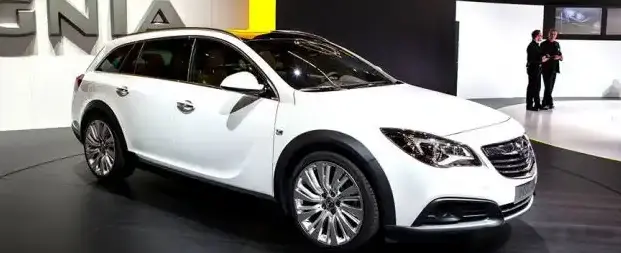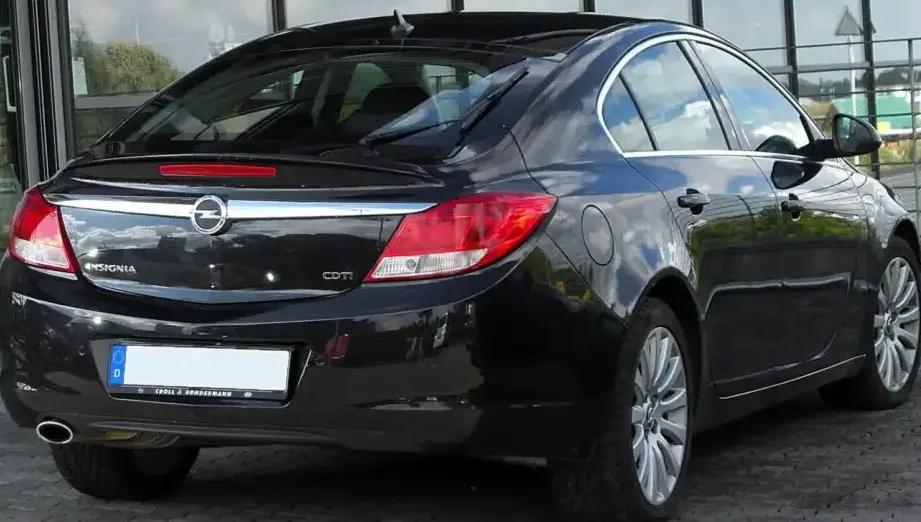
The Opel Insignia Hatchback (A), specifically the 2.0 CDTI variant producing 110 horsepower, was a key model in Opel’s lineup from November 2008 to June 2013. Positioned as a mid-range offering within the first generation (A) Insignia range, it aimed to provide a balance of fuel efficiency, practicality, and reasonable performance for European drivers. This model was built on the GM Epsilon II platform, shared with other vehicles like the Chevrolet Malibu and Saab 9-3. The Insignia represented a significant step forward for Opel in terms of design and technology, moving the brand towards a more contemporary and competitive position in the D-segment (mid-size) market.
Technical Specifications
| Brand | Opel |
| Model | Insignia |
| Generation | Insignia Hatchback (A) |
| Type (Engine) | 2.0 CDTI (110 Hp) DPF |
| Start of production | November, 2008 |
| End of production | June, 2013 |
| Powertrain Architecture | Internal Combustion engine |
| Body type | Hatchback |
| Seats | 5 |
| Doors | 5 |
| Fuel consumption (urban) | 7.6 l/100 km (30.9 US mpg) |
| Fuel consumption (extra urban) | 4.8 l/100 km (49 US mpg) |
| Fuel consumption (combined) | 5.8 l/100 km (40.6 US mpg) |
| Fuel Type | Diesel |
| Acceleration 0 – 100 km/h | 12.1 sec |
| Acceleration 0 – 62 mph | 12.1 sec |
| Acceleration 0 – 60 mph | 11.5 sec |
| Maximum speed | 190 km/h (118.06 mph) |
| Emission standard | Euro 5 |
| Weight-to-power ratio | 14.7 kg/Hp |
| Weight-to-torque ratio | 6.2 kg/Nm |
| Power | 110 Hp @ 4000 rpm |
| Torque | 260 Nm @ 1750 rpm (191.77 lb.-ft. @ 1750 rpm) |
| Engine layout | Front, Transverse |
| Engine Model/Code | A20DTC, A20DTL |
| Engine displacement | 1956 cm3 (119.36 cu. in.) |
| Number of cylinders | 4 |
| Engine configuration | Inline |
| Cylinder Bore | 83 mm (3.27 in.) |
| Piston Stroke | 90.4 mm (3.56 in.) |
| Compression ratio | 16.5:1 |
| Number of valves per cylinder | 4 |
| Fuel injection system | Diesel Commonrail |
| Engine aspiration | Turbocharger, Intercooler |
| Valvetrain | OHC |
| Engine oil capacity | 4.5 l (4.76 US qt | 3.96 UK qt) |
| Coolant | 9 l (9.51 US qt | 7.92 UK qt) |
| Kerb Weight | 1613 kg (3556.06 lbs.) |
| Max. weight | 2140 kg (4717.89 lbs.) |
| Max load | 527 kg (1161.84 lbs.) |
| Trunk (boot) space – minimum | 520 l (18.36 cu. ft.) |
| Trunk (boot) space – maximum | 1465 l (51.74 cu. ft.) |
| Fuel tank capacity | 70 l (18.49 US gal | 15.4 UK gal) |
| Length | 4830 mm (190.16 in.) |
| Width | 1856 mm (73.07 in.) |
| Height | 1498 mm (58.98 in.) |
| Wheelbase | 2737 mm (107.76 in.) |
| Front track | 1585 mm (62.4 in.) |
| Rear (Back) track | 1587 mm (62.48 in.) |
| Ride height (ground clearance) | 160 mm (6.3 in.) |
| Minimum turning circle | 11.4 m (37.4 ft.) |
| Drivetrain Architecture | Front wheel drive |
| Number of gears | 6 gears, manual transmission |
| Front brakes | Ventilated discs |
| Rear brakes | Disc |
| Tires size | 215/60 R16; 225/55 R17; 245/45 R18 |
| Wheel rims size | 16; 17; 18 |
Powertrain & Engine Architecture
The heart of this Insignia variant is the 2.0-liter (1956 cc) four-cylinder diesel engine, identified by engine codes A20DTC or A20DTL. This engine belongs to Opel’s family of common-rail direct injection diesels. It utilizes a turbocharger with an intercooler to boost power and efficiency. The common-rail system, supplied by Bosch, delivers fuel at extremely high pressure, ensuring fine atomization for cleaner combustion and improved performance. The engine features an overhead camshaft (OHC) valvetrain with four valves per cylinder, optimizing gas flow. The 110 horsepower output is achieved at 4000 rpm, while peak torque of 260 Nm (191.77 lb-ft) is available from just 1750 rpm, providing good low-end grunt. The engine is transversely mounted in the front of the vehicle. The transmission is a six-speed manual gearbox, chosen for its efficiency and driver engagement, although an automatic transmission was also available as an option.
Driving Characteristics
The 110 hp 2.0 CDTI with the six-speed manual transmission offered a comfortable and economical driving experience. Acceleration from 0-60 mph took around 11.5 seconds, and top speed was 190 km/h (118 mph). While not a performance-oriented variant, the engine’s strong low-end torque made it well-suited for everyday driving and overtaking maneuvers. The gear ratios were tuned for fuel efficiency, with taller gearing in higher gears to reduce engine speed at cruising speeds. Compared to the more powerful 160 hp or 195 hp versions of the 2.0 CDTI, this variant felt noticeably less responsive, particularly at higher engine speeds. However, it provided a smoother and more relaxed driving experience, and its lighter load on the drivetrain contributed to improved fuel economy.
Equipment & Trim Levels
The 110 hp 2.0 CDTI Insignia typically came equipped with a reasonable level of standard features. These included air conditioning, electric front windows, a CD/radio system, and ABS brakes. Higher trim levels, such as ‘Excite’ or ‘Sport’, added features like alloy wheels, cruise control, automatic climate control, and upgraded interior trim. Interior upholstery was typically cloth, with options for leather available on higher-spec models. The dashboard layout was modern and functional, with a clear instrument cluster and intuitive controls. Optional extras included a navigation system, parking sensors, and a panoramic sunroof.
Chassis & Braking
The Insignia Hatchback (A) featured a MacPherson strut front suspension and a multi-link rear suspension, providing a good balance of ride comfort and handling. The suspension was tuned to prioritize comfort over outright sportiness. Braking was handled by ventilated discs on the front wheels and solid discs on the rear. ABS (Anti-lock Braking System) was standard. Stabilizer bars were fitted to both the front and rear axles to reduce body roll during cornering. The chassis was designed to accommodate a range of engine and transmission combinations, and the 110 hp variant benefited from a slightly lighter overall weight compared to its more powerful siblings.
Market Reception & Comparison
The 110 hp 2.0 CDTI Insignia was generally well-received by critics as a practical and economical choice. It was praised for its fuel efficiency, comfortable ride, and spacious interior. However, some reviewers noted that the engine lacked the punch of the higher-powered variants. Compared to the 160 hp 2.0 CDTI, the 110 hp version offered significantly better fuel economy but at the expense of performance. The 1.8L petrol versions were generally less fuel-efficient and offered less torque. In terms of reliability, the 2.0 CDTI engine proved to be generally robust, although issues with the diesel particulate filter (DPF) were sometimes reported, particularly on vehicles used primarily for short journeys.
Legacy
The Opel Insignia 2.0 CDTI (110 hp) remains a relatively common sight on European roads today. The engine, while not the most powerful in the range, has proven to be reasonably durable with proper maintenance. The DPF system requires periodic regeneration, and neglecting this can lead to costly repairs. On the used car market, this variant represents a good value proposition for buyers seeking a comfortable, economical, and practical hatchback. Its relatively low running costs and readily available parts make it an attractive option for those looking for a reliable and affordable family car.