
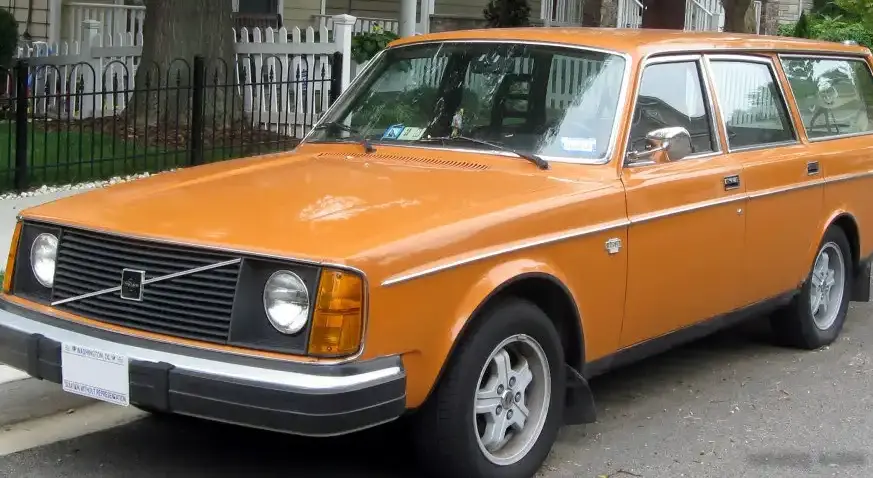
The Volvo 240 Combi, specifically the P245 variant powered by the 2.1-liter (97 horsepower) engine, represents a significant chapter in Volvo’s long-standing reputation for building safe, durable, and practical vehicles. Produced from 1974 through 1975, this iteration of the 240 series estate car served as a workhorse for families and businesses alike, particularly in European markets. It was positioned as a more affordable and accessible entry point into the 240 range, offering the renowned Volvo safety features and spaciousness at a lower price point than the higher-powered or more luxuriously equipped models.
Technical Specifications
| Brand | Volvo |
| Model | 240 |
| Generation | 240 Combi (P245) |
| Type (Engine) | 2.1 (97 Hp) |
| Start of Production | 1974 |
| End of Production | 1975 |
| Powertrain Architecture | Internal Combustion Engine |
| Body Type | Station Wagon (Estate) |
| Seats | 5 |
| Doors | 5 |
| Fuel Type | Petrol (Gasoline) |
| Power | 97 Hp |
| Engine Model/Code | B21A |
| Engine Aspiration | Naturally Aspirated |
| Engine Oil Capacity | 3.9 l (4.12 US qt | 3.43 UK qt) |
| Coolant Capacity | 9.4 l (9.93 US qt | 8.27 UK qt) |
| Fuel Tank Capacity | 60 l (15.85 US gal | 13.2 UK gal) |
Powertrain & Engine Architecture
The heart of the P245 2.1 is the Volvo B21A engine, a 2.1-liter inline-four cylinder powerplant. This engine is a robust, oversquare design, meaning its bore is larger than its stroke, contributing to its relatively rev-happy nature for the era. The B21A featured a cast iron block and an aluminum cylinder head, a common configuration for Volvo engines of the time. Fuel delivery was managed by a Solex carburetor, a relatively simple but effective system for the period. The engine utilized a single overhead camshaft (SOHC) valvetrain, operating two valves per cylinder. While not particularly sophisticated by modern standards, the B21A was known for its durability and ease of maintenance.
The 97 horsepower was transmitted to the rear wheels through a three-speed automatic transmission with overdrive. This transmission, while providing convenience, was not known for its performance. It was geared for economy and smooth cruising rather than spirited acceleration. The automatic transmission was a key differentiator for this variant, appealing to buyers who prioritized ease of driving over outright performance.
Driving Characteristics
The driving experience in the P245 2.1 Automatic is best described as comfortable and relaxed. Acceleration is modest, with 0-60 mph times estimated around 13-14 seconds. The automatic transmission contributes to a smooth, if somewhat sluggish, driving experience. The gear ratios are spaced to prioritize fuel economy and reduce engine strain, making it well-suited for highway cruising. Compared to the manual transmission versions of the 240, or the later 2.3-liter and turbocharged models, the 2.1 Automatic feels significantly less powerful. However, it offers a level of usability that appeals to a broader range of drivers. The steering is relatively heavy, typical of Volvo steering systems of the era, providing a solid and connected feel to the road.
Equipment & Trim Levels
The P245 2.1 Automatic was generally equipped with a fairly basic level of trim. Standard features typically included cloth upholstery, vinyl flooring, and a simple dashboard layout. Power steering was often an optional extra, as was a radio. The interior was designed with practicality in mind, offering ample space for passengers and cargo. The emphasis was on durability and functionality rather than luxury. While not lavishly appointed, the interior was well-built and comfortable for its time. Optional extras could include upgraded seat fabrics, a sunroof, and more advanced audio systems.
Chassis & Braking
The 240 Combi chassis is a robust and well-engineered unit. It features a MacPherson strut front suspension and a solid rear axle with leaf springs. This suspension setup provides a comfortable ride, although it can feel somewhat bouncy on uneven surfaces. The braking system consists of disc brakes on the front wheels and drum brakes on the rear. While adequate for the vehicle’s weight and performance, the rear drum brakes are a point of criticism compared to the all-disc setups found on higher-spec 240 models. A stabilizer bar was typically fitted to the front suspension to reduce body roll during cornering.
Market Reception & Comparison
The P245 2.1 Automatic was generally well-received as a practical and affordable family vehicle. Critics praised its spaciousness, safety features, and durability. However, the engine’s modest power output and the automatic transmission’s lack of responsiveness were often noted as drawbacks. Compared to the manual transmission versions of the 240, the 2.1 Automatic offered less engaging driving experience. Compared to the later 2.3-liter models, it lacked the extra power and refinement. However, it was significantly more affordable, making it an attractive option for budget-conscious buyers. Fuel economy was reasonable for the time, averaging around 20-25 mpg.
Legacy
The Volvo 240 Combi, including the P245 2.1 Automatic variant, has earned a reputation as one of the most reliable and durable cars ever built. The B21A engine is known for its longevity, and many examples are still on the road today, often with very high mileage. The simple mechanical design and readily available parts contribute to its ease of maintenance. In the used car market, these vehicles are sought after by enthusiasts and collectors who appreciate their classic styling, practicality, and robust construction. While not the fastest or most luxurious vehicle of its era, the P245 2.1 Automatic remains a testament to Volvo’s commitment to building safe, durable, and dependable automobiles. Its enduring popularity is a testament to its timeless design and engineering.
