
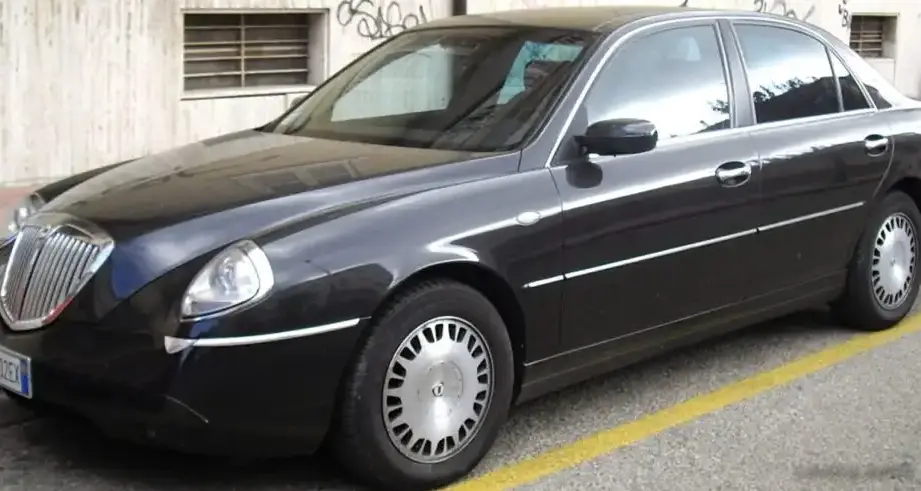
The Lancia Thesis 2.4 20V, produced from March 2002 to September 2007, represented Lancia’s flagship sedan during that period. Positioned as a luxury vehicle aimed at competing with the likes of the Alfa Romeo 166 and larger European sedans, the Thesis sought to revive Lancia’s reputation for sophisticated design and engineering. The 2.4 20V variant, equipped with a 2.4-liter inline-five engine and a five-speed automatic transmission, occupied a middle ground in the Thesis lineup, offering a balance between performance and comfort. It was positioned above the base 2.0-liter models and below the more powerful 2.8 V6 versions.
Technical Specifications
| Brand | Lancia |
| Model | Thesis |
| Generation | Thesis |
| Type (Engine) | 2.4 20V (170 Hp) Automatic |
| Start of production | March, 2002 |
| End of production | September, 2007 |
| Powertrain Architecture | Internal Combustion engine |
| Body type | Sedan |
| Seats | 5 |
| Doors | 4 |
| Fuel consumption (urban) | 15.2 l/100 km (15.5 US mpg, 18.6 UK mpg, 6.6 km/l) |
| Fuel consumption (extra urban) | 8.4 l/100 km (28 US mpg, 33.6 UK mpg, 11.9 km/l) |
| Fuel consumption (combined) | 10.9 l/100 km (21.6 US mpg, 25.9 UK mpg, 9.2 km/l) |
| Fuel Type | Petrol (Gasoline) |
| Acceleration 0 – 100 km/h | 9.5 sec |
| Acceleration 0 – 62 mph | 9.5 sec |
| Acceleration 0 – 60 mph | 9 sec |
| Maximum speed | 215 km/h (133.59 mph) |
| Weight-to-power ratio | 9.9 kg/Hp, 101.2 Hp/tonne |
| Weight-to-torque ratio | 7.4 kg/Nm, 134.5 Nm/tonne |
| Power | 170 Hp @ 6000 rpm |
| Power per litre | 69.5 Hp/l |
| Torque | 226 Nm @ 3500 rpm (166.69 lb.-ft. @ 3500 rpm) |
| Engine layout | Front, Transverse |
| Engine Model/Code | 841 D.000 |
| Engine displacement | 2446 cm3 (149.26 cu. in.) |
| Number of cylinders | 5 |
| Engine configuration | Inline |
| Cylinder Bore | 83 mm (3.27 in.) |
| Piston Stroke | 90.4 mm (3.56 in.) |
| Compression ratio | 10.3:1 |
| Number of valves per cylinder | 4 |
| Fuel injection system | Multi-port manifold injection |
| Engine aspiration | Naturally aspirated engine |
| Valvetrain | DOHC |
| Engine oil capacity | 5.5 l (5.81 US qt | 4.84 UK qt) |
| Coolant | 8.6 l (9.09 US qt | 7.57 UK qt) |
| Kerb Weight | 1680 kg (3703.77 lbs.) |
| Max. weight | 2190 kg (4828.12 lbs.) |
| Max load | 510 kg (1124.36 lbs.) |
| Trunk (boot) space – minimum | 480 l (16.95 cu. ft.) |
| Fuel tank capacity | 75 l (19.81 US gal | 16.5 UK gal) |
| Length | 4890 mm (192.52 in.) |
| Width | 1830 mm (72.05 in.) |
| Height | 1470 mm (57.87 in.) |
| Wheelbase | 2805 mm (110.43 in.) |
| Front track | 1570 mm (61.81 in.) |
| Rear (Back) track | 1540 mm (60.63 in.) |
| Drivetrain Architecture | The Internal combustion engine (ICE) drives the front wheels of the vehicle. |
| Drive wheel | Front wheel drive |
| Number of gears and type of gearbox | 5 gears, automatic transmission |
| Front suspension | Spring Strut |
| Rear suspension | Coil spring |
| Front brakes | Ventilated discs |
| Rear brakes | Ventilated discs |
| Assisting systems | ABS (Anti-lock braking system) |
| Steering type | Steering rack and pinion |
| Power steering | Hydraulic Steering |
| Tires size | 205/60 R15 |
| Wheel rims size | 15 |
Powertrain & Engine Architecture
The heart of the Thesis 2.4 is the 841 D.000 engine, a 2.4-liter inline-five cylinder gasoline engine. This engine is notable for its unusual configuration, a design choice Lancia often employed to differentiate its vehicles. The engine features a double overhead camshaft (DOHC) valvetrain with four valves per cylinder, contributing to its 20-valve designation. Fuel delivery is managed by a multi-port fuel injection system. The engine’s 170 horsepower output at 6000 rpm and 226 Nm (166.69 lb-ft) of torque at 3500 rpm provided adequate performance for comfortable cruising. The five-speed automatic transmission, while offering convenience, was not known for its particularly quick shifts or sporty feel. It was a conventional hydraulic automatic, prioritizing smoothness over outright performance.
Driving Characteristics
The Thesis 2.4 Automatic offered a comfortable and refined driving experience. The automatic transmission, while not particularly responsive, provided smooth gear changes, making it well-suited for city driving and long highway journeys. Acceleration from 0 to 60 mph took around 9 seconds, which was respectable for the time but not particularly quick compared to rivals. The inline-five engine delivered a relatively smooth power delivery, with usable torque available from low engine speeds. Compared to the more powerful 2.8 V6 versions, the 2.4 felt less eager to accelerate, but it offered better fuel economy. The suspension was tuned for comfort, absorbing bumps and imperfections in the road effectively, though it didn’t provide the same level of handling precision as some of its competitors.
Equipment & Trim Levels
The Thesis 2.4 Automatic typically came well-equipped, reflecting its luxury positioning. Standard features included leather upholstery, automatic climate control, power windows and mirrors, and an integrated audio system. Higher trim levels offered options such as a navigation system, premium sound system, sunroof, and heated seats. The interior design emphasized spaciousness and comfort, with high-quality materials used throughout the cabin. The dashboard layout was relatively straightforward and functional, prioritizing ease of use over flashy design elements.
Chassis & Braking
The Thesis 2.4 utilized a front-wheel-drive layout with independent suspension at the front (Spring Strut) and a coil spring setup at the rear. The braking system consisted of ventilated discs on all four wheels, providing adequate stopping power. An Anti-lock Braking System (ABS) was standard, enhancing safety and stability during emergency braking. The steering was rack and pinion with hydraulic power assistance, offering a light and easy steering feel. The 205/60 R15 tires provided a good balance between comfort and grip.
Market Reception & Comparison
The Lancia Thesis, in general, received mixed reviews. While praised for its comfortable ride, spacious interior, and distinctive styling, it was often criticized for its lack of dynamic handling and the perceived unreliability of some of its components. The 2.4 Automatic variant was seen as a sensible choice for buyers prioritizing comfort and fuel economy over outright performance. Compared to the 2.0-liter models, the 2.4 offered a noticeable improvement in performance, while the 2.8 V6 provided a more engaging driving experience but at the cost of increased fuel consumption. Fuel economy figures of around 21.6 US mpg combined were typical for this class of vehicle at the time.
Legacy
The Lancia Thesis, despite its relatively short production run, remains a distinctive and somewhat quirky vehicle. The 2.4 20V Automatic powertrain, while not known for exceptional reliability, has proven to be reasonably durable with proper maintenance. Today, the Thesis is a relatively rare sight on the roads, and well-maintained examples are becoming increasingly sought after by Lancia enthusiasts. The inline-five engine, in particular, is appreciated for its unique character and sound. The Thesis represents a final attempt by Lancia to create a truly luxurious and distinctive sedan, and it remains a testament to the brand’s rich history and engineering heritage.
