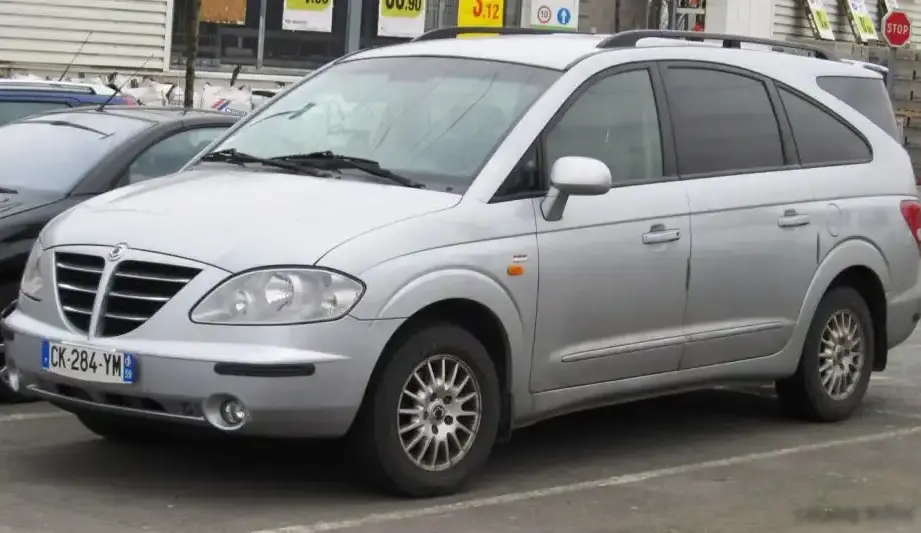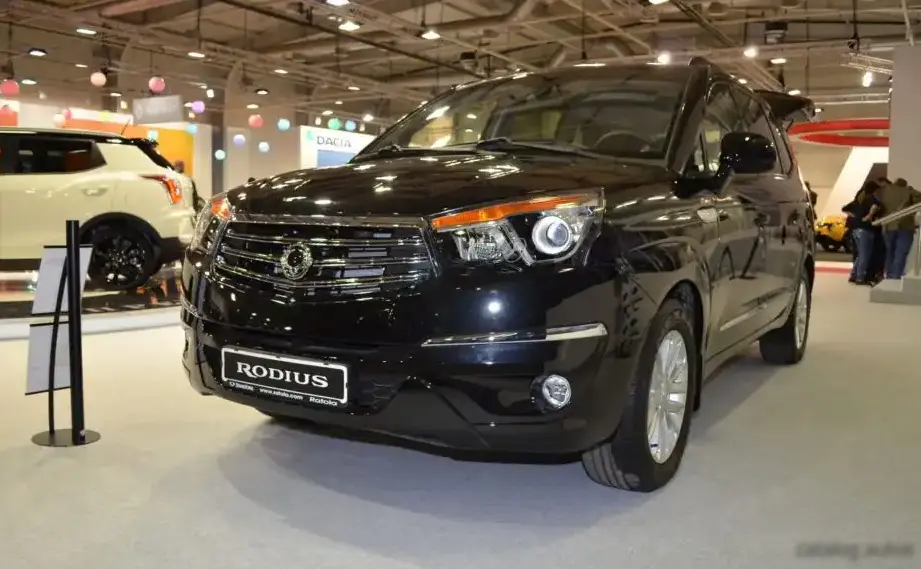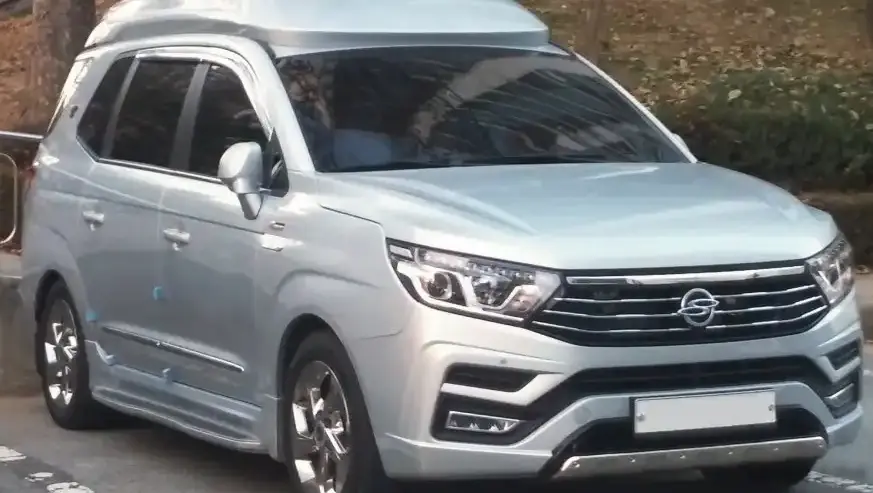
The SsangYong Rodius II, particularly the SV220 4WD Automatic variant produced from 2018 to 2023, represents a significant update to SsangYong’s large MPV offering. Positioned as a spacious and practical people-carrier, the Rodius II aimed to provide a compelling alternative to more established European and Asian MPVs. The facelifted 2018 model brought styling revisions and, crucially, powertrain updates to meet stricter Euro 6 emissions standards. This specific SV220 trim, equipped with a 2.2-liter diesel engine and a seven-speed automatic transmission, was a mid-range offering within the Rodius II lineup, balancing performance with fuel efficiency and comfort. It was primarily marketed towards families and businesses requiring substantial passenger and cargo capacity, particularly in markets where large MPVs remained popular.
Technical Specifications
| Brand | SsangYong |
| Model | Rodus |
| Generation | Rodus II (facelift 2018) |
| Type | SV220 (178 Hp) 4WD Automatic |
| Start of production | 2018 |
| End of production | 2023 |
| Powertrain Architecture | Internal Combustion engine |
| Body type | MPV |
| Seats | 7-11 |
| Doors | 5 |
| Fuel consumption (urban) | 10.1 l/100 km (23.3 US mpg, 28 UK mpg, 9.9 km/l) |
| Fuel consumption (extra urban) | 6.7 l/100 km (35.1 US mpg, 42.2 UK mpg, 14.9 km/l) |
| Fuel consumption (combined) | 8 l/100 km (29.4 US mpg, 35.3 UK mpg, 12.5 km/l) |
| CO2 emissions | 210 g/km |
| Fuel Type | Diesel |
| Maximum speed | 187 km/h (116.2 mph) |
| Emission standard | Euro 6 |
| Weight-to-power ratio | 12.6 kg/Hp, 79.5 Hp/tonne |
| Weight-to-torque ratio | 5.6 kg/Nm, 178.6 Nm/tonne |
| Power | 178 Hp @ 4000 rpm |
| Power per litre | 82.5 Hp/l |
| Torque | 400 Nm @ 1400-2800 rpm (295.02 lb.-ft. @ 1400-2800 rpm) |
| Engine Model/Code | D22DTR |
| Engine displacement | 2157 cm3 (131.63 cu. in.) |
| Number of cylinders | 4 |
| Engine configuration | Inline |
| Cylinder Bore | 86.2 mm (3.39 in.) |
| Piston Stroke | 92.4 mm (3.64 in.) |
| Compression ratio | 15.5:1 |
| Number of valves per cylinder | 4 |
| Fuel injection system | Diesel Commonrail |
| Engine aspiration | Turbocharger, Intercooler |
| Engine oil capacity | 6 l (6.34 US qt | 5.28 UK qt) |
| Coolant | 8.5 l (8.98 US qt | 7.48 UK qt) |
| Kerb Weight | 2240-2299 kg (4938.35 – 5068.43 lbs.) |
| Max. weight | 2950 kg (6503.64 lbs.) |
| Max load | 651-710 kg (1435.21 – 1565.28 lbs.) |
| Permitted trailer load with brakes (12%) | 2000 kg (4409.25 lbs.) |
| Permitted trailer load without brakes | 750 kg (1653.47 lbs.) |
| Length | 5130 mm (201.97 in.) |
| Width | 1915 mm (75.39 in.) |
| Height | 1815-1850 mm (71.46 – 72.83 in.) |
| Wheelbase | 3000 mm (118.11 in.) |
| Front track | 1610 mm (63.39 in.) |
| Rear track | 1620 mm (63.78 in.) |
| Front overhang | 975 mm (38.39 in.) |
| Rear overhang | 1155 mm (45.47 in.) |
| Ride height (ground clearance) | 182-200 mm (7.17 – 7.87 in.) |
| Minimum turning circle | 11.4 m (37.4 ft.) |
| Approach angle | 19.4° |
| Departure angle | 18.6° |
| Ramp-over angle | 18.9° |
| Drive wheel | All wheel drive (4×4) |
| Number of gears | 7 |
| Gearbox type | automatic transmission |
Powertrain & Engine Architecture
The heart of the SV220 is the SsangYong D22DTR, a 2.2-liter inline-four cylinder diesel engine. This engine utilizes a common-rail direct injection system, delivering fuel at extremely high pressure for improved combustion efficiency and reduced emissions. A turbocharger with an intercooler further enhances performance, boosting power output to 178 horsepower at 4000 rpm and a substantial 400 Nm (295 lb-ft) of torque between 1400 and 2800 rpm. This broad torque curve is particularly well-suited to the Rodius II’s size and weight, providing ample pulling power for fully loaded vehicles. The engine also incorporates a diesel particulate filter (DPF) to meet Euro 6 emission regulations. The seven-speed automatic transmission, sourced from AISIN, provides smooth and relatively quick gear changes. While not a performance-oriented transmission, it is well-matched to the engine’s characteristics, prioritizing comfort and drivability.
Driving Characteristics
The Rodius II SV220 4WD Automatic offers a comfortable, if not particularly engaging, driving experience. The automatic transmission contributes to ease of use, especially in urban environments. The 400 Nm of torque provides adequate acceleration, even with a full complement of passengers and luggage. However, the vehicle’s substantial weight (2240-2299 kg) is noticeable, and it doesn’t feel particularly nimble. Compared to manual versions of the Rodius II, the automatic sacrifices some responsiveness, but gains in convenience. The 4WD system provides enhanced traction in adverse weather conditions, making it a capable all-weather vehicle. The gear ratios are tuned for fuel efficiency and relaxed cruising, rather than outright performance.
Equipment & Trim Levels
The SV220 trim level typically included features such as air conditioning, power windows and mirrors, a basic audio system with USB connectivity, and cloth upholstery. Safety features included ABS brakes, electronic stability control, and multiple airbags. Higher trim levels offered upgrades like leather seats, a more advanced infotainment system with navigation, parking sensors, and a rearview camera. The Rodius II was designed to be a practical vehicle, so even the base trims offered a reasonable level of equipment.
Chassis & Braking
The Rodius II utilizes a body-on-frame construction, providing a robust and durable chassis. The suspension consists of independent double wishbones at the front and a multi-link setup at the rear. The SV220 typically featured disc brakes on all four wheels, providing adequate stopping power for its weight class. Stabilizer bars were fitted to both the front and rear axles to reduce body roll during cornering. The rear suspension was tuned to prioritize ride comfort, rather than sporty handling.
Market Reception & Comparison
The SsangYong Rodius II, including the SV220 variant, received mixed reviews. Critics generally praised its spacious interior, practicality, and competitive pricing. However, the styling was often criticized as being unconventional and somewhat dated. Compared to other MPVs in its class, such as the Hyundai iMax or the Mercedes-Benz V-Class, the Rodius II offered a more affordable option, but lacked the brand prestige and refinement of its competitors. Fuel economy was reasonable for a vehicle of its size, but not class-leading. Reliability reports were generally positive, although the Rodius II’s relatively low sales volume meant that long-term data was limited.
Legacy
The SsangYong Rodius II, and the SV220 variant specifically, represents a niche offering in the MPV market. While it didn’t achieve widespread popularity, it provided a viable option for those seeking a large, practical, and relatively affordable people-carrier. The D22DTR engine, while not known for being particularly sophisticated, proved to be reasonably durable and reliable. On the used car market, the Rodius II SV220 represents a good value proposition for buyers needing a spacious and capable vehicle, provided they are willing to accept its somewhat unconventional styling and prioritize practicality over driving dynamics. Parts availability can be a concern, depending on the region, but generally, the Rodius II is a relatively straightforward vehicle to maintain.