
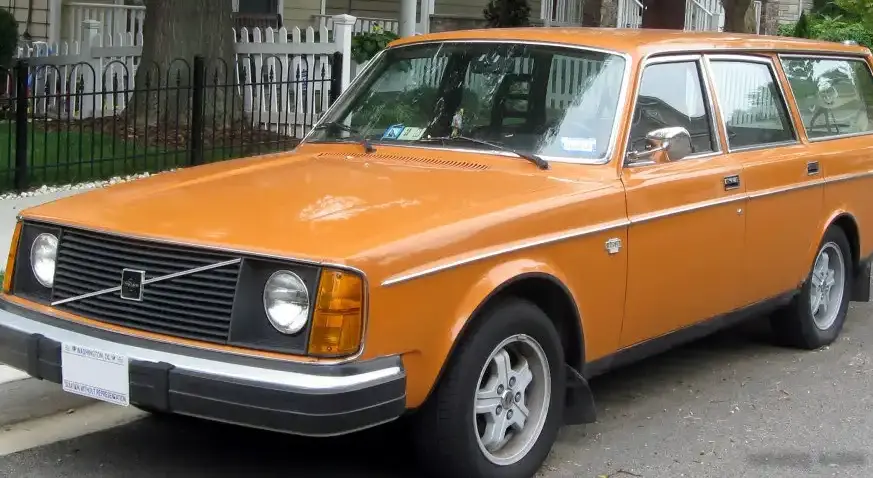
The Volvo 240 Combi (P245) 2.1 Turbo, produced from 1985 to 1986, represents a unique and relatively rare variant within the long-running and highly respected 240 series. Positioned as a performance-oriented version of the practical estate car, the 2.1 Turbo aimed to offer a blend of Volvo’s renowned safety and durability with a noticeable increase in power. It was built upon the P245 platform, the estate version of the 240, and served as a more engaging alternative to the standard naturally aspirated engines available at the time. While the 240 series was popular in both Europe and North America, the 2.1 Turbo Combi saw limited production numbers, making it a sought-after model by enthusiasts today.
Technical Specifications
| Brand | Volvo |
| Model | 240 |
| Generation | 240 Combi (P245) |
| Type (Engine) | 2.1 Turbo (155 Hp) |
| Start of Production | 1985 |
| End of Production | 1986 |
| Powertrain Architecture | Internal Combustion Engine |
| Body Type | Station Wagon (Estate) |
| Seats | 5 |
| Doors | 5 |
| Fuel Type | Petrol (Gasoline) |
| Power | 155 Hp |
| Engine Model/Code | B21ET |
| Engine Aspiration | Turbocharger |
| Engine Oil Capacity | 4.5 l (4.76 US qt | 3.96 UK qt) |
| Coolant Capacity | 9.4 l (9.93 US qt | 8.27 UK qt) |
| Fuel Tank Capacity | 60 l (15.85 US gal | 13.2 UK gal) |
Powertrain & Engine Architecture
The heart of the 240 Combi 2.1 Turbo is the B21ET engine, a 2.1-liter inline-four cylinder powerplant. This engine is based on Volvo’s well-established red-block family, known for its robustness and over-engineering. The ‘ET’ designation signifies ‘Einspritzung Turbo’ – German for ‘Fuel Injection Turbo’. The B21ET utilizes Bosch K-Jetronic mechanical fuel injection, a system known for its reliability and consistent fuel delivery, though less sophisticated than later electronic systems. A Garrett T25 turbocharger is responsible for force-feeding the engine with compressed air, significantly boosting power output compared to the naturally aspirated 2.1-liter engines. The engine features a cast iron block and an aluminum cylinder head, contributing to its durability. The valvetrain consists of a single overhead camshaft (SOHC) operating two valves per cylinder. While not cutting-edge for the mid-1980s, this configuration proved exceptionally reliable. The engine was typically paired with a four-speed automatic transmission (ZF 4HP22) or a five-speed manual transmission, though the automatic was more common in the US market. The automatic transmission, while providing ease of use, did impact acceleration compared to the manual version.
Driving Characteristics
The 240 Combi 2.1 Turbo offered a distinctly different driving experience than its naturally aspirated siblings. The turbocharger provides a noticeable surge of power in the mid-range, offering brisk acceleration for its time. While 155 horsepower doesn’t sound impressive by modern standards, it was a substantial increase over the standard 240 engines, transforming the Combi into a surprisingly capable performer. The automatic transmission, while smooth, does result in some power loss through the torque converter. Gear ratios are geared towards comfortable cruising, rather than outright performance. The suspension, typical of Volvo’s focus on comfort and safety, is relatively soft, providing a compliant ride. However, this can also lead to some body roll during cornering. The steering is unassisted, requiring a bit more effort at low speeds, but providing good feedback. Compared to the manual transmission version, the automatic turbo feels less engaging, but remains a practical and comfortable vehicle for everyday use.
Equipment & Trim Levels
The 240 Combi 2.1 Turbo generally came well-equipped for its era, though trim levels varied depending on the market. Standard features typically included power steering, front disc brakes, cloth upholstery, and a basic AM/FM radio. Higher trim levels, often denoted by ‘GL’ or ‘GLE’ badges, added features such as electric windows, central locking, a sunroof, and upgraded interior trim. Leather upholstery was available as an optional extra. The dashboard layout is characteristically Volvo – functional and straightforward, with clearly marked gauges. Safety features, a Volvo hallmark, were standard, including three-point seatbelts for all occupants and a reinforced safety cage. Optional extras included air conditioning, cruise control, and upgraded sound systems.
Chassis & Braking
The 240 Combi 2.1 Turbo utilizes a traditional body-on-frame construction, contributing to its durability and ease of repair. The front suspension consists of MacPherson struts, while the rear suspension employs a solid axle with leaf springs. Brakes are disc brakes at the front and drum brakes at the rear, a common configuration for vehicles of this era. The braking system is adequate for the car’s weight and performance, but lacks the stopping power of more modern systems. Stabilizer bars are fitted to both the front and rear axles to reduce body roll. The chassis is robust and capable of handling the increased power output of the turbo engine, though the suspension can feel somewhat dated by modern standards.
Market Reception & Comparison
The 240 Combi 2.1 Turbo was generally well-received by automotive critics, who praised its blend of performance, practicality, and safety. However, some critics noted that the automatic transmission dulled the driving experience and that the turbocharger could exhibit some lag. Compared to the standard 240 models, the 2.1 Turbo offered a significant performance upgrade, but at a higher price point. Compared to the 240 GLT with the naturally aspirated 2.3-liter engine, the Turbo offered more power but slightly lower fuel economy. The 240 Turbo was also positioned as a more affordable alternative to other European performance estates, such as the Audi 80 Quattro. Fuel economy was reasonable for the time, averaging around 20-25 mpg in mixed driving conditions. Reliability was generally good, though the turbocharger and fuel injection system required more maintenance than the simpler naturally aspirated engines.
Legacy
The Volvo 240 Combi 2.1 Turbo has developed a strong following among Volvo enthusiasts. The B21ET engine is known for its durability and potential for modification. While the turbocharger and fuel injection system require regular maintenance, the engine is generally reliable if properly cared for. Today, the 240 Combi 2.1 Turbo is a relatively rare and sought-after classic car. Well-maintained examples command a premium price in the used car market. Its combination of practicality, performance, and Volvo’s legendary safety makes it a desirable vehicle for collectors and enthusiasts alike. The car represents a unique chapter in Volvo’s history, showcasing the brand’s willingness to experiment with performance-oriented models while remaining true to its core values of safety and durability.
