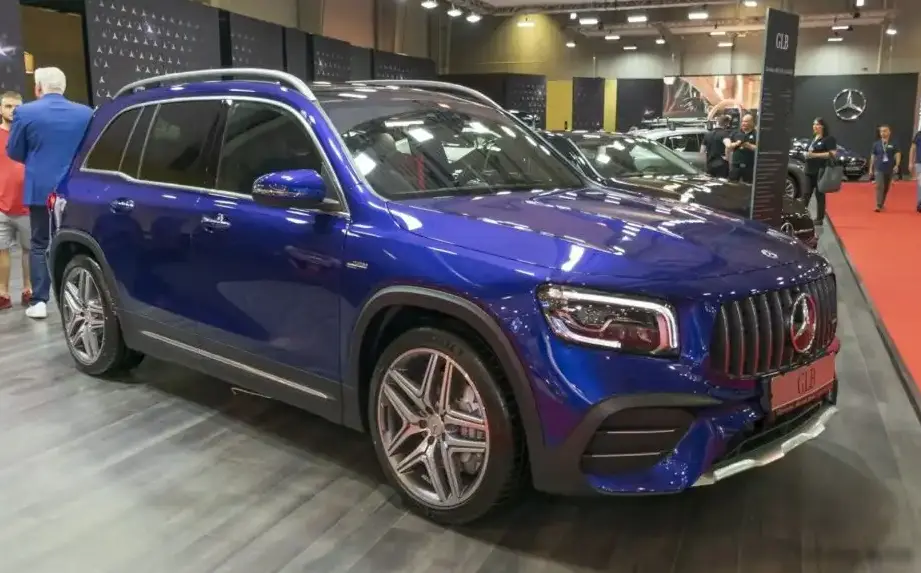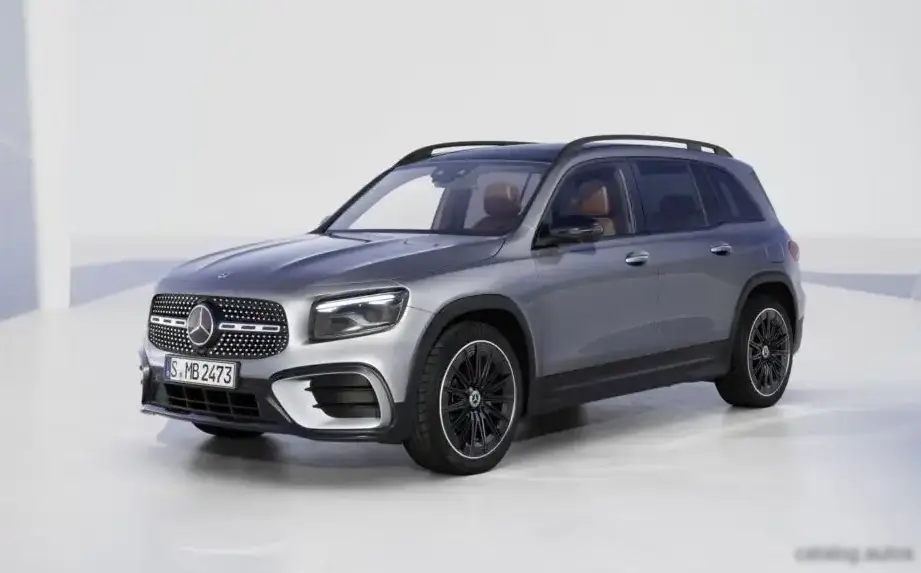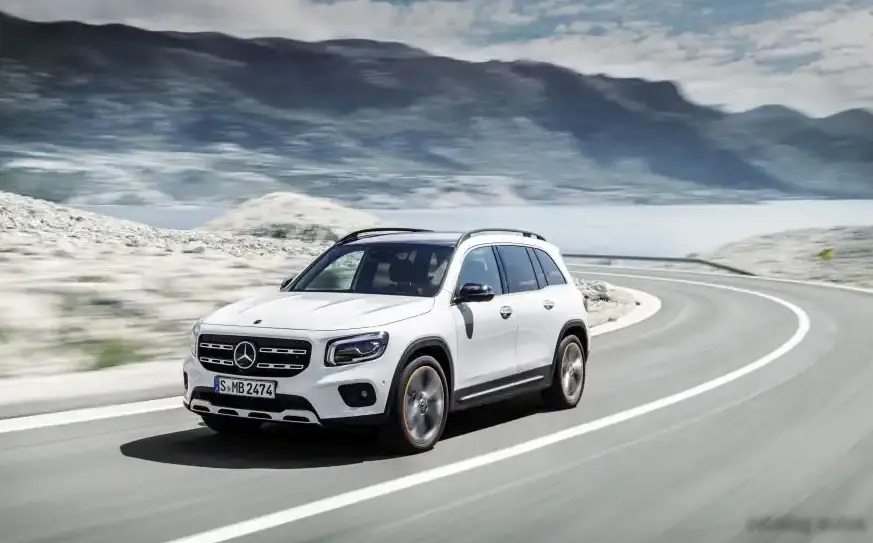
The Mercedes-Benz GLB 250, produced from December 2019 through 2023, represents a key offering within the X247 GLB-Class range. Positioned as a mid-range trim, it bridged the gap between the entry-level GLB 250 and the more performance-oriented AMG variants. This compact luxury SUV aimed to deliver a blend of practicality, comfort, and respectable performance, appealing to families and individuals seeking a versatile vehicle with the Mercedes-Benz badge. The GLB-Class, as a whole, was notable for offering optional third-row seating, a relatively uncommon feature in its segment, increasing its appeal to those needing occasional seven-passenger capacity.
Technical Specifications
| Brand | Mercedes-Benz |
| Model | GLB |
| Generation | GLB (X247) |
| Type (Engine) | GLB 250 (224 Hp) DCT |
| Start of production | December, 2019 |
| End of production | 2023 |
| Powertrain Architecture | Internal Combustion engine |
| Body type | SUV |
| Seats | 5-7 |
| Doors | 5 |
| Fuel consumption at Low speed (WLTP) | 7.7 l/100 km (30.5 US mpg, 36.7 UK mpg, 13 km/l) |
| Fuel consumption at very high speed (WLTP) | 8.5 l/100 km (27.7 US mpg, 33.2 UK mpg, 11.8 km/l) |
| CO2 emissions (WLTP) | 175-193 g/km |
| Fuel consumption (economy) – urban | 8.7-8.8 l/100 km (27 – 26.7 US mpg, 32.5 – 32.1 UK mpg, 11.5 – 11.4 km/l) |
| Fuel consumption (economy) – extra urban | 5.6-5.9 l/100 km (42 – 39.9 US mpg, 50.4 – 47.9 UK mpg, 17.9 – 16.9 km/l) |
| Fuel consumption (economy) – combined | 6.7-7.0 l/100 km (35.1 – 33.6 US mpg, 42.2 – 40.4 UK mpg, 14.9 – 14.3 km/l) |
| CO2 emissions | 153-159 g/km |
| Fuel Type | Petrol (Gasoline) |
| Acceleration 0 – 100 km/h | 7.1 sec |
| Acceleration 0 – 62 mph | 7.1 sec |
| Acceleration 0 – 60 mph | 6.7 sec |
| Maximum speed | 240 km/h (149.13 mph) |
| Emission standard | Euro 6d ISC-FCM |
| Weight-to-power ratio | 6.9 kg/Hp, 145.9 Hp/tonne |
| Weight-to-torque ratio | 4.4 kg/Nm, 228 Nm/tonne |
| Power | 224 Hp @ 5500 rpm |
| Torque | 350 Nm @ 1800-4000 rpm (258.15 lb.-ft. @ 1800-4000 rpm) |
| Engine layout | Front, Transverse |
| Engine Model/Code | M 260 |
| Engine displacement | 1991 cm3 (121.5 cu. in.) |
| Number of cylinders | 4 |
| Engine configuration | Inline |
| Number of valves per cylinder | 4 |
| Fuel injection system | Direct injection |
| Engine aspiration | Turbocharger, Intercooler |
| Engine oil capacity | 5.5 l (5.81 US qt | 4.84 UK qt) |
| Kerb Weight | 1535 kg (3384.1 lbs.) |
| Max. weight | 2145 kg (4728.92 lbs.) |
| Max load | 610 kg (1344.82 lbs.) |
| Trunk (boot) space – minimum | 565 l (19.95 cu. ft.) |
| Trunk (boot) space – maximum | 1800 l (63.57 cu. ft.) |
| Fuel tank capacity | 52 l (13.74 US gal | 11.44 UK gal) |
| Permitted trailer load with brakes (12%) | 2000 kg (4409.25 lbs.) |
| Permitted trailer load without brakes | 750 kg (1653.47 lbs.) |
| Length | 4634 mm (182.44 in.) |
| Width | 1834 mm (72.2 in.) |
| Width including mirrors | 2020 mm (79.53 in.) |
| Height | 1658 mm (65.28 in.) |
| Wheelbase | 2829 mm (111.38 in.) |
| Front track | 1605 mm (63.19 in.) |
| Rear (Back) track | 1606 mm (63.23 in.) |
| Front overhang | 905 mm (35.63 in.) |
| Rear overhang | 900 mm (35.43 in.) |
| Ride height (ground clearance) | 135 mm (5.31 in.) |
| Approach angle | 18° |
| Departure angle | 18.3° |
| Ramp-over (brakeover) angle | 13.9° |
| Drivetrain Architecture | The Internal combustion engine (ICE) drives the front wheels of the vehicle. |
| Drive wheel | Front wheel drive |
| Number of gears and type of gearbox | 8 gears, automatic transmission G-DCT |
| Front suspension | Independent type McPherson |
| Rear suspension | Independent multi-link suspension |
| Front brakes | Ventilated discs |
| Rear brakes | Ventilated discs |
| Assisting systems | ABS (Anti-lock braking system) |
| Steering type | Steering rack and pinion |
| Power steering | Electric Steering |
| Tires size | 215/65 R17 |
| Wheel rims size | 6.5J x 17 |
Powertrain & Engine Architecture
The GLB 250 is powered by Mercedes-Benz’s M 260 engine, a 2.0-liter turbocharged inline-four cylinder gasoline engine. This engine, part of the modular M260 family, utilizes direct fuel injection and a single scroll turbocharger to deliver 224 horsepower at 5500 rpm and 258 lb-ft of torque between 1800 and 4000 rpm. The engine’s design emphasizes efficiency and responsiveness. The M 260 incorporates features like CONICA (Conditionally Operated Narrow Angle Injection) technology for optimized combustion. Power is transmitted to the front wheels via an 8-speed dual-clutch transmission (DCT), marketed as G-DCT. This transmission provides quick and smooth gear changes, contributing to both performance and fuel economy. The DCT’s programming is tuned for comfort and efficiency in typical driving situations, with sport modes available for more aggressive driving.
Driving Characteristics
The GLB 250 with the 8-speed DCT offers a comfortable and refined driving experience. Acceleration from 0 to 60 mph takes approximately 6.7 seconds, making it adequately quick for everyday driving and highway merging. The DCT transmission contributes to seamless gear changes, and the engine provides a good balance of power and responsiveness. Compared to the base GLB 250, the 250 offers a noticeable improvement in acceleration and overall performance. While not as sporty as the AMG-tuned variants, the GLB 250 provides sufficient power for most drivers. The gear ratios are optimized for both fuel efficiency and usable power in a variety of driving conditions. The front-wheel-drive configuration provides good traction in most situations, although all-wheel drive was available as an option.
Equipment & Trim Levels
The GLB 250 typically came standard with features such as Mercedes-Benz User Experience (MBUX) infotainment system with a touchscreen display, Apple CarPlay and Android Auto integration, and a suite of driver-assistance features including automatic emergency braking and lane-keeping assist. Interior upholstery was typically MB-Tex artificial leather, with genuine leather available as an upgrade. Common optional extras included a panoramic sunroof, premium audio system, heated and ventilated front seats, and the third-row seating option. Trim levels could vary slightly depending on the market, but generally offered packages that bundled popular options together.
Chassis & Braking
The GLB 250 utilizes an independent McPherson strut front suspension and a multi-link rear suspension. This setup provides a comfortable ride quality while maintaining good handling characteristics. The suspension is tuned to prioritize comfort, but still offers reasonable body control in corners. Braking duties are handled by ventilated disc brakes on all four wheels. ABS (Anti-lock Braking System) is standard, along with electronic stability control. The GLB 250’s chassis is designed to provide a stable and predictable driving experience, with a focus on safety and comfort.
Market Reception & Comparison
The GLB 250 was generally well-received by automotive critics. It was praised for its spacious interior, comfortable ride, and user-friendly technology. The optional third-row seating was a significant selling point for families. Compared to other compact luxury SUVs, the GLB 250 offered a compelling combination of features and value. Fuel economy was considered competitive for its class, with combined fuel consumption ranging from 33.6 to 35.1 US mpg. Reliability reports have been generally positive, with few major issues reported. The GLB 250 offered a more refined and upscale experience than many of its competitors, such as the BMW X1 and Audi Q3.
Legacy
The Mercedes-Benz GLB 250 has proven to be a popular and reliable vehicle in the used car market. The M 260 engine, coupled with the 8-speed DCT transmission, has demonstrated good long-term durability. Regular maintenance, including oil changes and fluid checks, is crucial for maintaining the powertrain’s health. The GLB 250’s spacious interior and versatile configuration continue to appeal to buyers seeking a practical and comfortable luxury SUV. Its relatively affordable price point compared to larger Mercedes-Benz models has also contributed to its enduring popularity.