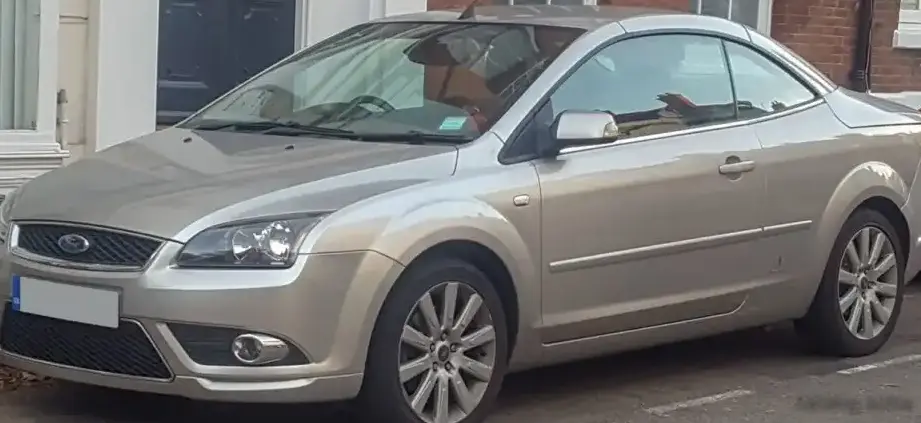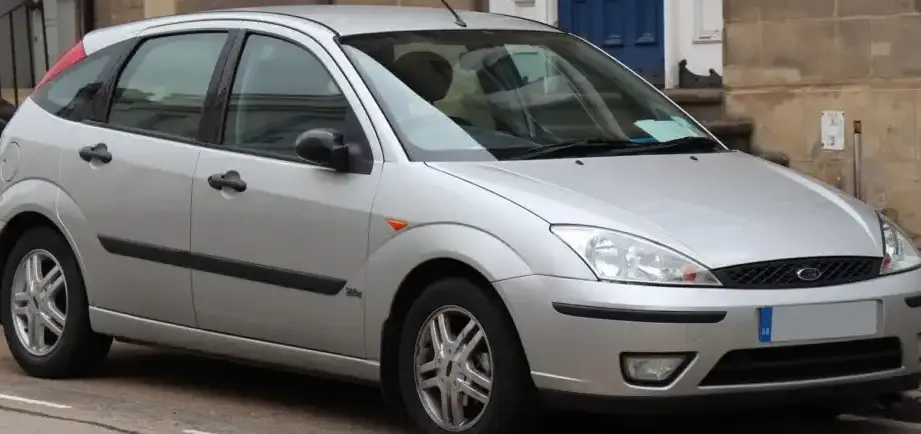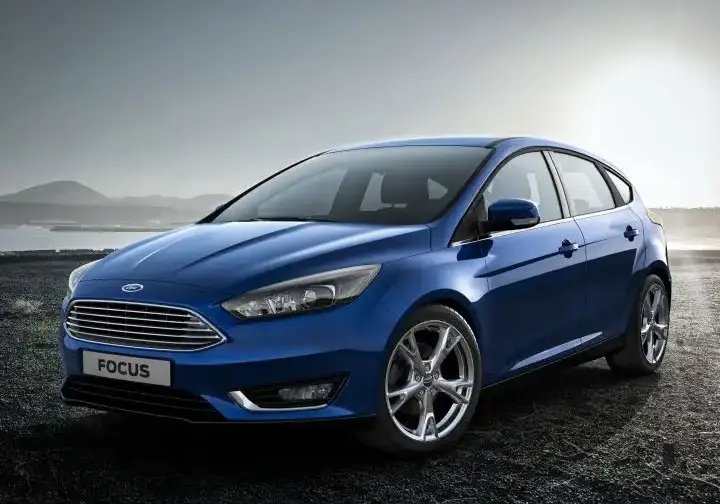
The Ford Focus III, specifically the facelifted model produced from 2014 to 2018, represented a significant evolution of Ford’s globally successful compact car. Within this generation, the 1.5 EcoBoost 182 horsepower variant with a six-speed manual transmission occupied a middle-ground position, offering a balance between performance, fuel efficiency, and affordability. This model aimed to appeal to drivers seeking a more engaging driving experience than the base engine options, without the higher price tag of the performance-oriented ST model. It was primarily marketed in Europe and other global markets, with the North American Focus receiving different engine options.
Technical Specifications
| Brand | Ford |
| Model | Focus |
| Generation | Focus III Hatchback (facelift 2014) |
| Type (Engine) | 1.5 EcoBoost (182 Hp) S&S |
| Start of production | 2014 |
| End of production | 2018 |
| Powertrain Architecture | Internal Combustion engine |
| Body type | Hatchback |
| Seats | 5 |
| Doors | 5 |
| Fuel consumption (urban) | 7 l/100 km (33.6 US mpg, 40.4 UK mpg, 14.3 km/l) |
| Fuel consumption (extra urban) | 4.6 l/100 km (51.1 US mpg, 61.4 UK mpg, 21.7 km/l) |
| Fuel consumption (combined) | 5.5 l/100 km (42.8 US mpg, 51.4 UK mpg, 18.2 km/l) |
| CO2 emissions | 127 g/km |
| Fuel Type | Petrol (Gasoline) |
| Acceleration 0 – 100 km/h | 8.6 sec |
| Acceleration 0 – 62 mph | 8.6 sec |
| Acceleration 0 – 60 mph | 8.2 sec |
| Maximum speed | 224 km/h (139.19 mph) |
| Emission standard | Euro 6 |
| Weight-to-power ratio | 7.3 kg/Hp, 137.4 Hp/tonne |
| Weight-to-torque ratio | 5.5 kg/Nm, 181.1 Nm/tonne |
| Power | 182 Hp @ 6000 rpm |
| Power per litre | 121.4 Hp/l |
| Torque | 240 Nm @ 1600-5000 rpm (177.01 lb.-ft. @ 1600-5000 rpm) |
| Engine layout | Front, Transverse |
| Engine Model/Code | M9DA, M9DB, M9DG, M9DH |
| Engine displacement | 1499 cm3 (91.47 cu. in.) |
| Number of cylinders | 4 |
| Engine configuration | Inline |
| Cylinder Bore | 79 mm (3.11 in.) |
| Piston Stroke | 76.4 mm (3.01 in.) |
| Compression ratio | 10:1 |
| Number of valves per cylinder | 4 |
| Fuel injection system | Direct injection |
| Engine aspiration | Turbocharger, Intercooler |
| Valvetrain | DOHC |
| Engine oil capacity | 4.1 l (4.33 US qt | 3.61 UK qt) |
| Coolant | 5.8 l (6.13 US qt | 5.1 UK qt) |
| Kerb Weight | 1325 kg (2921.12 lbs.) |
| Max. weight | 1900 kg (4188.78 lbs.) |
| Max load | 575 kg (1267.66 lbs.) |
| Trunk (boot) space – minimum | 277 l (9.78 cu. ft.) |
| Trunk (boot) space – maximum | 1062 l (37.5 cu. ft.) |
| Fuel tank capacity | 55 l (14.53 US gal | 12.1 UK gal) |
| Length | 4358 mm (171.57 in.) |
| Width | 1823 mm (71.77 in.) |
| Height | 1484 mm (58.43 in.) |
| Wheelbase | 2648 mm (104.25 in.) |
| Front track | 1544 mm (60.79 in.) |
| Rear (Back) track | 1559 mm (61.38 in.) |
| Minimum turning circle | 11 m (36.09 ft.) |
| Drivetrain Architecture | ICE, Front wheel drive |
| Number of gears | 6 |
| Gearbox type | Manual transmission |
| Front suspension | Independent, McPherson with coil spring and anti-roll bar |
| Rear suspension | Independent multi-link suspension |
| Front brakes | Disc |
| Rear brakes | Disc |
| Assisting systems | ABS |
| Steering type | Steering rack and pinion |
| Tires size | 205/55 R16; 215/50 R17 |
| Wheel rims size | 6.5J x 16; 7.0J x 17 |
INTRODUCTION
The 1.5 EcoBoost engine, introduced in the facelifted Ford Focus III in 2014, represented Ford’s push towards smaller, more efficient powertrains without sacrificing performance. This particular variant, producing 182 horsepower, was a key offering in the European market, positioned above the 1.0 EcoBoost and 1.6 Ti-VCT engines, and below the higher-performance ST model. The Focus III, built on the C170 platform (also known as the 1HX0 platform for the three-door version), aimed to provide a refined and practical driving experience, and the 1.5 EcoBoost engine played a crucial role in achieving that balance. Production continued through 2018, with minor updates throughout the model cycle.
Powertrain & Engine Architecture
The heart of this Focus variant is the 1.5-liter EcoBoost inline-four cylinder engine, identified by engine codes such as M9DA, M9DB, M9DG, and M9DH. This engine utilizes direct fuel injection, a technology that improves fuel efficiency and power output by injecting fuel directly into the combustion chamber. The engine also features a single turbocharger with an intercooler, which forces more air into the cylinders, boosting power. The valvetrain employs a Dual Overhead Camshaft (DOHC) design with four valves per cylinder, optimizing airflow for improved performance. The engine’s Start & Stop System further enhances fuel economy by automatically shutting off the engine when the vehicle is stationary. Paired with the engine is a six-speed manual transmission, providing precise gear changes and a more engaging driving experience. The transmission’s gear ratios are tuned to maximize both acceleration and fuel efficiency.
Driving Characteristics
The 1.5 EcoBoost 182 hp Focus offers a noticeable step up in performance compared to the lower-powered engine options. Acceleration from 0 to 60 mph takes approximately 8.2 seconds, and the car reaches a top speed of 139.19 mph. The turbocharger provides a good amount of low-end torque, making the car feel responsive in everyday driving situations. However, the power delivery isn’t as aggressive as the Focus ST, making it more accessible and predictable for a wider range of drivers. The six-speed manual transmission allows for precise control over the engine’s power band, and the gear ratios are well-matched to the engine’s characteristics. Compared to the 1.0 EcoBoost, the 1.5 offers significantly more power and torque, resulting in a more confident driving experience, especially when carrying passengers or cargo. It also feels more refined than the 1.6 Ti-VCT engine, offering a smoother and quieter ride.
Equipment & Trim Levels
The 1.5 EcoBoost 182 hp variant was typically offered in mid-range trim levels, such as Zetec or Titanium, depending on the specific market. Standard equipment generally included air conditioning, power windows, power mirrors, a basic audio system with USB connectivity, and alloy wheels. Higher trim levels added features like a touchscreen infotainment system, navigation, automatic climate control, and parking sensors. Optional extras included a panoramic sunroof, leather upholstery, and advanced driver-assistance systems. Interior upholstery was typically cloth, with higher trims offering partial leather options. The dashboard layout was functional and modern, with a focus on ergonomics and ease of use.
Chassis & Braking
The Focus III utilizes an independent McPherson strut suspension at the front and an independent multi-link suspension at the rear, providing a comfortable and controlled ride. The suspension is tuned to balance handling and comfort, making the car enjoyable to drive on both smooth highways and winding roads. The braking system consists of disc brakes on all four wheels, providing ample stopping power. Anti-lock Braking System (ABS) is standard, enhancing safety and stability during emergency braking. Stabilizer bars are fitted to both the front and rear axles to reduce body roll during cornering.
Market Reception & Comparison
The 1.5 EcoBoost 182 hp Focus was generally well-received by automotive critics. It was praised for its blend of performance, fuel efficiency, and practicality. Reviewers noted that the engine provided ample power for everyday driving, while still delivering respectable fuel economy figures. Compared to the 1.0 EcoBoost, the 1.5 offered a more refined and capable driving experience. However, some critics pointed out that the engine wasn’t as exciting as the Focus ST’s 2.0-liter EcoBoost. In terms of reliability, the 1.5 EcoBoost engine has proven to be generally reliable, although some owners have reported issues with the turbocharger and fuel injectors. Fuel economy figures are competitive, with combined fuel consumption averaging around 42.8 US mpg.
Legacy
The 1.5 EcoBoost engine has become a mainstay in Ford’s lineup, powering a variety of models across different segments. The Focus III 1.5 EcoBoost 182 hp variant remains a popular choice in the used car market, offering a good balance of performance, fuel efficiency, and affordability. While not as iconic as some of Ford’s classic performance cars, this variant represents a significant step forward in terms of powertrain technology and efficiency. Its long-term reliability is generally good, making it a sensible choice for buyers looking for a practical and enjoyable compact car.