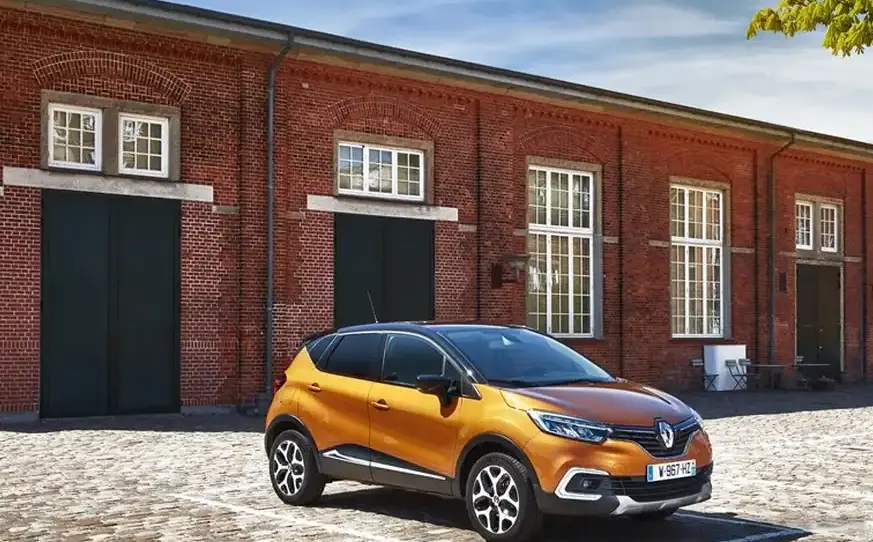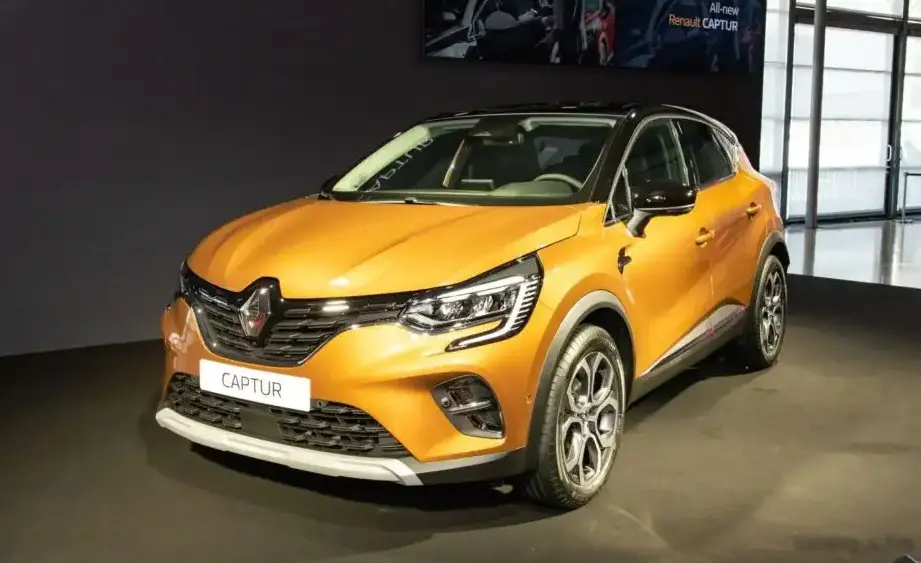
The Renault Captur II 1.0 TCe (100 hp) LPG, produced from February 2020 to April 2024, represents a significant offering within the second generation of Renault’s popular Captur crossover. Positioned as an entry-level to mid-range option, this variant aimed to provide a balance of affordability, fuel efficiency, and practicality, particularly appealing to buyers seeking a compact urban vehicle with the added flexibility of LPG conversion. It falls within the broader Captur II range, which utilizes the 1HX0/A3 platform shared with other Renault and Nissan models. The introduction of the LPG option broadened the Captur’s appeal in markets where alternative fuels are incentivized or readily available.
Technical Specifications
| Brand | Renault |
| Model | Captur |
| Generation | Captur II |
| Type (Engine) | 1.0 TCe (100 Hp) LPG |
| Start of production | February, 2020 |
| End of production | April, 2024 |
| Powertrain Architecture | Internal Combustion engine |
| Body type | Crossover |
| Seats | 5 |
| Doors | 5 |
| Combined fuel consumption (WLTP) | 5.9 l/100 km (39.9 US mpg, 47.9 UK mpg, 16.9 km/l) |
| Combined fuel consumption (WLTP) (LPG) | 7.7 l/100 km |
| CO2 emissions (WLTP) | 134 g/km |
| CO2 emissions (LPG) (WLTP) | 119 g/km |
| Fuel Type | Petrol / LPG |
| Emission standard | Euro 6 |
| Weight-to-power ratio | 13.5 kg/Hp, 74.1 Hp/tonne |
| Power | 100 Hp |
| Power per litre | 100.1 Hp/l |
| Engine layout | Front, Transverse |
| Engine Model/Code | H4D 460 |
| Engine displacement | 999 cm3 (60.96 cu. in.) |
| Number of cylinders | 3 |
| Engine configuration | Inline |
| Number of valves per cylinder | 4 |
| Fuel injection system | Multi-port manifold injection |
| Engine aspiration | Turbocharger |
| Engine oil capacity | 4.2 l (4.44 US qt | 3.7 UK qt) |
| Coolant | 6.4 l (6.76 US qt | 5.63 UK qt) |
| Kerb Weight | 1349 kg (2974.04 lbs.) |
| Max. weight | 1774 kg (3911 lbs.) |
| Max load | 425 kg (936.96 lbs.) |
| Trunk (boot) space – minimum | 404-536 l (14.27 – 18.93 cu. ft.) |
| Fuel tank capacity | 48 l (12.68 US gal | 10.56 UK gal) |
| Fuel tank capacity (LPG) | 40 l |
| Permitted trailer load with brakes (12%) | 1200 kg (2645.55 lbs.) |
| Length | 4227 mm (166.42 in.) |
| Width | 1797 mm (70.75 in.) |
| Width including mirrors | 2003 mm (78.86 in.) |
| Height | 1576 mm (62.05 in.) |
| Wheelbase | 2639 mm (103.9 in.) |
| Front overhang | 876 mm (34.49 in.) |
| Rear overhang | 712 mm (28.03 in.) |
| Ride height (ground clearance) | 142 mm (5.59 in.) |
| Minimum turning circle (turning diameter) | 11.1 m (36.42 ft.) |
| Drivetrain Architecture | The Internal combustion engine (ICE) drives the front wheels of the vehicle. |
| Drive wheel | Front wheel drive |
| Number of gears and type of gearbox | 6 gears, manual transmission |
| Front brakes | Ventilated discs |
| Rear brakes | Drum |
| Assisting systems | ABS (Anti-lock braking system) |
| Steering type | Steering rack and pinion |
| Power steering | Electric Steering |
| Tires size | 215/60 R17 |
| Wheel rims size | 17 |
Powertrain & Engine Architecture
At the heart of the Captur II 1.0 TCe LPG lies the Renault H4D 460 engine, a 999cc, three-cylinder turbocharged petrol engine. This engine is part of Renault’s ‘Energy dCi’ family, known for its focus on efficiency. The engine utilizes multi-point fuel injection and a single turbocharger to deliver 100 horsepower. The LPG conversion is typically a factory-fitted option, integrating a dedicated LPG tank and fuel system alongside the petrol system, allowing the driver to switch between fuels. The engine’s compact size and lightweight construction contribute to the Captur’s overall agility. The six-speed manual transmission was the standard offering for this variant, providing a balance between fuel economy and driver engagement. The engine’s design prioritizes low-end torque, making it suitable for urban driving conditions.
Driving Characteristics
The 100 hp 1.0 TCe engine, paired with the six-speed manual gearbox, delivers adequate performance for everyday driving. Acceleration is not particularly brisk, with a 0-60 mph time estimated around 12-13 seconds. However, the engine provides sufficient power for overtaking maneuvers and maintaining highway speeds. The manual transmission allows for greater driver control and contributes to improved fuel economy compared to an automatic. The gear ratios are tuned for efficiency, with a relatively long sixth gear for comfortable cruising. Switching to LPG slightly reduces power output, but offers a lower fuel cost per mile. Compared to the higher-output 1.3 TCe variants, this engine feels less responsive, but it offers a more economical and relaxed driving experience.
Equipment & Trim Levels
The 1.0 TCe (100 hp) LPG variant typically came equipped with a reasonable level of standard features. These included air conditioning, a touchscreen infotainment system with Bluetooth connectivity, and basic safety features like ABS and multiple airbags. Higher trim levels, such as the Intens, added features like alloy wheels, automatic climate control, a reversing camera, and parking sensors. Interior upholstery was typically cloth, with options for upgraded materials on higher trims. The dashboard layout was modern and functional, with a focus on ease of use. Optional extras included a panoramic sunroof, upgraded sound system, and advanced driver-assistance systems.
Chassis & Braking
The Captur II utilizes a front-wheel-drive chassis with a MacPherson strut front suspension and a torsion beam rear suspension. This setup provides a comfortable ride quality, well-suited for urban roads. The front brakes are ventilated discs, while the rear brakes are drums, a cost-saving measure common in this segment. The steering is electrically assisted, providing light and precise control. The suspension is tuned for comfort rather than outright handling performance. Stabilizer bars are fitted to both the front and rear axles to reduce body roll during cornering. The relatively lightweight construction of the vehicle contributes to its agility.
Market Reception & Comparison
The Renault Captur II 1.0 TCe (100 hp) LPG was generally well-received by critics as a practical and economical choice. Its fuel efficiency, particularly when running on LPG, was a major selling point. However, some reviewers noted that the engine could feel underpowered, especially when fully loaded or driving uphill. Compared to the 1.3 TCe variants, the 1.0 TCe offered lower running costs but less performance. The LPG conversion added to the vehicle’s appeal in markets with favorable LPG pricing and infrastructure. Reliability reports suggest that the H4D engine is generally robust, but regular maintenance is essential to ensure long-term durability.
Legacy
The Renault Captur II 1.0 TCe (100 hp) LPG has established itself as a popular choice in the used car market, particularly for buyers seeking an affordable and fuel-efficient crossover. The LPG conversion adds to its appeal, offering potential savings on fuel costs. The H4D engine has proven to be relatively reliable, although it’s important to check for regular maintenance records. As a compact and practical urban vehicle, the Captur II 1.0 TCe LPG continues to offer a compelling value proposition for budget-conscious buyers.