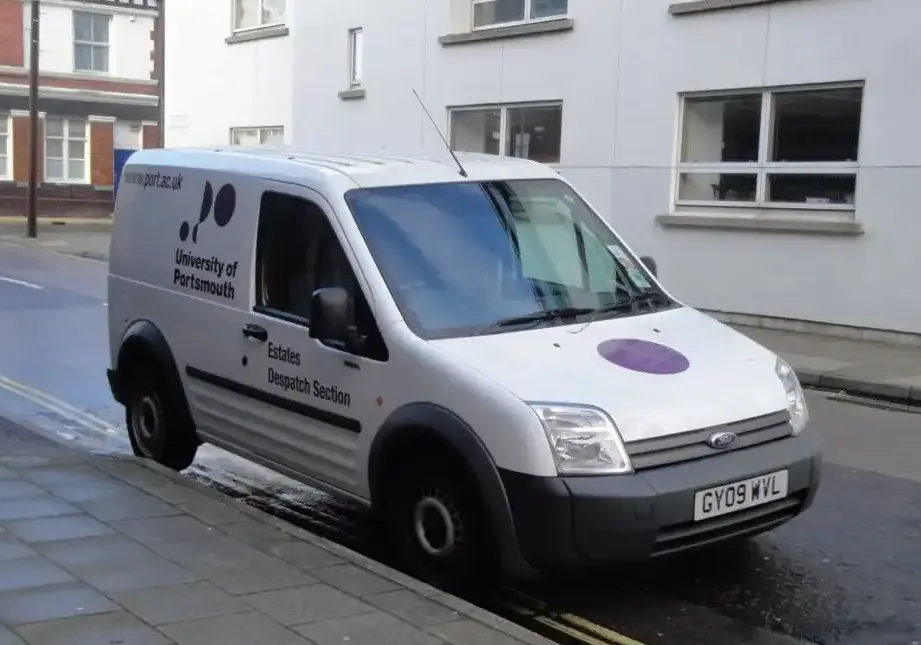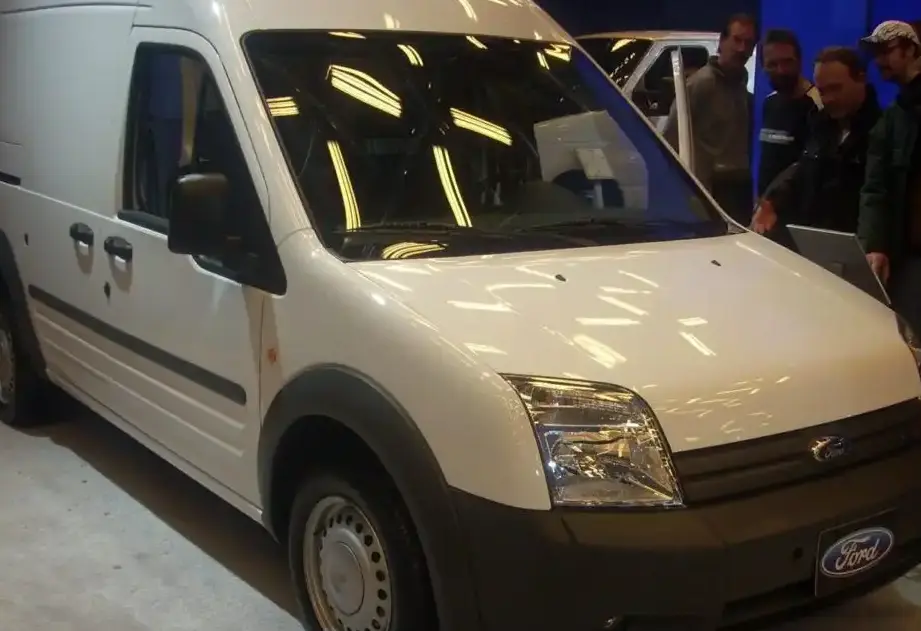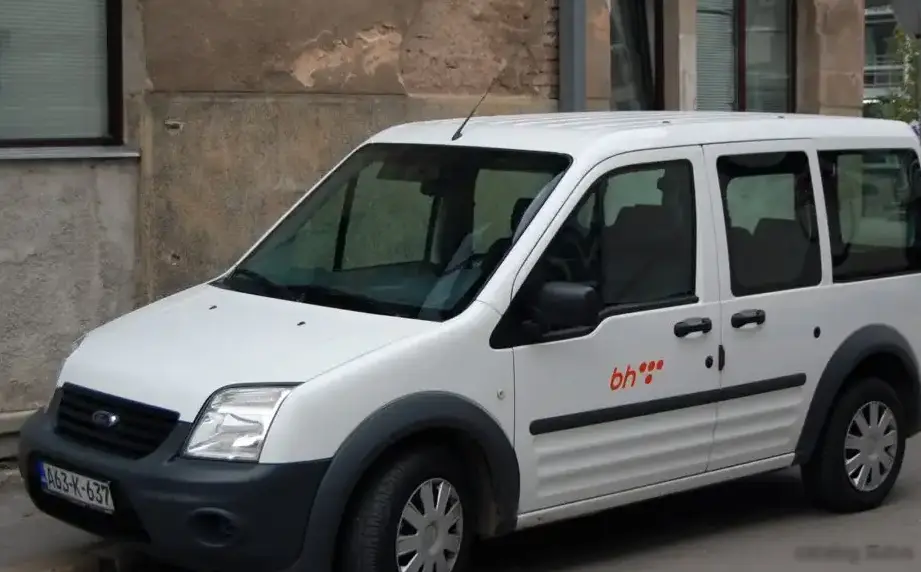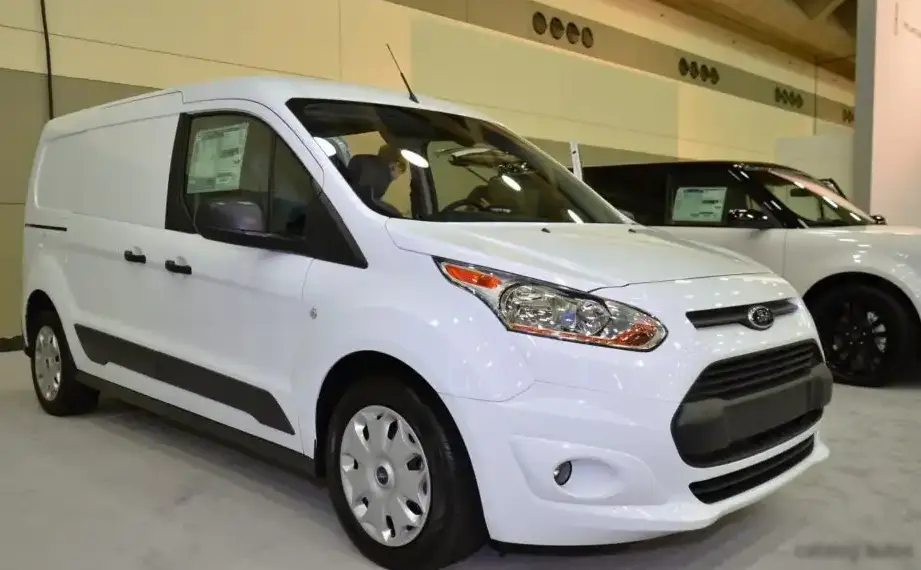
The Ford Transit Connect II Panel Van L2 1.6 EcoBoost (150 hp) Automatic, produced from 2013 to 2015, represents a significant iteration of Ford’s compact commercial vehicle offering in the North American and European markets. Positioned as a mid-range option within the second-generation Transit Connect lineup (introduced in 2013, based on the Ford C2 platform – also known as the 1HX0/A3 platform shared with the Ford Focus and C-Max), this variant aimed to balance fuel efficiency with adequate power for light-duty commercial and personal use. The L2 designation indicates the long wheelbase version, offering increased cargo capacity compared to the standard L1 model. This particular configuration, pairing the 1.6-liter EcoBoost engine with a six-speed automatic transmission, was designed to appeal to customers prioritizing ease of driving over outright performance or maximum fuel economy.
Technical Specifications
| Brand | Ford |
| Model | Transit Connect |
| Generation | Transit Connect II Panel Van L2 |
| Type (Engine) | 1.6 EcoBoost (150 Hp) Automatic |
| Start of production | 2013 |
| End of production | 2015 |
| Powertrain Architecture | Internal Combustion engine |
| Body type | Minivan |
| Seats | 2-3 |
| Doors | 4-5 |
| Fuel consumption (economy) – urban (NEDC) | 10.9 l/100 km (21.6 US mpg, 25.9 UK mpg, 9.2 km/l) |
| Fuel consumption (economy) – extra urban (NEDC) | 6.3 l/100 km (37.3 US mpg, 44.8 UK mpg, 15.9 km/l) |
| Fuel consumption (economy) – combined (NEDC) | 8 l/100 km (29.4 US mpg, 35.3 UK mpg, 12.5 km/l) |
| CO2 emissions (NEDC) | 184 g/km |
| Fuel Type | Petrol (Gasoline) |
| Emission standard | Euro 5 |
| Weight-to-power ratio | 9.5 kg/Hp, 105.3 Hp/tonne |
| Weight-to-torque ratio | 5.9 kg/Nm, 168.5 Nm/tonne |
| Power | 150 Hp @ 5700 rpm |
| Power per litre | 93.9 Hp/l |
| Torque | 240 Nm @ 1600-4000 rpm (177.01 lb.-ft. @ 1600-4000 rpm) |
| Engine layout | Front, Transverse |
| Engine Model/Code | EcoBoost / JQGA |
| Engine displacement | 1597 cm3 (97.45 cu. in.) |
| Number of cylinders | 4 |
| Engine configuration | Inline |
| Cylinder Bore | 79 mm (3.11 in.) |
| Piston Stroke | 81.4 mm (3.2 in.) |
| Compression ratio | 10:1 |
| Number of valves per cylinder | 4 |
| Fuel injection system | Direct injection |
| Engine aspiration | Turbocharger, Intercooler |
| Valvetrain | DOHC |
| Engine oil capacity | 4.1 l (4.33 US qt | 3.61 UK qt) |
| Coolant | 9.1 l (9.62 US qt | 8.01 UK qt) |
| Kerb Weight | 1424-1431 kg (3139.38 – 3154.81 lbs.) |
| Max. weight | 2335 kg (5147.79 lbs.) |
| Max load | 904-911 kg (1992.98 – 2008.41 lbs.) |
| Trunk (boot) space – minimum | 3220 l (113.71 cu. ft.) |
| Trunk (boot) space – maximum | 4400 l (155.38 cu. ft.) |
| Fuel tank capacity | 60 l (15.85 US gal | 13.2 UK gal) |
| Permitted trailer load with brakes (12%) | 1200 kg (2645.55 lbs.) |
| Permitted trailer load without brakes | 745 kg (1642.44 lbs.) |
| Length | 4818 mm (189.69 in.) |
| Width | 1835 mm (72.24 in.) |
| Width including mirrors | 2137 mm (84.13 in.) |
| Height | 1862 mm (73.31 in.) |
| Wheelbase | 3062 mm (120.55 in.) |
| Front track | 1568 mm (61.73 in.) |
| Rear (Back) track | 1584-1585 mm (62.36 – 62.4 in.) |
| Front overhang | 878 mm (34.57 in.) |
| Rear overhang | 878 mm (34.57 in.) |
| Ride height (ground clearance) | 159 mm (6.26 in.) |
| Minimum turning circle (turning diameter) | 12.5 m (41.01 ft.) |
| Drivetrain Architecture | The Internal combustion engine (ICE) drives the front wheels of the vehicle. |
| Drive wheel | Front wheel drive |
| Number of gears and type of gearbox | 6 gears, automatic transmission |
| Front suspension | Independent, type McPherson with coil spring and anti-roll bar |
| Rear suspension | Coil spring, Torsion |
| Front brakes | Ventilated discs, 320 mm |
| Rear brakes | Disc, 280 mm |
| Assisting systems | ABS (Anti-lock braking system) |
| Steering type | Steering rack and pinion |
| Power steering | Electric Steering |
| Tires size | 205/60 R16 |
| Wheel rims size | 6.5J x 16 |
Powertrain & Engine Architecture
The heart of this Transit Connect variant is the Ford 1.6-liter EcoBoost inline-four cylinder engine, bearing the internal code JQGA. This engine utilizes direct fuel injection, a single scroll turbocharger with an intercooler, and a double overhead camshaft (DOHC) valvetrain with four valves per cylinder. The EcoBoost technology, introduced by Ford, aimed to combine the efficiency of smaller displacement engines with the power output of larger ones through turbocharging and direct injection. The 1.6 EcoBoost engine produces 150 horsepower at 5700 rpm and 240 Nm (177 lb-ft) of torque between 1600 and 4000 rpm. This broad torque curve is a key characteristic, providing usable power across a wide range of engine speeds. The engine is paired with a six-speed automatic transmission, designed to provide smooth shifting and optimize fuel economy. This transmission, while offering convenience, isn’t known for particularly sporty or rapid gear changes.
Driving Characteristics
The 1.6 EcoBoost automatic Transit Connect L2 offers adequate, but not exhilarating, performance. Acceleration is sufficient for typical urban and highway driving, but the vehicle feels noticeably slower when fully loaded or climbing hills compared to versions equipped with the manual transmission or the more powerful 1.6-liter EcoBoost engine producing 178 hp. The automatic transmission’s gear ratios are tuned for fuel efficiency, which can sometimes result in the engine feeling strained during aggressive acceleration. The steering is light and precise, making it easy to maneuver in tight spaces, a crucial characteristic for a commercial vehicle. The suspension, while comfortable for everyday driving, can feel somewhat bouncy when carrying heavy loads.
Equipment & Trim Levels
The 1.6 EcoBoost Automatic L2 typically came standard with features such as air conditioning, power windows and locks, a basic audio system with AM/FM radio and auxiliary input, and steel wheels with wheel covers. Higher trim levels offered options like alloy wheels, a more advanced audio system with Bluetooth connectivity, cruise control, and a rearview camera. Interior upholstery was typically cloth, with durable and easy-to-clean materials used throughout the cabin. The L2’s extended wheelbase provided a substantial cargo area, making it ideal for businesses requiring ample space for goods or equipment.
Chassis & Braking
The Transit Connect II utilizes a front-wheel-drive layout with an independent McPherson strut suspension in the front and a semi-independent torsion beam suspension in the rear. Braking duties are handled by ventilated discs on the front wheels and solid discs on the rear. Anti-lock Braking System (ABS) is standard. The suspension setup is geared towards providing a comfortable ride and adequate handling for a light commercial vehicle, rather than sporty performance. The torsion beam rear suspension is a cost-effective solution that contributes to the vehicle’s overall affordability.
Market Reception & Comparison
Critics generally praised the Transit Connect II for its practicality, fuel efficiency, and maneuverability. However, the 1.6 EcoBoost automatic variant received mixed reviews. While the automatic transmission was appreciated for its convenience, some reviewers found the engine to be underpowered, especially when the vehicle was loaded. Compared to the manual transmission version, the automatic offered slightly lower fuel economy and slower acceleration. The 1.6 EcoBoost engine was also seen as less refined than the optional 1.6-liter diesel engine available in European markets, which offered superior fuel economy and torque.
Legacy
The Ford Transit Connect II 1.6 EcoBoost Automatic has proven to be a relatively reliable powertrain. The 1.6 EcoBoost engine, while having some reported issues with carbon buildup on the intake valves (common to direct-injection engines), generally holds up well with regular maintenance. The six-speed automatic transmission is also considered durable. In the used car market, these Transit Connects are often sought after by small businesses and individuals needing a versatile and affordable cargo van. Their relatively low running costs and readily available parts contribute to their continued popularity.