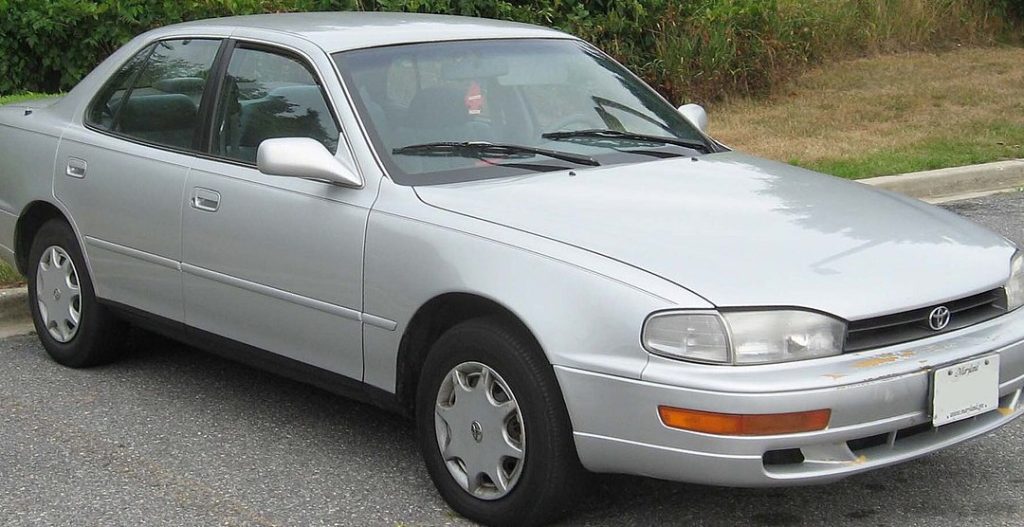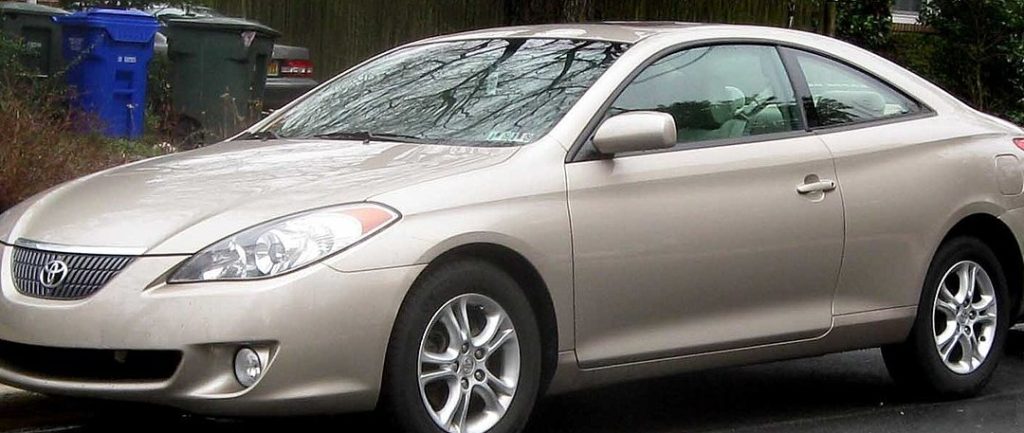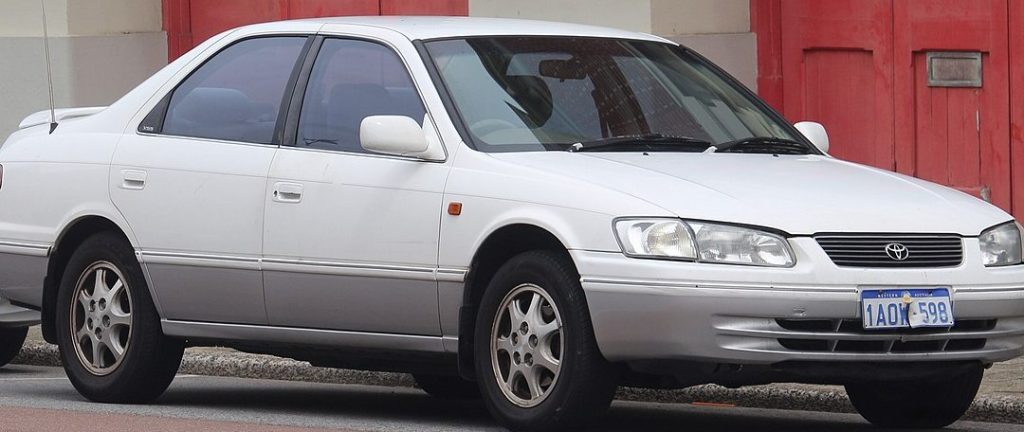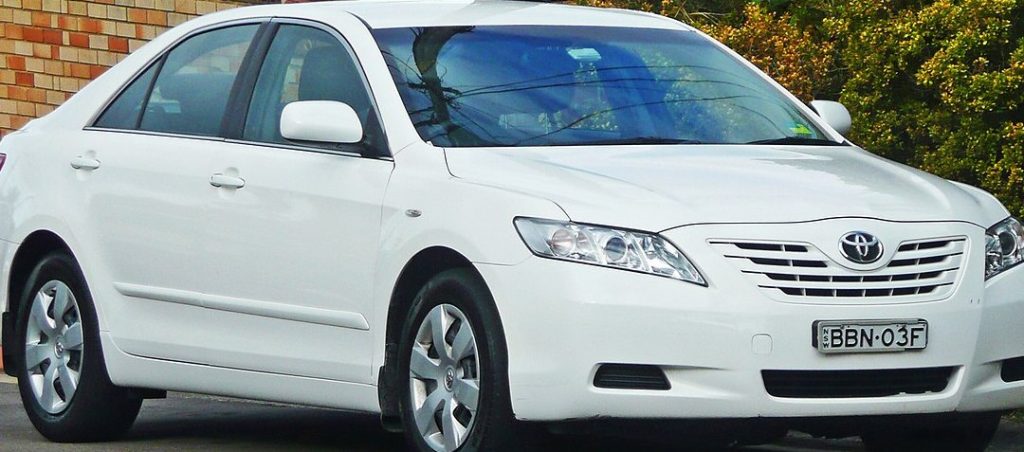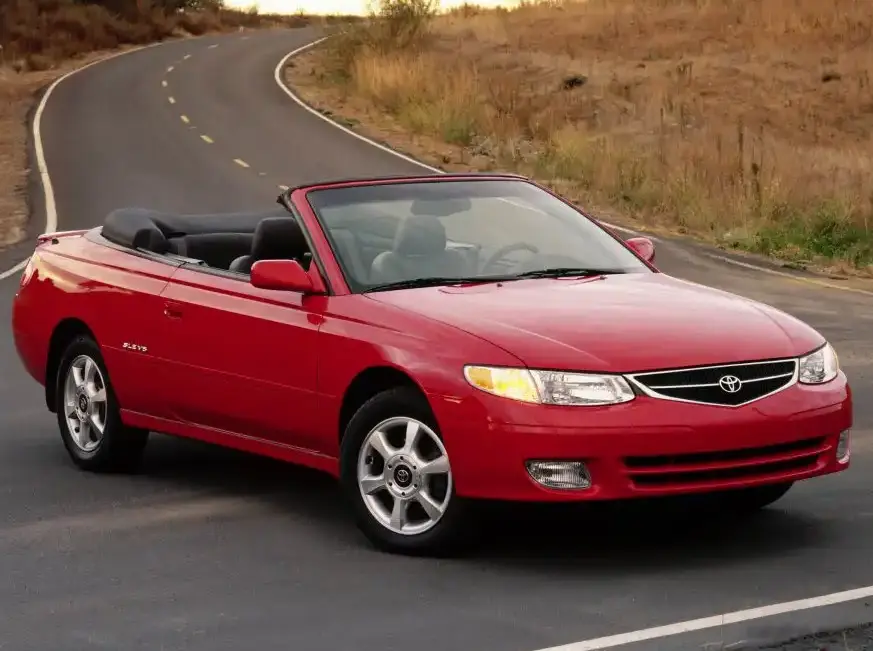
The Toyota Camry Solara Convertible, specifically the first generation (Mark V) produced between 1998 and 2001, represented Toyota’s foray into the mid-size convertible market. Positioned as a more stylish and open-air alternative to the traditional Camry sedan, the Solara aimed to attract buyers seeking a blend of comfort, reliability, and a touch of sporty flair. The 2.2i 16V variant, equipped with a 2.2-liter inline-four engine and a four-speed automatic transmission, served as the entry point into the Solara Convertible lineup, offering a balance between affordability and acceptable performance. It was built on the XV20 platform, shared with the fifth-generation Camry.
Technical Specifications
| Brand | Toyota |
| Model | Camry |
| Generation | Camry Solara I Convertible (Mark V) |
| Type (Engine) | 2.2i 16V (135 Hp) Automatic |
| Start of production | 1998 |
| End of production | 2001 |
| Powertrain Architecture | Internal Combustion engine |
| Body type | Cabriolet |
| Seats | 4 |
| Doors | 2 |
| Fuel consumption (urban) | 10.2 l/100 km (23.1 US mpg) |
| Fuel consumption (extra urban) | 7.8 l/100 km (30.2 US mpg) |
| Fuel Type | Petrol (Gasoline) |
| Weight-to-power ratio | 11.3 kg/Hp |
| Weight-to-torque ratio | 7.7 kg/Nm |
| Power | 135 Hp @ 5200 rpm |
| Power per litre | 62.4 Hp/l |
| Torque | 199 Nm @ 4400 rpm (146.77 lb.-ft. @ 4400 rpm) |
| Engine layout | Front, Transverse |
| Engine Model/Code | 5S-FE |
| Engine displacement | 2164 cm3 (132.06 cu. in.) |
| Number of cylinders | 4 |
| Engine configuration | Inline |
| Cylinder Bore | 87 mm (3.43 in.) |
| Piston Stroke | 91 mm (3.58 in.) |
| Compression ratio | 9.8:1 |
| Number of valves per cylinder | 4 |
| Fuel injection system | Multi-port manifold injection |
| Engine aspiration | Naturally aspirated |
| Valvetrain | DOHC |
| Engine oil capacity | 3.6 l (3.8 US qt | 3.17 UK qt) |
| Coolant capacity | 6.9 l (7.29 US qt | 6.07 UK qt) |
| Kerb Weight | 1525 kg (3362.05 lbs.) |
| Trunk (boot) space (minimum) | 249 l (8.79 cu. ft.) |
| Fuel tank capacity | 70 l (18.49 US gal | 15.4 UK gal) |
| Length | 4826 mm (190 in.) |
| Width | 1806 mm (71.1 in.) |
| Height | 1400 mm (55.12 in.) |
| Wheelbase | 2670 mm (105.12 in.) |
| Front track | 1544 mm (60.79 in.) |
| Rear track | 1519 mm (59.8 in.) |
| Ride height (ground clearance) | 135 mm (5.31 in.) |
| Drag coefficient (Cd) | 0.31 |
| Minimum turning circle | 11.6 m (38.06 ft.) |
| Drivetrain Architecture | Front wheel drive |
| Number of gears | 4 |
| Gearbox type | Automatic transmission ECT-i |
| Front suspension | Independent, McPherson with coil spring and anti-roll bar |
| Rear suspension | Independent multi-link with stabilizer |
| Front brakes | Ventilated discs |
| Rear brakes | Drum |
| Assisting systems | ABS |
| Steering type | Steering rack and pinion |
| Power steering | Hydraulic |
| Tires size | 205/65 R15 |
| Wheel rims size | 15 |
Powertrain & Engine Architecture
The heart of the 2.2i Solara Convertible was the 5S-FE engine, a 2.2-liter inline-four cylinder powerplant. This engine was a mainstay in Toyota’s lineup during the late 1990s and early 2000s, known for its reliability and relatively smooth operation. The 5S-FE featured a double overhead camshaft (DOHC) valvetrain with four valves per cylinder, contributing to its respectable power output for its displacement. Fuel delivery was handled by a multi-port fuel injection system, optimizing combustion efficiency. The engine produced 135 horsepower at 5200 rpm and 199 Nm (146.77 lb-ft) of torque at 4400 rpm. Paired with this engine was a four-speed automatic transmission, designated ECT-i (Electronically Controlled Transmission – intelligent). This transmission offered smooth shifts and was geared towards comfortable cruising rather than aggressive acceleration.
Driving Characteristics
The 2.2i automatic Solara Convertible offered a comfortable and relaxed driving experience. Acceleration was adequate for everyday driving, but not particularly brisk. The four-speed automatic transmission, while smooth, lacked the responsiveness of a manual gearbox or a more modern automatic with additional gears. The gear ratios were optimized for fuel efficiency and cruising, meaning the engine could feel strained during hard acceleration or when climbing hills. Compared to the optional 3.0-liter V6 engine available in other Solara trims, the 2.2i felt noticeably less powerful. However, the 2.2i offered better fuel economy and a lighter front-end weight, which slightly improved handling balance.
Equipment & Trim Levels
The base 2.2i Solara Convertible typically came equipped with features such as air conditioning, power windows and locks, a CD player, and cloth upholstery. Safety features included dual front airbags and ABS (Anti-lock Braking System). Optional extras included leather upholstery, a power-adjustable driver’s seat, upgraded audio systems, and a power-operated convertible top. The interior design was generally functional and comfortable, though not particularly luxurious. The dashboard layout was typical of Toyota vehicles from that era, with clearly labeled controls and a straightforward design.
Chassis & Braking
The Solara Convertible utilized an independent suspension system at all four wheels. The front suspension employed a McPherson strut design with coil springs and an anti-roll bar, while the rear suspension featured an independent multi-link setup with a stabilizer bar. This suspension configuration provided a comfortable ride quality and decent handling characteristics. Braking duties were handled by ventilated disc brakes at the front and drum brakes at the rear. While adequate for normal driving conditions, the rear drum brakes were a cost-saving measure and didn’t offer the same stopping power as disc brakes. The steering system was a rack-and-pinion setup with hydraulic power assistance, providing light and easy steering feel.
Market Reception & Comparison
The 2.2i Solara Convertible was generally well-received by critics as an affordable and reliable entry into the convertible market. However, its performance was often criticized as being underwhelming, particularly when compared to competitors offering more powerful engine options. Fuel economy was a strong point, and the Solara’s build quality and reliability were praised. Compared to the V6-powered Solara models, the 2.2i was significantly more affordable, making it an attractive option for budget-conscious buyers. However, the V6 offered a much more engaging driving experience and was better suited for those who prioritized performance.
Legacy
The Toyota Camry Solara Convertible, particularly the 2.2i variant, has proven to be a relatively reliable vehicle over the long term. The 5S-FE engine is known for its durability, and the automatic transmission, while not the most advanced, has generally held up well. Today, these vehicles can be found on the used car market at relatively affordable prices. While they may not offer the performance or features of more modern convertibles, they represent a comfortable, reliable, and stylish option for those seeking an open-air driving experience. Maintenance is generally straightforward, and parts availability remains good, making them a viable choice for enthusiasts and budget-minded buyers alike.