
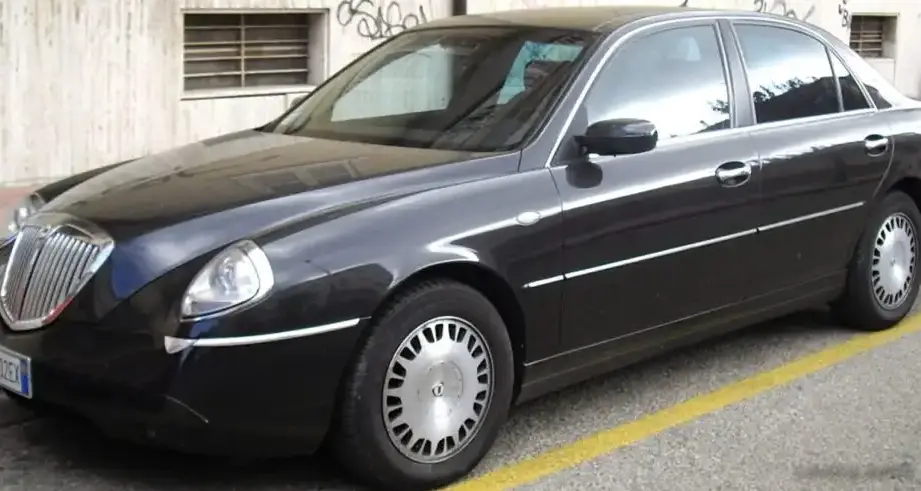
The Lancia Thesis 3.0 V6 (215 Hp) represents the flagship engine option for the second-generation Lancia Thesis, produced between March 2002 and May 2003. Positioned as the premium trim level, it aimed to offer a blend of Italian luxury, performance, and advanced technology within the executive sedan segment. The Thesis, as a whole, was Lancia’s attempt to recapture its former glory as a maker of sophisticated automobiles, and the 3.0 V6 was intended to be the halo model demonstrating the brand’s engineering capabilities. It was built on the 841 platform, shared with other Fiat Group vehicles, but distinguished itself through its unique styling and focus on comfort.
Technical Specifications
| Brand | Lancia |
| Model | Thesis |
| Generation | Thesis |
| Type (Engine) | 3.0 V6 (215 Hp) |
| Start of production | March, 2002 |
| End of production | May, 2003 |
| Powertrain Architecture | Internal Combustion engine |
| Body type | Sedan |
| Seats | 5 |
| Doors | 4 |
| Fuel consumption (urban) | 20.6 l/100 km (11.4 US mpg) |
| Fuel consumption (extra urban) | 9.1 l/100 km (25.8 US mpg) |
| Fuel consumption (combined) | 13.4 l/100 km (17.6 US mpg) |
| Fuel Type | Petrol (Gasoline) |
| Acceleration 0 – 100 km/h | 9.2 sec |
| Acceleration 0 – 62 mph | 9.2 sec |
| Acceleration 0 – 60 mph | 8.7 sec |
| Maximum speed | 234 km/h (145.4 mph) |
| Weight-to-power ratio | 8.1 kg/Hp |
| Weight-to-torque ratio | 6.7 kg/Nm |
| Power | 215 Hp @ 6300 rpm |
| Torque | 263 Nm @ 5000 rpm (193.98 lb.-ft. @ 5000 rpm) |
| Engine layout | Front, Transverse |
| Engine Model/Code | 841 A.000 |
| Engine displacement | 2959 cm3 (180.57 cu. in.) |
| Number of cylinders | 6 |
| Engine configuration | V-engine |
| Cylinder Bore | 93 mm (3.66 in.) |
| Piston Stroke | 72.6 mm (2.86 in.) |
| Compression ratio | 10:1 |
| Number of valves per cylinder | 4 |
| Fuel injection system | Multi-port manifold injection |
| Engine aspiration | Naturally aspirated engine |
| Valvetrain | DOHC |
| Engine oil capacity | 5.9 l (6.23 US qt | 5.19 UK qt) |
| Coolant capacity | 12.2 l (12.89 US qt | 10.73 UK qt) |
| Kerb Weight | 1750 kg (3858.09 lbs.) |
| Max. weight | 2260 kg (4982.45 lbs.) |
| Max load | 510 kg (1124.36 lbs.) |
| Trunk (boot) space – minimum | 480 l (16.95 cu. ft.) |
| Fuel tank capacity | 75 l (19.81 US gal | 16.5 UK gal) |
| Length | 4890 mm (192.52 in.) |
| Width | 1830 mm (72.05 in.) |
| Height | 1470 mm (57.87 in.) |
| Wheelbase | 2805 mm (110.43 in.) |
| Front track | 1570 mm (61.81 in.) |
| Rear track | 1540 mm (60.63 in.) |
| Drivetrain Architecture | Front wheel drive |
| Drive wheel | Front wheel drive |
| Number of gears | 5 |
| Gearbox type | automatic transmission |
| Front suspension | Spring Strut |
| Rear suspension | Coil spring |
| Front brakes | Ventilated discs |
| Rear brakes | Ventilated discs |
| Assisting systems | ABS (Anti-lock braking system) |
| Steering type | Steering rack and pinion |
| Power steering | Hydraulic Steering |
| Tires size | 215/60 R16 |
Powertrain & Engine Architecture
The heart of the Thesis 3.0 V6 is the 841 A.000 engine, a 60-degree V6 displacing 2959 cc (180.6 cubic inches). This engine is a naturally aspirated design featuring a cast iron block and aluminum cylinder heads. It utilizes a multi-port fuel injection system and a double overhead camshaft (DOHC) valvetrain with four valves per cylinder. The engine produces 215 horsepower at 6300 rpm and 263 Nm (194 lb-ft) of torque at 5000 rpm. The engine’s design prioritized smooth operation and refinement over outright performance. The five-speed automatic transmission was sourced from Jatco, and was chosen to complement the engine’s character, providing comfortable and effortless cruising. While not a particularly advanced transmission by modern standards, it was known for its reliability and smooth shifts.
Driving Characteristics
The Thesis 3.0 V6 Automatic offered a distinctly grand touring experience. Acceleration to 60 mph took approximately 8.7 seconds, and it could achieve a top speed of 145 mph. However, the focus wasn’t on blistering speed, but rather on providing a comfortable and refined ride. The automatic transmission, while smooth, wasn’t particularly quick to downshift, and the gear ratios were geared towards relaxed cruising. Compared to the manual transmission versions, the automatic felt slightly less responsive. The 3.0 V6 offered a significant performance upgrade over the lower-displacement four-cylinder engines available in the Thesis range, but it lacked the sporting edge of potential higher-performance variants that were considered but never materialized.
Equipment & Trim Levels
The 3.0 V6 Thesis came standard with a high level of equipment, befitting its flagship status. This included leather upholstery, automatic climate control, power-adjustable front seats, a premium audio system, and alloy wheels. Optional extras included a navigation system, sunroof, and upgraded sound system. The interior was designed to be luxurious and comfortable, with a focus on high-quality materials and a spacious cabin. The dashboard featured wood trim and a generally elegant design, reflecting Lancia’s heritage of Italian style.
Chassis & Braking
The Thesis utilized a front-engine, front-wheel-drive layout. Suspension consisted of a spring strut setup at the front and a coil spring arrangement at the rear. The braking system featured ventilated discs on all four wheels, along with ABS (Anti-lock Braking System) as standard. The suspension was tuned for comfort, providing a smooth and compliant ride. The steering was hydraulic power-assisted, offering a light and easy driving experience. The chassis was designed to provide a stable and secure feel, even at higher speeds.
Market Reception & Comparison
The Lancia Thesis 3.0 V6 was generally well-received by critics, who praised its luxurious interior, comfortable ride, and refined engine. However, it was also criticized for its relatively high price and its lack of sporting character compared to some of its German rivals. Fuel economy was also a concern, with combined fuel consumption figures of around 17.6 US mpg. Compared to the 2.0 and 2.4 liter four-cylinder versions, the 3.0 V6 offered significantly more power and refinement, but at a higher cost and with increased fuel consumption. The 3.0 V6 was aimed at buyers who prioritized comfort and luxury over outright performance.
Legacy
The Lancia Thesis, and particularly the 3.0 V6 variant, remains a relatively rare and sought-after vehicle among enthusiasts. The 841 A.000 V6 engine is generally considered to be a reliable unit, although maintenance can be expensive due to the engine’s complexity and the limited availability of parts. The automatic transmission, while robust, requires regular servicing to ensure smooth operation. Today, the Thesis 3.0 V6 represents a unique and stylish alternative to the more common executive sedans of its era, offering a taste of Italian luxury and engineering.
