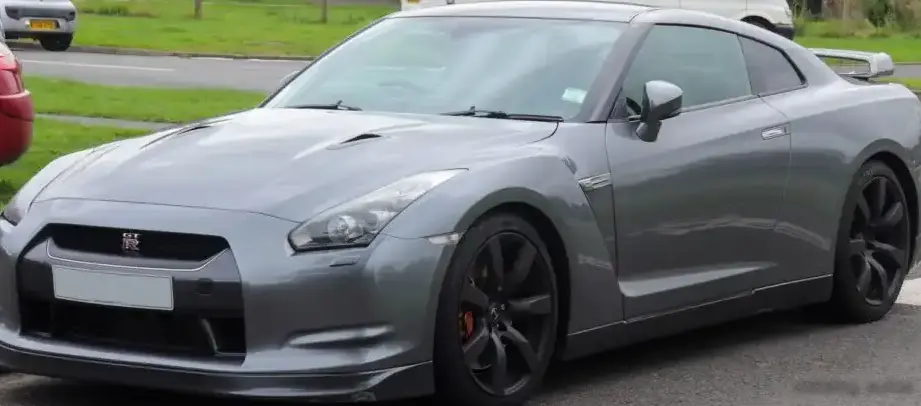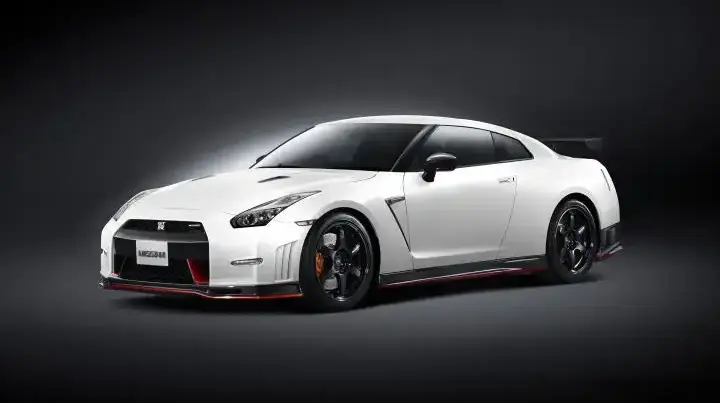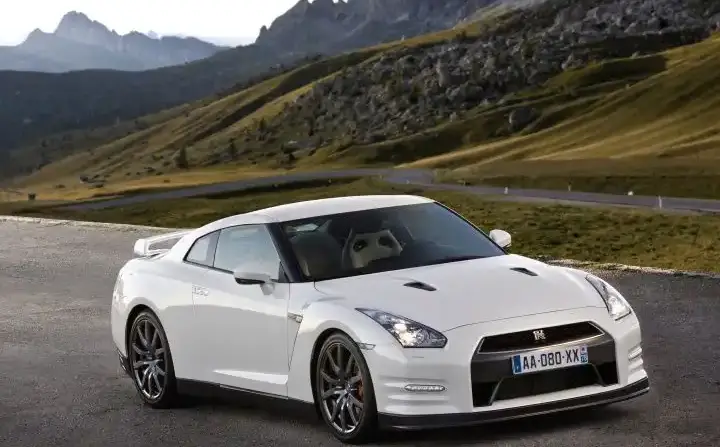
The Nissan GT-R, specifically the R35 model produced from 2012 to 2016 following the 2010 facelift, represents a significant evolution in Japanese performance car engineering. This iteration, powered by the 3.8-liter VR38DETT V6 engine producing 550 horsepower and paired with a six-speed dual-clutch transmission (DCT) and all-wheel drive, cemented the GT-R’s reputation as a world-class sports car capable of challenging established European marques. Positioned as the flagship model within the R35 range during these years, it offered a no-compromise performance experience, focusing on speed, handling, and advanced technology. The 2010 facelift brought subtle but important changes to the exterior styling, interior refinement, and engine management, further enhancing the GT-R’s overall appeal.
Technical Specifications
| Brand | Nissan |
| Model | GT-R |
| Generation | GT-R (R35, facelift 2010) |
| Type (Engine) | 3.8 V6 (550 Hp) AWD DCT |
| Start of production | January, 2012 |
| End of production | August, 2016 |
| Powertrain Architecture | Internal Combustion engine |
| Body type | Coupe |
| Seats | 4 |
| Doors | 2 |
| Fuel consumption (economy) – urban (NEDC) | 17 l/100 km (13.8 US mpg, 16.6 UK mpg, 5.9 km/l) |
| Fuel consumption (economy) – extra urban (NEDC) | 8.8 l/100 km (26.7 US mpg, 32.1 UK mpg, 11.4 km/l) |
| Fuel consumption (economy) – combined (NEDC) | 11.8 l/100 km (19.9 US mpg, 23.9 UK mpg, 8.5 km/l) |
| CO2 emissions (NEDC) | 275 g/km |
| Fuel Type | Petrol (Gasoline) |
| Acceleration 0 – 100 km/h | 2.8 sec |
| Acceleration 0 – 62 mph | 2.8 sec |
| Acceleration 0 – 60 mph | 2.7 sec |
| Maximum speed | 315 km/h (195.73 mph) |
| Emission standard | Euro 5 |
| Weight-to-power ratio | 3.2 kg/Hp, 316.1 Hp/tonne |
| Weight-to-torque ratio | 2.8 kg/Nm, 363.2 Nm/tonne |
| Power | 550 Hp @ 6400 rpm |
| Power per litre | 144.8 Hp/l |
| Torque | 632 Nm @ 3200-5800 rpm (466.14 lb.-ft. @ 3200-5800 rpm) |
| Engine layout | Front, Longitudinal |
| Engine Model/Code | VR38DETT |
| Engine displacement | 3799 cm3 (231.83 cu. in.) |
| Number of cylinders | 6 |
| Engine configuration | V-engine |
| Cylinder Bore | 95.5 mm (3.76 in.) |
| Piston Stroke | 88.4 mm (3.48 in.) |
| Compression ratio | 9:1 |
| Number of valves per cylinder | 4 |
| Fuel injection system | Multi-port manifold injection |
| Engine aspiration | Twin-Turbo, Intercooler |
| Valvetrain | DOHC |
| Engine oil capacity | 5 l (5.28 US qt | 4.4 UK qt) |
| Coolant | 11.3 l (11.94 US qt | 9.94 UK qt) |
| Kerb Weight | 1740 kg (3836.04 lbs.) |
| Max. weight | 2200 kg (4850.17 lbs.) |
| Max load | 460 kg (1014.13 lbs.) |
| Trunk (boot) space – minimum | 315 l (11.12 cu. ft.) |
| Fuel tank capacity | 74 l (19.55 US gal | 16.28 UK gal) |
| Length | 4670 mm (183.86 in.) |
| Width | 1895 mm (74.61 in.) |
| Height | 1370 mm (53.94 in.) |
| Wheelbase | 2780 mm (109.45 in.) |
| Front track | 1590 mm (62.6 in.) |
| Rear (Back) track | 1600 mm (62.99 in.) |
| Ride height (ground clearance) | 105 mm (4.13 in.) |
| Drag coefficient (Cd) | 0.26 |
| Minimum turning circle (turning diameter) | 11.4 m (37.4 ft.) |
| Front brakes | Ventilated discs, 390 mm |
| Rear brakes | Ventilated discs, 380 mm |
| Front tires | 255/40 R20 |
| Rear tires | 285/35 R20 |
Powertrain & Engine Architecture
At the heart of the 2012-2016 GT-R lies the VR38DETT 3.8-liter V6 engine. This engine is notable for its hand-assembled nature, with each engine built by a master craftsman at Nissan’s Yokohama plant. The “DETT” designation signifies dual turbochargers, which are positioned to minimize turbo lag and provide a broad, flat torque curve. The engine utilizes a multi-port fuel injection system and a double overhead camshaft (DOHC) valvetrain. The 9:1 compression ratio is a compromise between performance and reliability, allowing for the use of readily available 91 octane gasoline. The six-speed dual-clutch transmission (DCT) is a crucial component of the GT-R’s performance, offering incredibly fast and seamless gear changes. Unlike traditional automatic transmissions, the DCT provides a more direct connection between the engine and the wheels, enhancing responsiveness.
Driving Characteristics
The 550 horsepower and 466 lb-ft of torque, combined with the all-wheel-drive system, deliver breathtaking acceleration. The GT-R can sprint from 0 to 60 mph in around 2.7 seconds, and its top speed is electronically limited to 195.73 mph. The DCT’s programming prioritizes quick shifts, particularly during aggressive driving. While the power delivery is immense, the GT-R is surprisingly manageable thanks to the sophisticated all-wheel-drive system, which continuously adjusts the torque split between the front and rear axles to optimize traction. Compared to earlier R35 models, the 2010 facelifted version benefited from revised suspension tuning and improved engine management, resulting in a more refined and predictable driving experience. The DCT, while incredibly fast, can feel slightly jerky at low speeds compared to a conventional automatic.
Equipment & Trim Levels
The GT-R, even in its base form, was exceptionally well-equipped. Standard features included leather upholstery, heated front seats, a premium audio system, navigation, and a suite of driver-assistance technologies. Optional extras included Recaro seats, carbon-fiber interior trim, and a variety of exterior customization options. The interior design, while functional, was not overly luxurious, prioritizing a driver-focused environment. The dashboard layout is relatively straightforward, with a prominent central display providing information on vehicle performance and system settings.
Chassis & Braking
The GT-R’s chassis is a rigid space frame constructed from high-strength steel. This provides a solid foundation for the suspension and contributes to the car’s exceptional handling. The suspension consists of double wishbones at the front and an independent multi-link setup at the rear, both with transverse stabilizers to reduce body roll. Braking performance is equally impressive, with large ventilated discs at all four corners providing ample stopping power. The GT-R’s braking system incorporates Anti-lock Braking System (ABS) for enhanced safety.
Market Reception & Comparison
The Nissan GT-R was widely praised by automotive critics for its incredible performance and technological sophistication. It was often compared favorably to established sports cars from Porsche, Ferrari, and Lamborghini, often at a significantly lower price point. However, the GT-R’s fuel economy (around 19.9 US mpg combined) was relatively poor compared to some of its competitors. Reliability was generally good, although the complex engine and transmission required diligent maintenance. Compared to other R35 variants, the 550 hp model represented the sweet spot in the lineup, offering a substantial performance upgrade over the earlier models without the extreme price tag of the later NISMO versions.
Legacy
The 2012-2016 Nissan GT-R (R35) remains a highly sought-after performance car in the used market. Its combination of raw speed, advanced technology, and relative affordability has made it a favorite among enthusiasts. The VR38DETT engine, while complex, has proven to be reasonably durable when properly maintained. The GT-R’s impact on the automotive landscape is undeniable, forcing established manufacturers to re-evaluate their performance offerings and demonstrating that a Japanese automaker could compete with the best in the world. Today, well-maintained examples command premium prices, reflecting their enduring appeal and iconic status.