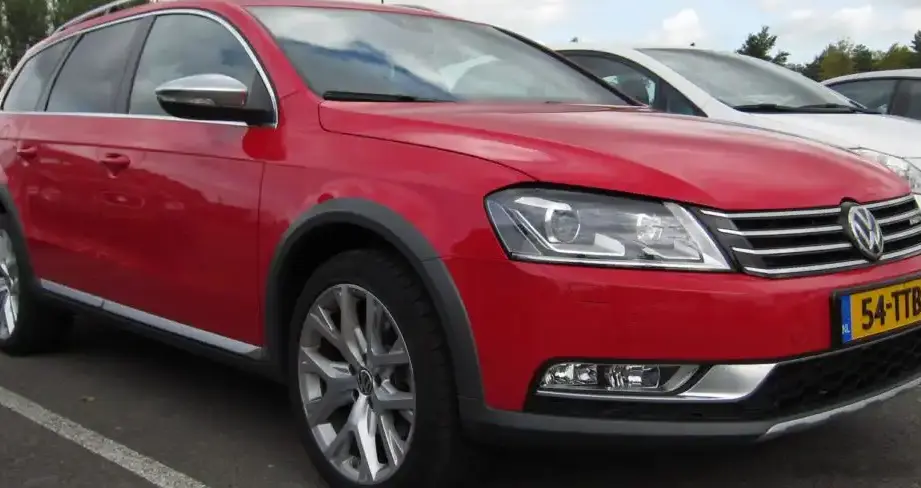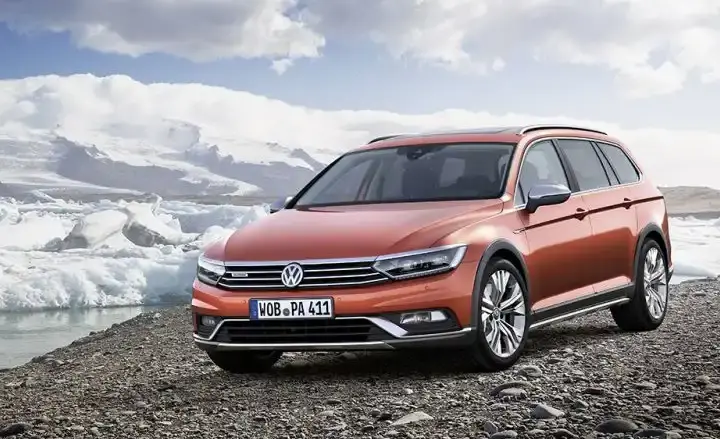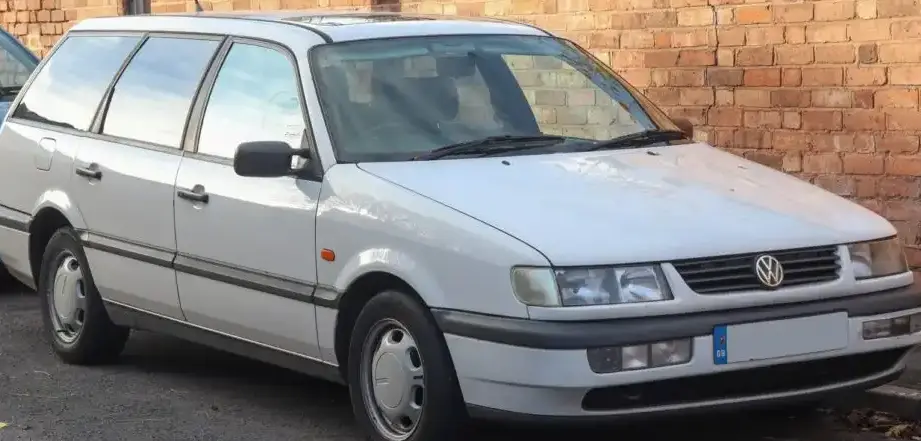
The Volkswagen Passat Variant (B4) 1.9 TDI, producing 90 horsepower, was a popular choice in the European market from 1993 to 1997. Positioned as an economical and practical option within the B4 Passat range, it offered a blend of fuel efficiency, cargo space, and diesel durability. This variant occupied a middle ground in the lineup, slotting below the more powerful gasoline engines and above the base-level diesel offerings. It was a key component of Volkswagen’s strategy to provide a versatile family vehicle appealing to a broad customer base.
Technical Specifications
| Brand | Volkswagen |
| Model | Passat |
| Generation | Passat Variant (B4) |
| Type (Engine) | 1.9 TDI (90 Hp) |
| Start of production | 1993 |
| End of production | 1997 |
| Powertrain Architecture | Internal Combustion engine |
| Body type | Station wagon (estate) |
| Seats | 5 |
| Doors | 5 |
| Fuel consumption (urban) | 6.1 l/100 km (38.6 US mpg, 46.3 UK mpg, 16.4 km/l) |
| Fuel consumption (extra urban) | 4.2 l/100 km (56 US mpg, 67.3 UK mpg, 23.8 km/l) |
| Fuel consumption (combined) | 5.4 l/100 km (43.6 US mpg, 52.3 UK mpg, 18.5 km/l) |
| Fuel Type | Diesel |
| Acceleration 0 – 100 km/h | 14.4 sec |
| Acceleration 0 – 62 mph | 14.4 sec |
| Acceleration 0 – 60 mph | 13.7 sec |
| Maximum speed | 160 km/h (99.42 mph) |
| Emission standard | Euro 2 |
| Weight-to-power ratio | 14.3 kg/Hp, 70 Hp/tonne |
| Weight-to-torque ratio | 6.4 kg/Nm, 157.2 Nm/tonne |
| Power | 90 Hp @ 4000 rpm |
| Power per litre | 47.5 Hp/l |
| Torque | 202 Nm @ 1900 rpm (148.99 lb.-ft. @ 1900 rpm) |
| Engine layout | Front, Transverse |
| Engine Model/Code | 1Z |
| Engine displacement | 1896 cm3 (115.7 cu. in.) |
| Number of cylinders | 4 |
| Engine configuration | Inline |
| Cylinder Bore | 79.5 mm (3.13 in.) |
| Piston Stroke | 95.5 mm (3.76 in.) |
| Compression ratio | 19.5:1 |
| Number of valves per cylinder | 2 |
| Fuel injection system | Direct injection |
| Engine aspiration | Turbocharger, Intercooler |
| Valvetrain | SOHC |
| Engine oil capacity | 4.3 l (4.54 US qt | 3.78 UK qt) |
| Coolant | 6.5 l (6.87 US qt | 5.72 UK qt) |
| Kerb Weight | 1285 kg (2832.94 lbs.) |
| Max. weight | 1820 kg (4012.41 lbs.) |
| Max load | 535 kg (1179.47 lbs.) |
| Trunk (boot) space – minimum | 465 l (16.42 cu. ft.) |
| Trunk (boot) space – maximum | 1500 l (52.97 cu. ft.) |
| Fuel tank capacity | 70 l (18.49 US gal | 15.4 UK gal) |
| Max. roof load | 75 kg (165.35 lbs.) |
| Permitted trailer load with brakes (12%) | 1200 kg (2645.55 lbs.) |
| Permitted trailer load without brakes | 600 kg (1322.77 lbs.) |
| Length | 4595 mm (180.91 in.) |
| Width | 1720 mm (67.72 in.) |
| Height | 1445 mm (56.89 in.) |
| Wheelbase | 2625 mm (103.35 in.) |
| Front track | 1479-1485 mm (58.23 – 58.46 in.) |
| Rear (Back) track | 1422-1428 mm (55.98 – 56.22 in.) |
| Front overhang | 915 mm (36.02 in.) |
| Rear overhang | 1055 mm (41.54 in.) |
| Minimum turning circle | 10.7 m (35.1 ft.) |
| Drivetrain Architecture | The Internal combustion engine (ICE) drives the front wheels of the vehicle. |
| Drive wheel | Front wheel drive |
| Number of gears and type of gearbox | 5 gears, manual transmission |
| Front suspension | Coil spring, Wishbone, Transverse stabilizer |
| Rear suspension | Wishbone, Transverse stabilizer, Coil spring |
| Front brakes | Disc |
| Rear brakes | Drum |
| Steering type | Steering rack and pinion |
| Power steering | Hydraulic Steering |
| Tires size | 185/65 R14; 205/50 R15 |
| Wheel rims size | 6J x 14; 6J x 15 |
INTRODUCTION
The Volkswagen Passat Variant (B4) 1.9 TDI 90 hp, produced between 1993 and 1997, was a station wagon variant of the popular B4 Passat. Built on the 1HX0/A3 platform, it represented Volkswagen’s commitment to offering practical, fuel-efficient vehicles for families. The “TDI” designation signified the use of Volkswagen’s direct-injection diesel technology, which was becoming increasingly prevalent in Europe due to its fuel economy and reduced emissions compared to older diesel engines. This particular variant aimed to provide a balance between affordability, practicality, and reasonable performance, making it a common sight on European roads.
Powertrain & Engine Architecture
The heart of this Passat Variant was the 1.9-liter, inline-four cylinder diesel engine, specifically the 1Z engine code. This engine featured direct fuel injection, a technology that significantly improved combustion efficiency and reduced emissions. The 1Z engine utilized a Bosch VE injection pump, delivering fuel directly into the cylinders at extremely high pressure. The engine also incorporated a turbocharger with an intercooler, boosting power output to 90 horsepower and 202 Nm (148.99 lb-ft) of torque. The engine employed a single overhead camshaft (SOHC) valvetrain operating two valves per cylinder. The engine was transversely mounted in the front of the vehicle. The transmission was a five-speed automatic gearbox, designed to provide smooth and convenient shifting. This automatic transmission, while offering ease of use, was not known for its sportiness and was geared towards maximizing fuel efficiency.
Driving Characteristics
The 1.9 TDI 90 hp automatic Passat Variant offered a comfortable, if not particularly exhilarating, driving experience. Acceleration was modest, with a 0-60 mph time of around 13.7 seconds. The automatic transmission, while smooth, contributed to a noticeable delay in response compared to the manual transmission versions. The engine’s torque, however, was readily available from low RPMs, making it suitable for everyday driving and hauling loads. The gear ratios were optimized for fuel economy rather than outright performance. Compared to the more powerful gasoline engines (like the VR6) or even the later, higher-output TDI variants, this 90 hp version felt noticeably slower. However, it excelled in fuel efficiency, achieving combined fuel economy figures of around 43.6 US mpg.
Equipment & Trim Levels
The 1.9 TDI 90 hp automatic Passat Variant typically came with a reasonable level of standard equipment. This included power steering, central locking, electric front windows, and a basic audio system. Interior upholstery was typically cloth, with a functional, if somewhat plain, dashboard layout. Optional extras included air conditioning, alloy wheels, a sunroof, and upgraded audio systems. Trim levels varied slightly depending on the market, but generally, this variant represented a mid-range offering, providing a good balance of features and affordability. Safety features were relatively basic for the time, including seatbelts and a driver’s airbag.
Chassis & Braking
The B4 Passat Variant featured a MacPherson strut front suspension and a semi-independent wishbone rear suspension. The suspension was tuned for comfort, providing a relatively smooth ride, although it could feel somewhat soft in corners. The front brakes were ventilated discs, while the rear brakes were drums. This configuration was typical for vehicles in this weight class during the 1990s. A transverse stabilizer bar was fitted to both the front and rear axles to reduce body roll. The steering was a hydraulic power-assisted rack and pinion system, providing reasonable steering feel.
Market Reception & Comparison
The 1.9 TDI 90 hp automatic Passat Variant was generally well-received by critics and consumers alike. It was praised for its fuel efficiency, practicality, and durability. However, the automatic transmission was sometimes criticized for its sluggishness. Compared to the manual transmission versions, the automatic offered less driver engagement and slightly lower fuel economy. Against the more powerful gasoline engines, it lacked outright performance, but it offered significantly better fuel economy and lower running costs. The 1.9 TDI engine, in general, was considered a reliable and robust unit, making this variant a popular choice for long-distance drivers and families.
Legacy
The 1.9 TDI engine, particularly the 1Z variant, has earned a reputation for its longevity and reliability. Many examples of the Passat Variant (B4) 1.9 TDI are still on the road today, testament to the engine’s durability. While maintenance costs can increase with age, the engine itself is relatively straightforward to repair. In the used car market, these vehicles are often sought after by those looking for an affordable, economical, and practical estate car. The combination of the TDI engine and the spacious Variant body style continues to appeal to a niche market of drivers who value fuel efficiency and practicality over outright performance.