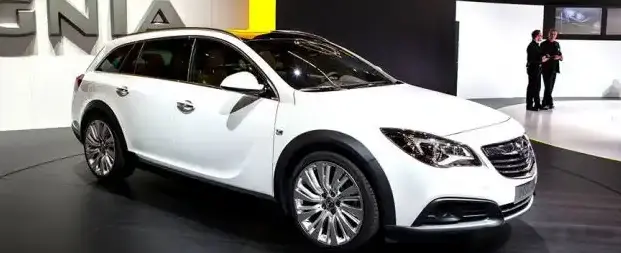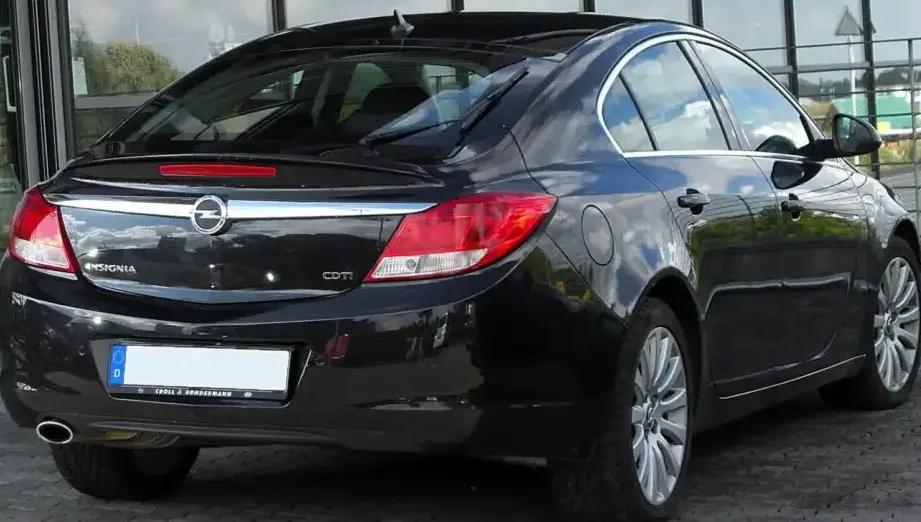
The Opel Insignia Hatchback (A) 2.0 CDTI 4×4 DPF Automatic, produced from 2008 to October 2009, represented a significant offering in the mid-size segment for the German automaker. Positioned as a premium trim within the first generation (A) Insignia lineup, it combined a potent diesel engine with all-wheel drive and the convenience of an automatic transmission. This variant aimed to appeal to drivers seeking a blend of performance, practicality, and all-weather capability. The Insignia itself was Opel’s answer to established rivals like the Ford Mondeo, Volkswagen Passat, and Peugeot 407, and was a key model in Opel’s attempt to move upmarket and establish a stronger brand identity.
Technical Specifications
| Brand | Opel |
| Model | Insignia |
| Generation | Insignia Hatchback (A) |
| Type (Engine) | 2.0 CDTI (190 Hp) 4×4 DPF Automatic |
| Start of production | 2008 |
| End of production | October, 2009 |
| Powertrain Architecture | Internal Combustion engine |
| Body type | Hatchback |
| Seats | 5 |
| Doors | 5 |
| Fuel consumption (combined) | 7.7 l/100 km (30.5 US mpg, 36.7 UK mpg, 13 km/l) |
| Fuel Type | Diesel |
| Acceleration 0 – 100 km/h | 9.1 sec |
| Acceleration 0 – 62 mph | 9.1 sec |
| Acceleration 0 – 60 mph | 8.6 sec |
| Maximum speed | 221 km/h (137.32 mph) |
| Emission standard | Euro 4 |
| Power | 190 Hp @ 4500 rpm |
| Power per litre | 97.1 Hp/l |
| Torque | 400 Nm @ 2000 rpm (295.02 lb.-ft. @ 2000 rpm) |
| Engine layout | Front, Transverse |
| Engine Model/Code | A20DTR |
| Engine displacement | 1956 cm3 (119.36 cu. in.) |
| Number of cylinders | 4 |
| Engine configuration | Inline |
| Cylinder Bore | 83 mm (3.27 in.) |
| Piston Stroke | 90.4 mm (3.56 in.) |
| Number of valves per cylinder | 4 |
| Fuel injection system | Diesel Commonrail |
| Engine aspiration | Turbocharger, Intercooler |
| Valvetrain | OHC |
| Engine oil capacity | 4.5 l (4.76 US qt | 3.96 UK qt) |
| Coolant | 9 l (9.51 US qt | 7.92 UK qt) |
| Trunk (boot) space – minimum | 520 l (18.36 cu. ft.) |
| Trunk (boot) space – maximum | 1465 l (51.74 cu. ft.) |
| Fuel tank capacity | 70 l (18.49 US gal | 15.4 UK gal) |
| Length | 4830 mm (190.16 in.) |
| Width | 1856 mm (73.07 in.) |
| Height | 1498 mm (58.98 in.) |
| Wheelbase | 2737 mm (107.76 in.) |
| Front track | 1585 mm (62.4 in.) |
| Rear (Back) track | 1587 mm (62.48 in.) |
| Ride height (ground clearance) | 160 mm (6.3 in.) |
| Minimum turning circle | 10.8 m (35.43 ft.) |
| Drive wheel | All wheel drive (4×4) |
| Number of gears and type of gearbox | 6 gears, automatic transmission |
| Front brakes | Ventilated discs |
| Rear brakes | Disc |
| Assisting systems | ABS (Anti-lock braking system) |
| Tires size | 225/55 R17; 245/45 R18 |
| Wheel rims size | 17; 18 |
Powertrain & Engine Architecture
At the heart of the Insignia 2.0 CDTI 4×4 was the A20DTR engine, a 1.956-liter inline-four cylinder diesel. This engine was a common sight in various Opel and Vauxhall models of the era, known for its robust construction and relatively good fuel economy. The A20DTR utilized a common rail direct injection system, delivering fuel at extremely high pressures for optimized combustion. A turbocharger with an intercooler further enhanced performance, boosting power output to 190 horsepower and 400 Nm (295 lb-ft) of torque. The engine featured an overhead camshaft (OHC) valvetrain with four valves per cylinder. The automatic transmission was a six-speed unit, providing smooth shifts and contributing to the car’s overall refinement. The inclusion of a Diesel Particulate Filter (DPF) was crucial for meeting Euro 4 emissions standards.
Driving Characteristics
The 190 hp 2.0 CDTI automatic powertrain delivered a respectable driving experience. Acceleration from 0-60 mph took around 8.6 seconds, making it adequately quick for everyday driving and overtaking maneuvers. The automatic transmission, while smooth, wasn’t particularly sporty, prioritizing comfort over rapid gear changes. Compared to the manual transmission versions of the same engine, the automatic offered slightly reduced acceleration due to inherent transmission losses. The all-wheel drive system provided enhanced traction, particularly in adverse weather conditions, making the Insignia a confident handler on slippery surfaces. The torque curve was relatively flat, providing good pulling power across a wide range of engine speeds. However, it didn’t offer the same level of responsiveness as higher-output versions like the 2.8L V6 Turbo.
Equipment & Trim Levels
The 2.0 CDTI 4×4 Automatic typically came well-equipped, reflecting its position as a higher-end trim level. Standard features often included climate control, alloy wheels (typically 17 or 18 inch), a CD/radio system with MP3 compatibility, electric windows and mirrors, and remote central locking. Safety features such as ABS, traction control, and multiple airbags were also standard. Optional extras could include leather upholstery, a sunroof, parking sensors, and a more advanced navigation system. Interior trim generally featured comfortable cloth seats, with the option of upgrading to leather. The dashboard layout was modern for its time, with a focus on ergonomics and ease of use.
Chassis & Braking
The Insignia’s chassis was designed to provide a balance between comfort and handling. The front suspension utilized MacPherson struts, while the rear employed a multi-link setup. This configuration helped to absorb bumps and provide a stable ride. The 4×4 system employed a multi-plate clutch to distribute torque between the front and rear axles as needed. Braking duties were handled by ventilated discs at the front and solid discs at the rear. ABS (Anti-lock Braking System) was standard, enhancing braking performance and stability. Stabilizer bars were fitted to both the front and rear axles to reduce body roll during cornering.
Market Reception & Comparison
The Opel Insignia 2.0 CDTI 4×4 Automatic was generally well-received by automotive critics. It was praised for its comfortable ride, spacious interior, and strong diesel engine. The all-wheel drive system was also seen as a significant advantage, particularly in regions with harsh winters. However, some critics noted that the automatic transmission could feel a bit sluggish at times, and the steering lacked some of the feedback found in rivals like the Ford Mondeo. Compared to the 1.8L petrol versions, the 2.0 CDTI offered significantly better fuel economy and torque. Against the higher-powered V6 models, it provided a more economical and practical option, albeit with less outright performance.
Legacy
The A20DTR engine, while generally reliable, is known to have some potential issues, including DPF clogging (particularly with frequent short journeys) and occasional turbocharger failures. However, with regular maintenance and careful driving, it can prove to be a durable and long-lasting unit. Today, the Insignia 2.0 CDTI 4×4 Automatic can be found on the used car market at relatively affordable prices. It remains a practical and comfortable family car, offering a good balance of performance, economy, and all-weather capability. Its all-wheel drive system and robust diesel engine continue to appeal to buyers seeking a dependable and versatile vehicle.