
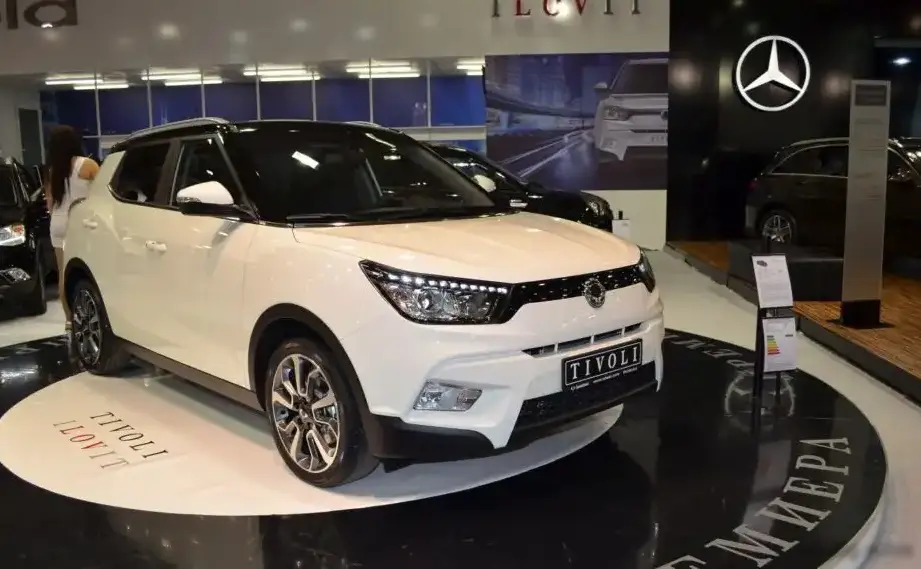
The SsangYong Tivoli 1.6 VGT, producing 115 horsepower, was a key variant in the first generation of the Tivoli, produced from 2015 to 2019. Introduced as SsangYong sought to re-establish its presence in the European and global crossover SUV market, the Tivoli aimed to offer a blend of affordability, practicality, and a relatively modern feature set. This particular engine and transmission combination represented a mid-range offering within the Tivoli lineup, positioned between the base gasoline engine and potentially higher-output diesel options depending on the market. The Tivoli, built on SsangYong’s X100 platform, was the brand’s first entry into the compact SUV segment and was intended to appeal to families and individuals seeking a versatile and economical vehicle.
Technical Specifications
| Brand | SsangYong |
| Model | Tivoli |
| Generation | Tivoli |
| Type (Engine) | 1.6 VGT (115 Hp) |
| Start of production | 2015 |
| End of production | 2019 |
| Powertrain Architecture | Internal Combustion engine |
| Body type | SUV, Crossover |
| Seats | 5 |
| Doors | 5 |
| Fuel consumption (urban) | 5.1 l/100 km (46.1 US mpg) |
| Fuel consumption (extra urban) | 3.9 l/100 km (60.3 US mpg) |
| Fuel consumption (combined) | 4.3 l/100 km (54.7 US mpg) |
| CO2 emissions | 113 g/km |
| Fuel Type | Diesel |
| Maximum speed | 175 km/h (108.74 mph) |
| Emission standard | Euro 6 |
| Weight-to-power ratio | 11.8 kg/Hp |
| Weight-to-torque ratio | 4.5 kg/Nm |
| Power | 115 Hp @ 3400-4000 rpm |
| Torque | 300 Nm @ 1500-2500 rpm (221.27 lb.-ft.) |
| Engine layout | Front, Transverse |
| Engine Model/Code | D16DTF |
| Engine displacement | 1597 cm3 (97.45 cu. in.) |
| Number of cylinders | 4 |
| Engine configuration | Inline |
| Cylinder Bore | 76 mm (2.99 in.) |
| Piston Stroke | 88 mm (3.46 in.) |
| Compression ratio | 15.5:1 |
| Number of valves per cylinder | 4 |
| Fuel injection system | Diesel Commonrail |
| Engine aspiration | Turbocharger, Intercooler |
| Engine oil capacity | 5 l (5.28 US qt | 4.4 UK qt) |
| Coolant capacity | 7.5 l (7.93 US qt | 6.6 UK qt) |
| Kerb Weight | 1355 kg (2987.26 lbs.) |
| Max. weight | 1920 kg (4232.88 lbs.) |
| Max load | 565 kg (1245.61 lbs.) |
| Trunk (boot) space – minimum | 423 l (14.94 cu. ft.) |
| Fuel tank capacity | 47 l (12.42 US gal | 10.34 UK gal) |
| Permitted trailer load with brakes (12%) | 1500 kg (3306.93 lbs.) |
| Permitted trailer load without brakes | 500 kg (1102.31 lbs.) |
| Length | 4202 mm (165.43 in.) |
| Width | 1798 mm (70.79 in.) |
| Height | 1590 mm (62.6 in.) |
| Wheelbase | 2600 mm (102.36 in.) |
| Front track | 1555 mm (61.22 in.) |
| Rear track | 1555 mm (61.22 in.) |
| Front overhang | 865 mm (34.06 in.) |
| Rear overhang | 737 mm (29.02 in.) |
| Ride height (ground clearance) | 167 mm (6.57 in.) |
| Minimum turning circle | 10.6 m (34.78 ft.) |
| Drivetrain Architecture | Front wheel drive |
| Number of gears | 6 |
| Gearbox type | Manual transmission |
| Front suspension | Independent type McPherson |
| Rear suspension | Torsion |
| Front brakes | Ventilated discs |
| Rear brakes | Disc |
| Tires size | 205/60 R16; 215/45 R18 |
| Wheel rims size | 16; 18 |
Powertrain & Engine Architecture
The heart of the Tivoli 1.6 VGT was the D16DTF engine, a 1.6-liter inline-four cylinder diesel. This engine utilized a common rail direct injection system, delivering fuel directly into the combustion chamber at extremely high pressure for improved efficiency and reduced emissions. A turbocharger with an intercooler was employed to boost power output, providing 115 horsepower and a respectable 300 Nm (221 lb-ft) of torque. The engine featured four valves per cylinder and a compression ratio of 15.5:1, contributing to its efficiency. The engine was transversely mounted in the front of the vehicle. The 6-speed manual transmission was the standard offering for this variant, providing a balance between fuel economy and driver control. The transmission’s gear ratios were tuned to maximize the engine’s torque output, providing adequate acceleration in everyday driving situations.
Driving Characteristics
The Tivoli 1.6 VGT with a manual transmission offered a reasonably engaging driving experience for its class. While not a performance-oriented vehicle, the 300 Nm of torque available from 1500-2500 rpm provided sufficient pulling power for overtaking and navigating hilly terrain. The 6-speed gearbox allowed for efficient cruising on highways, while the relatively short gearing kept the engine in its optimal power band during city driving. Compared to a potential gasoline counterpart, the diesel offered superior fuel economy and a more relaxed driving experience due to the higher torque output. However, it lacked the immediate responsiveness of a gasoline engine and exhibited some typical diesel characteristics, such as a slight amount of turbo lag. Compared to higher-output diesel versions (if available in certain markets), this 115 hp variant felt less powerful, but it offered a more economical and accessible entry point into the Tivoli range.
Equipment & Trim Levels
The 1.6 VGT trim level typically included standard features such as air conditioning, power windows, central locking, and a basic audio system. Safety features included ABS, airbags, and stability control. Higher trim levels, often available as optional packages, added features like alloy wheels, a touchscreen infotainment system with navigation, rear parking sensors, and climate control. Interior upholstery was typically cloth, with options for leather upgrades. The dashboard layout was functional and straightforward, prioritizing usability over luxury. The Tivoli aimed to provide a good level of equipment for its price point, appealing to budget-conscious buyers.
Chassis & Braking
The Tivoli 1.6 VGT utilized a McPherson strut front suspension and a torsion beam rear suspension. This setup provided a comfortable ride quality, suitable for everyday driving. The front brakes were ventilated discs, while the rear brakes were solid discs, providing adequate stopping power for the vehicle’s weight and performance. The steering was a rack and pinion system, offering reasonable precision and feedback. The suspension was tuned to prioritize comfort over sporty handling, resulting in a slightly softer and more forgiving ride. Stabilizer bars were included to reduce body roll during cornering.
Market Reception & Comparison
The SsangYong Tivoli 1.6 VGT was generally well-received by critics as a practical and affordable crossover SUV. Its fuel economy was a major selling point, particularly in Europe where diesel engines were popular. However, some reviewers noted that the interior materials felt somewhat basic and that the driving experience was not particularly exciting. Compared to competitors like the Nissan Juke, Renault Captur, and Peugeot 2008, the Tivoli offered a competitive price and a spacious interior, but it lacked the brand recognition and refinement of some of its rivals. The 1.6 VGT variant struck a balance between performance and economy, making it a popular choice for buyers seeking a versatile and efficient vehicle.
Legacy
The SsangYong Tivoli 1.6 VGT, while not a groundbreaking vehicle, played a significant role in SsangYong’s efforts to modernize its lineup and appeal to a wider audience. The D16DTF engine proved to be relatively reliable, although, like any diesel engine, it required regular maintenance and careful servicing. In the used car market, these Tivolis are often sought after for their affordability and fuel efficiency. While the Tivoli has since been updated with newer engines and technology, the first-generation 1.6 VGT remains a viable option for buyers seeking a budget-friendly and practical crossover SUV.

