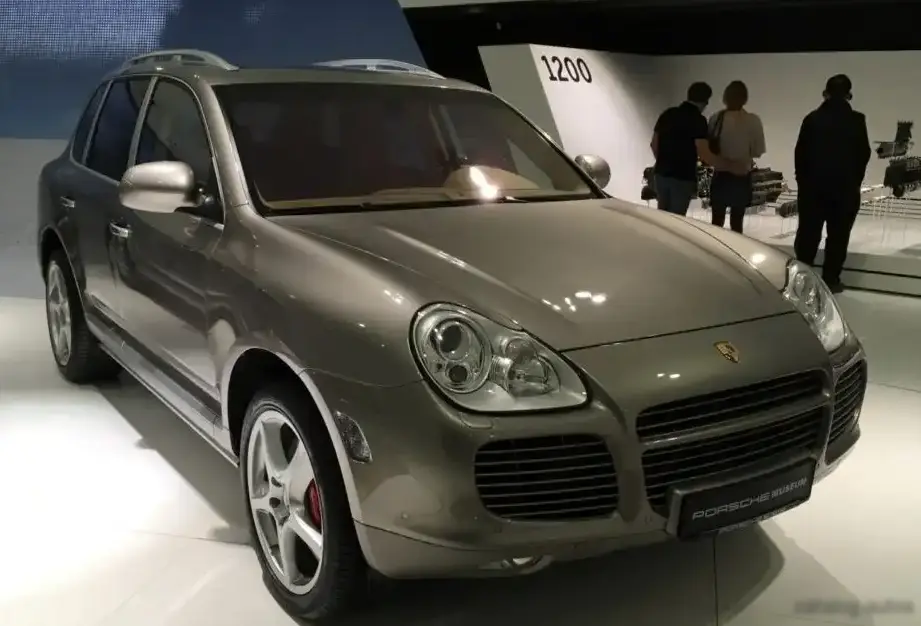
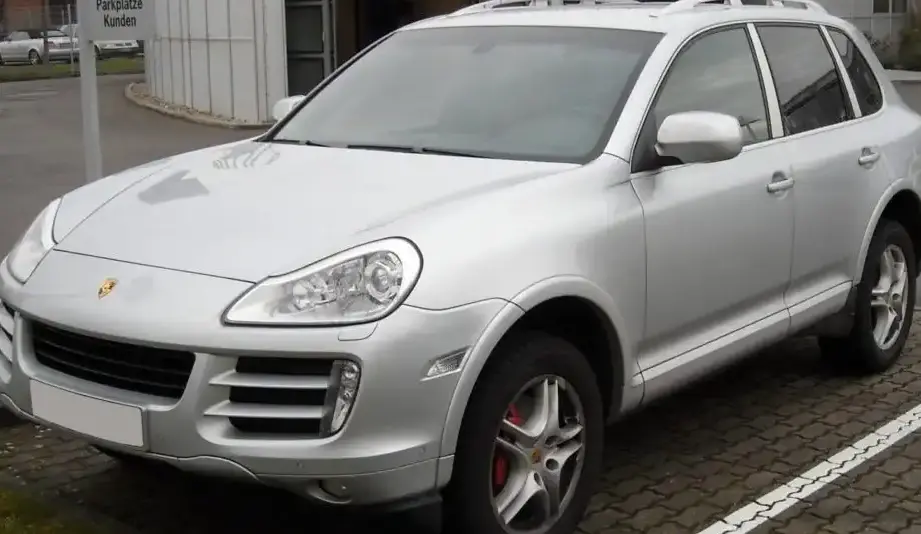
The Porsche Cayenne III Coupe 3.0 V6 (353 Hp) Tiptronic S, introduced in July 2023 as part of the facelift for the third-generation Cayenne, represents a compelling blend of performance, luxury, and practicality within the Porsche SUV lineup. Positioned as a mid-range offering, this variant caters to buyers seeking a powerful and refined driving experience without the outright performance focus of the Turbo models, or the diesel-oriented efficiency of the E-Hybrid. It builds upon the foundation of the 9YA platform (Cayenne III) with styling cues differentiating it from the standard Cayenne SUV, namely a sloping roofline that emphasizes a more sporting silhouette. This model year represents a significant refresh for the Cayenne, incorporating updated technology, interior refinements, and subtle exterior styling changes.
Technical Specifications
| Brand | Porsche |
| Model | Cayenne |
| Generation | Cayenne III (facelift 2023) Coupe |
| Type (Engine) | 3.0 V6 (353 Hp) Tiptronic S |
| Start of production | July, 2023 |
| Powertrain Architecture | Internal Combustion engine |
| Body type | Coupe, SUV |
| Seats | 4 |
| Doors | 5 |
| Fuel consumption at Low speed (WLTP) | 15.7 l/100 km (15 US mpg, 18 UK mpg, 6.4 km/l) |
| Fuel consumption at Medium speed (WLTP) | 10.8 l/100 km (21.8 US mpg, 26.2 UK mpg, 9.3 km/l) |
| Fuel consumption at high speed (WLTP) | 9.2 l/100 km (25.6 US mpg, 30.7 UK mpg, 10.9 km/l) |
| Fuel consumption at very high speed (WLTP) | 10.6 l/100 km (22.2 US mpg, 26.6 UK mpg, 9.4 km/l) |
| Combined fuel consumption (WLTP) | 10.9-12.1 l/100 km (21.6 – 19.4 US mpg, 25.9 – 23.3 UK mpg, 9.2 – 8.3 km/l) |
| CO2 emissions (WLTP) | 247-275 g/km |
| Fuel Type | Petrol (Gasoline) |
| Acceleration 0 – 100 km/h | 5.7 sec |
| Acceleration 0 – 62 mph | 5.7 sec |
| Acceleration 0 – 60 mph | 5.4 sec |
| Acceleration 0 – 200 km/h | 23.7 sec |
| Maximum speed | 248 km/h (154.1 mph) |
| Emission standard | Euro 6d-ISC-FCM |
| Weight-to-power ratio | 5.9 kg/Hp, 169.3 Hp/tonne |
| Weight-to-torque ratio | 4.2 kg/Nm, 239.8 Nm/tonne |
| Power | 353 Hp @ 5400-6400 rpm |
| Power per litre | 117.9 Hp/l |
| Torque | 500 Nm @ 1450-4500 rpm (368.78 lb.-ft. @ 1450-4500 rpm) |
| Maximum engine speed | 6500 rpm |
| Engine layout | Front, Longitudinal |
| Engine displacement | 2995 cm3 (182.77 cu. in.) |
| Number of cylinders | 6 |
| Engine configuration | V-engine |
| Cylinder Bore | 84.5 mm (3.33 in.) |
| Piston Stroke | 89 mm (3.5 in.) |
| Number of valves per cylinder | 4 |
| Fuel injection system | Direct injection |
| Engine aspiration | Turbocharger, Intercooler |
| Engine systems | Start & Stop System, Particulate filter |
| Kerb Weight | 2085 kg (4596.64 lbs.) |
| Max. weight | 2820 kg (6217.04 lbs.) |
| Max load | 735 kg (1620.4 lbs.) |
| Trunk (boot) space – minimum | 554 l (19.56 cu. ft.) |
| Trunk (boot) space – maximum | 1502 l (53.04 cu. ft.) |
| Fuel tank capacity | 75 l (19.81 US gal, 16.5 UK gal) |
| Max. roof load | 75 kg (165.35 lbs.) |
| Permitted trailer load with brakes (12%) | 3500 kg (7716.18 lbs.) |
| Permitted trailer load without brakes | 750 kg (1653.47 lbs.) |
| Permitted towbar download | 140 kg (308.65 lbs.) |
| Length | 4930 mm (194.09 in.) |
| Width | 1983 mm (78.07 in.) |
| Width including mirrors | 2194 mm (86.38 in.) |
| Height | 1678 mm (66.06 in.) |
| Wheelbase | 2895 mm (113.98 in.) |
| Ride height (ground clearance) | 192 mm (7.56 in.) |
| Minimum turning circle (turning diameter) | 12.2 m (40.03 ft.) |
| Approach angle | 23.5° |
| Departure angle | 20.9° |
| Ramp-over (brakeover) angle | 17.2° |
| Wading depth | 475 mm (18.7 in.) |
| Drivetrain Architecture | The Internal combustion engine (ICE) drives permanently the four wheels of the vehicle. |
| Drive wheel | All wheel drive (4×4) |
| Number of gears and type of gearbox | 8 gears, automatic transmission Tiptronic S |
| Front suspension | Independent multi-link suspension |
| Rear suspension | Independent multi-link suspension |
| Front brakes | Ventilated discs |
| Rear brakes | Ventilated discs |
| Assisting systems | ABS (Anti-lock braking system) |
| Steering type | Steering rack and pinion |
| Power steering | Electric Steering |
| Tires size | Front wheel tires: 255/55 ZR20, Rear wheel tires: 295/45 ZR20 |
| Wheel rims size | Front wheel rims: 9J x 20, Rear wheel rims: 10.5J x 20 |
Powertrain & Engine Architecture
At the heart of the Cayenne Coupe 3.0 V6 Tiptronic S lies Porsche’s 3.0-liter twin-turbocharged V6 engine, internally designated as the EA837. This engine is a member of the Volkswagen Group’s modular engine family, and is also found in various Audi and Volkswagen models. The engine utilizes direct fuel injection, a variable valve timing system, and a single turbocharger to deliver a balance of power and efficiency. The ‘S’ designation in Tiptronic S refers to Porsche’s 8-speed automatic transmission, a sophisticated unit known for its quick shifts and smooth operation. This transmission features a torque converter and allows for manual gear selection via steering wheel-mounted paddles. The engine produces 353 horsepower at 5400-6400 rpm and 368 lb-ft of torque between 1450 and 4500 rpm, providing strong acceleration across a broad rev range. A particulate filter is included to meet stringent emissions standards.
Driving Characteristics
The 3.0 V6 Tiptronic S offers a refined and capable driving experience. While not as brutally quick as the Cayenne Turbo, it provides ample power for everyday driving and confident overtaking maneuvers. The 8-speed Tiptronic S transmission is well-matched to the engine’s characteristics, providing smooth and responsive shifts. The automatic transmission prioritizes comfort and efficiency, but Sport and Sport Plus modes sharpen the shift points and throttle response. Compared to the manual transmission options available on other Cayenne variants, the Tiptronic S prioritizes ease of use and convenience, making it ideal for drivers who prefer a more relaxed driving experience. The all-wheel-drive system provides excellent traction in all weather conditions, enhancing stability and control.
Equipment & Trim Levels
The Cayenne Coupe 3.0 V6 Tiptronic S comes standard with a comprehensive list of features, including Porsche Active Suspension Management (PASM), a panoramic sunroof, leather upholstery, heated front seats, a 12.3-inch touchscreen infotainment system with navigation, and a suite of advanced driver-assistance systems such as lane keep assist and adaptive cruise control. Optional extras include air suspension, rear-axle steering, upgraded audio systems, and a wide range of interior customization options. Interior trim levels typically offer a choice of leather colors and materials, as well as various wood or carbon fiber accents.
Chassis & Braking
The Cayenne Coupe features a fully independent suspension system with multi-link designs at both the front and rear. PASM electronically adjusts the damping characteristics of the shocks to optimize ride comfort and handling. The braking system consists of ventilated discs at all four corners, providing ample stopping power. Larger brakes are available as an option. The Cayenne Coupe’s chassis is tuned to provide a balance between comfort and agility, offering a composed and stable ride even when pushed hard.
Market Reception & Comparison
The Cayenne Coupe 3.0 V6 Tiptronic S was generally well-received by automotive critics, who praised its blend of performance, luxury, and practicality. Compared to the base Cayenne, the Coupe offers a more sporting aesthetic and a slightly more engaging driving experience. Compared to the higher-output Cayenne Turbo, the 3.0 V6 offers a more accessible price point and slightly better fuel economy. Fuel economy figures, while not exceptional, are reasonable for a vehicle of this size and performance, averaging around 21-23 mpg in combined driving. Reliability has been generally good, although some owners have reported minor issues with the infotainment system.
Legacy
The Cayenne III Coupe 3.0 V6 Tiptronic S represents a significant step forward in Porsche’s SUV offerings. The EA837 engine has proven to be a durable and reliable unit, and the 8-speed Tiptronic S transmission is known for its smooth operation. On the used car market, these models hold their value well, reflecting the Porsche brand’s reputation for quality and performance. As Porsche continues to electrify its lineup, the 3.0 V6 Tiptronic S will likely be remembered as a transitional model, bridging the gap between traditional internal combustion engines and the future of electric mobility.