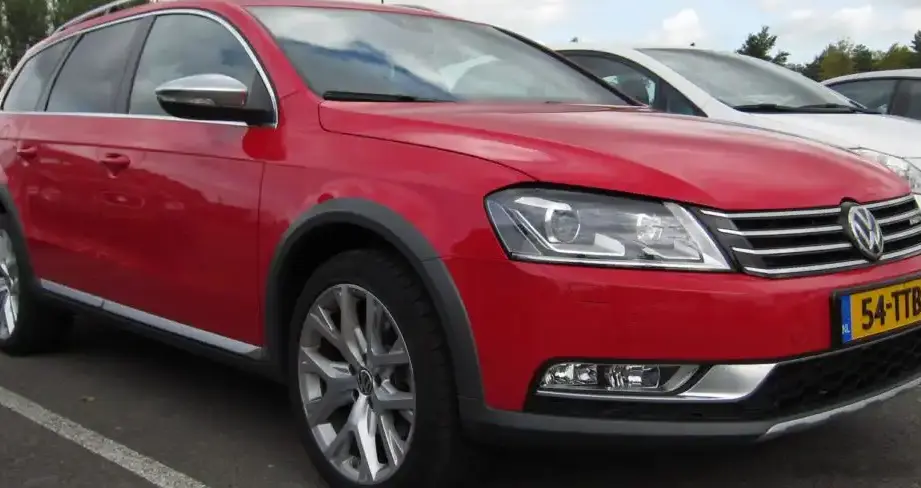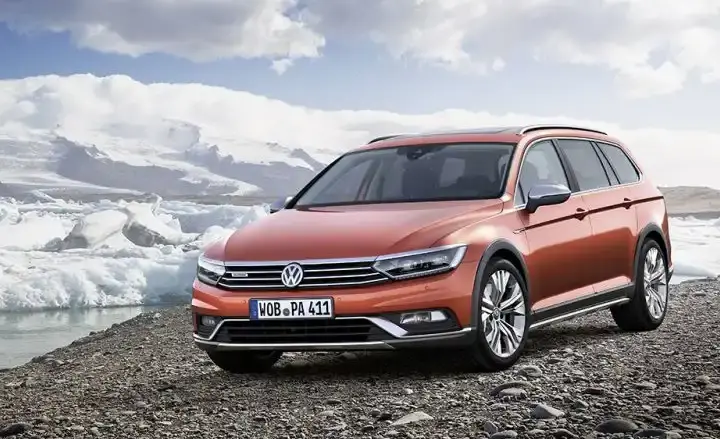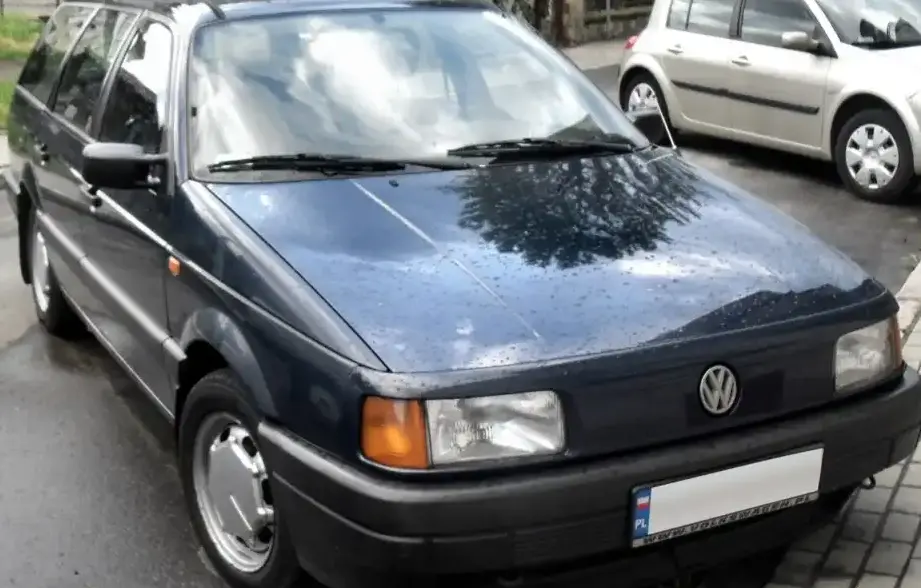
The Volkswagen Passat Variant (B4) 2.9 VR6 Syncro, produced between 1995 and 1997, represents a compelling blend of practicality, performance, and all-weather capability within the B4 Passat range. Positioned as a premium offering, it catered to buyers seeking a spacious, comfortable wagon with a more powerful engine and the added security of Volkswagen’s Syncro all-wheel-drive system. This variant was built on the 1HX0 platform, shared with other Volkswagen Group vehicles like the Audi A4 and SEAT Alhambra, and distinguished itself through its unique VR6 engine and sophisticated drivetrain.
Technical Specifications
| Brand | Volkswagen |
| Model | Passat |
| Generation | Passat Variant (B4) |
| Type (Engine) | 2.9 VR6 (184 Hp) Syncro |
| Start of production | 1995 |
| End of production | 1997 |
| Powertrain Architecture | Internal Combustion engine |
| Body type | Station wagon (estate) |
| Seats | 5 |
| Doors | 5 |
| Fuel consumption (economy) – urban | 14.8 l/100 km (15.9 US mpg, 19.1 UK mpg, 6.8 km/l) |
| Fuel consumption (economy) – extra urban | 8 l/100 km (29.4 US mpg, 35.3 UK mpg, 12.5 km/l) |
| Fuel Type | Petrol (Gasoline) |
| Acceleration 0 – 100 km/h | 9.2 sec |
| Acceleration 0 – 62 mph | 9.2 sec |
| Acceleration 0 – 60 mph | 8.7 sec |
| Maximum speed | 218 km/h (135.46 mph) |
| Emission standard | Euro 2 |
| Weight-to-power ratio | 8.2 kg/Hp, 121.5 Hp/tonne |
| Weight-to-torque ratio | 6.2 kg/Nm, 161.7 Nm/tonne |
| Power | 184 Hp @ 5800 rpm |
| Power per litre | 64.3 Hp/l |
| Torque | 245 Nm @ 4200 rpm (180.7 lb.-ft. @ 4200 rpm) |
| Engine layout | Front, Transverse |
| Engine Model/Code | ABV |
| Engine displacement | 2861 cm3 (174.59 cu. in.) |
| Number of cylinders | 6 |
| Engine configuration | VR-engine |
| Cylinder Bore | 82 mm (3.23 in.) |
| Piston Stroke | 90.3 mm (3.56 in.) |
| Compression ratio | 10:1 |
| Number of valves per cylinder | 2 |
| Fuel injection system | Multi-port manifold injection |
| Engine aspiration | Naturally aspirated engine |
| Valvetrain | DOHC |
| Engine oil capacity | 5.5 l (5.81 US qt, 4.84 UK qt) |
| Coolant | 10 l (10.57 US qt, 8.8 UK qt) |
| Kerb Weight | 1515 kg (3340 lbs.) |
| Max. weight | 2020 kg (4453.34 lbs.) |
| Max load | 505 kg (1113.33 lbs.) |
| Trunk (boot) space – minimum | 465 l (16.42 cu. ft.) |
| Trunk (boot) space – maximum | 1500 l (52.97 cu. ft.) |
| Fuel tank capacity | 70 l (18.49 US gal, 15.4 UK gal) |
| Max. roof load | 75 kg (165.35 lbs.) |
| Permitted trailer load with brakes (12%) | 1500 kg (3306.93 lbs.) |
| Permitted trailer load without brakes | 750 kg (1653.47 lbs.) |
| Length | 4595 mm (180.91 in.) |
| Width | 1720 mm (67.72 in.) |
| Height | 1485 mm (58.46 in.) |
| Wheelbase | 2630 mm (103.54 in.) |
| Front track | 1485 mm (58.46 in.) |
| Rear (Back) track | 1428 mm (56.22 in.) |
| Front overhang | 915 mm (36.02 in.) |
| Rear overhang | 1050 mm (41.34 in.) |
| Minimum turning circle (turning diameter) | 10.7 m (35.1 ft.) |
| Drivetrain Architecture | All wheel drive (4×4) |
| Drive wheel | All wheel drive (4×4) |
| Number of gears and type of gearbox | 5 gears, manual transmission |
| Front suspension | Coil spring, Wishbone, Transverse stabilizer |
| Rear suspension | Wishbone, Transverse stabilizer, Coil spring |
| Front brakes | Ventilated discs |
| Rear brakes | Disc |
| Assisting systems | ABS (Anti-lock braking system) |
| Steering type | Steering rack and pinion |
| Power steering | Hydraulic Steering |
| Tires size | 205/50 R15 |
| Wheel rims size | 6J x 15 |
INTRODUCTION
The Volkswagen Passat Variant (B4) 2.9 VR6 Syncro, produced from 1995 to 1997, was a top-tier offering in the Passat B4 lineup. It built upon the already successful B4 platform, known for its spacious interior and comfortable ride, by adding the distinctive VR6 engine and Volkswagen’s Syncro all-wheel-drive system. This combination aimed to provide a refined and capable wagon for drivers needing both performance and all-weather traction. The B4 generation Passat, produced from 1993 to 1997, represented a significant evolution of the Passat, moving towards a more modern and aerodynamic design.
Powertrain & Engine Architecture
The heart of the Passat Variant 2.9 VR6 Syncro is the ABV engine code, a 2.9-liter naturally aspirated VR6 engine. This engine is notable for its compact design, achieved by arranging the cylinders in a ‘V’ configuration with a narrow angle (15 degrees). This layout allows for a shorter engine block, facilitating its fitment into the Passat’s engine bay. The ABV engine utilizes multi-port fuel injection and a dual overhead camshaft (DOHC) valvetrain, contributing to its smooth power delivery. It produces 184 horsepower at 5800 rpm and 245 Nm (180.7 lb-ft) of torque at 4200 rpm. The engine’s characteristics are a relatively flat torque curve, providing usable power across a wide range of engine speeds. The Syncro system employs a viscous coupling to distribute power between the front and rear axles as needed, providing all-wheel drive capability without a traditional transfer case. The standard transmission was a 5-speed manual, although a 4-speed automatic was also available, though less common.
Driving Characteristics
The 2.9 VR6 Syncro offered a noticeably more engaging driving experience than the lower-powered Passat variants. Acceleration to 60 mph took approximately 8.7 seconds, and the top speed was around 135 mph. The Syncro all-wheel-drive system provided enhanced traction, particularly in slippery conditions, making it a capable vehicle for year-round use. The 5-speed manual transmission allowed for precise control over the engine’s power, while the optional automatic, while offering convenience, resulted in some power loss and a less responsive feel. The VR6 engine’s smooth power delivery and distinctive exhaust note contributed to a refined driving experience. Compared to the 1.8L and 2.0L variants, the VR6 offered significantly more power and torque, but at the expense of fuel economy.
Equipment & Trim Levels
The 2.9 VR6 Syncro typically came well-equipped, reflecting its position as a premium trim level. Standard features often included power windows, power locks, central locking, air conditioning, and an upgraded audio system. Interior upholstery was typically cloth or leather, with wood trim accents. Optional extras included a sunroof, heated front seats, and upgraded alloy wheels. The dashboard layout was typical of the B4 Passat, with a functional and straightforward design. The Syncro models also featured a warning light to indicate when the all-wheel-drive system was engaged.
Chassis & Braking
The Passat B4 featured an independent suspension system, with coil springs, wishbones, and a transverse stabilizer bar at the front, and a wishbone suspension with coil springs and a transverse stabilizer bar at the rear. The VR6 Syncro models often received slightly stiffer suspension components to handle the increased power and weight. Braking was handled by ventilated discs at the front and solid discs at the rear, with ABS (Anti-lock Braking System) as standard equipment. The braking system provided adequate stopping power for the vehicle’s weight and performance.
Market Reception & Comparison
The Passat Variant 2.9 VR6 Syncro was generally well-received by automotive critics, who praised its performance, handling, and all-weather capability. However, it was also noted that the VR6 engine’s fuel consumption was relatively high compared to the lower-powered variants. Compared to the 1.8L and 2.0L models, the VR6 Syncro offered a significant performance upgrade, but at a higher price point. The 1.9 TDI diesel variant offered comparable fuel economy and strong torque, but lacked the VR6’s smooth power delivery and refined character. The VR6 Syncro was often seen as a competitor to other premium wagons, such as the Audi A4 Avant and Volvo V70.
Legacy
The ABV VR6 engine, while generally reliable, is known to be susceptible to head gasket failures if not properly maintained. Regular oil changes and coolant flushes are crucial for preventing this issue. The Syncro all-wheel-drive system is also relatively robust, but the viscous coupling can wear out over time, requiring replacement. Today, the Passat Variant 2.9 VR6 Syncro is a sought-after classic among Volkswagen enthusiasts, appreciated for its unique combination of performance, practicality, and all-weather capability. Well-maintained examples command a premium in the used car market, and the VR6 engine’s distinctive sound continues to appeal to driving enthusiasts.