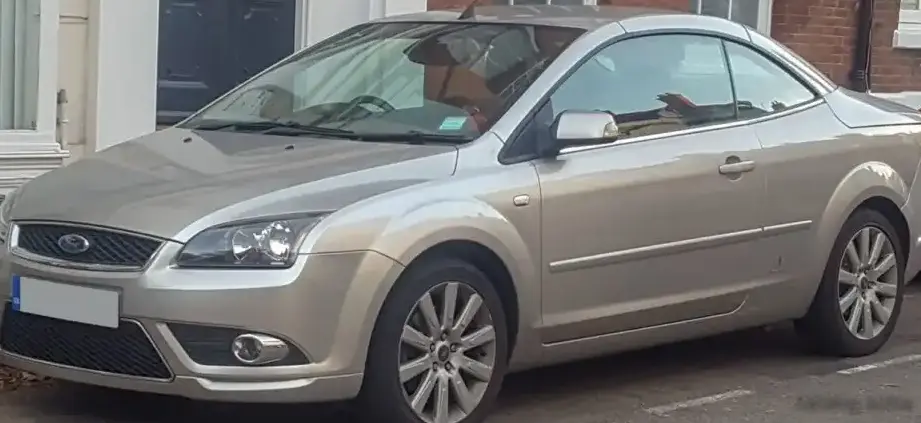
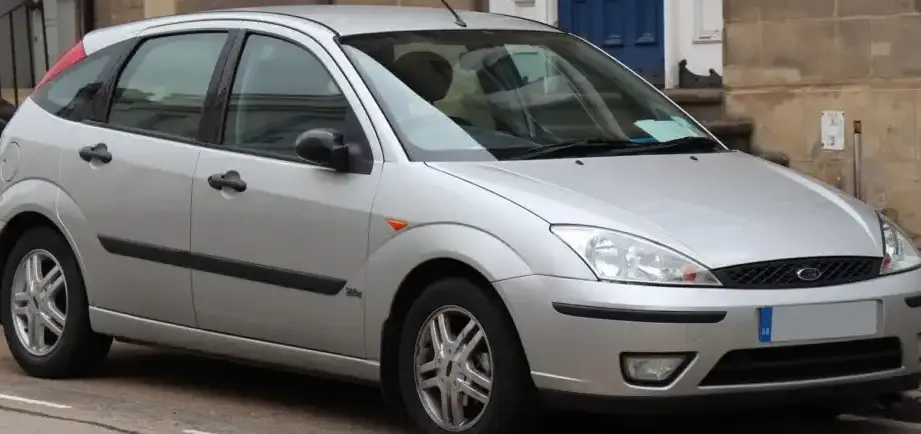
The Ford Focus III, specifically the facelifted model produced from 2014-2015, represented a significant evolution of Ford’s globally successful compact car. Within the third generation (2011-2018), the 1.6 TDCi 95 horsepower variant occupied an important position as an entry-level diesel option, particularly in European markets. This model aimed to provide fuel efficiency and reasonable running costs to budget-conscious buyers. It was positioned below the more powerful 1.6 TDCi 115 hp and the higher-performance petrol variants, offering a balance between economy and usability. The facelift brought revised styling, updated technology, and refinements to the engine lineup, including improvements to the 1.6 TDCi engine.
Technical Specifications
| Brand | Ford |
| Model | Focus |
| Generation | Focus III Hatchback (facelift 2014) |
| Type (Engine) | 1.6 TDCi (95 Hp) |
| Start of production | 2014 |
| End of production | 2015 |
| Powertrain Architecture | Internal Combustion engine |
| Body type | Hatchback |
| Seats | 5 |
| Doors | 5 |
| Fuel consumption (urban) | 5.7 l/100 km (41.3 US mpg, 49.6 UK mpg, 17.5 km/l) |
| Fuel consumption (extra urban) | 3.7 l/100 km (63.6 US mpg, 76.3 UK mpg, 27 km/l) |
| Fuel consumption (combined) | 4.5 l/100 km (52.3 US mpg, 62.8 UK mpg, 22.2 km/l) |
| CO2 emissions | 117 g/km |
| Fuel Type | Diesel |
| Acceleration 0 – 100 km/h | 12.5 sec |
| Acceleration 0 – 62 mph | 12.5 sec |
| Acceleration 0 – 60 mph | 11.9 sec |
| Maximum speed | 182 km/h (113.09 mph) |
| Emission standard | Euro 6 |
| Weight-to-power ratio | 14 kg/Hp, 71.3 Hp/tonne |
| Weight-to-torque ratio | 6.2 kg/Nm, 161.4 Nm/tonne |
| Power | 95 Hp @ 3800 rpm |
| Power per litre | 60.9 Hp/l |
| Torque | 215 Nm @ 1750 rpm (158.58 lb.-ft. @ 1750 rpm) |
| Engine layout | Front, Transverse |
| Engine Model/Code | TZJA, T3DA, T3DB |
| Engine displacement | 1560 cm3 (95.2 cu. in.) |
| Number of cylinders | 4 |
| Engine configuration | Inline |
| Cylinder Bore | 75 mm (2.95 in.) |
| Piston Stroke | 88.3 mm (3.48 in.) |
| Compression ratio | 16:1 |
| Number of valves per cylinder | 2 |
| Fuel injection system | Diesel Commonrail |
| Engine aspiration | Turbocharger, Intercooler |
| Valvetrain | DOHC |
| Engine oil capacity | 3.85 l (4.07 US qt | 3.39 UK qt) |
| Coolant | 7.3 l (7.71 US qt | 6.42 UK qt) |
| Kerb Weight | 1332 kg (2936.56 lbs.) |
| Max. weight | 1900 kg (4188.78 lbs.) |
| Max load | 568 kg (1252.23 lbs.) |
| Trunk (boot) space – minimum | 277 l (9.78 cu. ft.) |
| Trunk (boot) space – maximum | 1062 l (37.5 cu. ft.) |
| Fuel tank capacity | 53 l (14 US gal | 11.66 UK gal) |
| Length | 4358 mm (171.57 in.) |
| Width | 1823 mm (71.77 in.) |
| Height | 1484 mm (58.43 in.) |
| Wheelbase | 2648 mm (104.25 in.) |
| Front track | 1544 mm (60.79 in.) |
| Rear track | 1559 mm (61.38 in.) |
| Minimum turning circle | 11 m (36.09 ft.) |
| Drivetrain Architecture | Front wheel drive |
| Number of gears | 6 gears, manual transmission |
| Front suspension | Independent, type McPherson with coil spring and anti-roll bar |
| Rear suspension | Independent multi-link suspension |
| Front brakes | Disc |
| Rear brakes | Drum |
| Assisting systems | ABS (Anti-lock braking system) |
| Steering type | Steering rack and pinion |
| Tires size | 205/55 R16; 215/50 R17 |
| Wheel rims size | 6.5J x 16; 7.0J x 17 |
Powertrain & Engine Architecture
The heart of this Focus variant is the 1.6-liter TDCi diesel engine, identified by engine codes TZJA, T3DA, and T3DB. This engine belongs to Ford’s Duratorq family of diesel engines, known for their robustness and fuel efficiency. The 1.6 TDCi utilizes a common rail direct injection system, delivering fuel at extremely high pressure for optimized combustion. A turbocharger with an intercooler is employed to increase power output and improve torque across a wider rev range. The engine features a double overhead camshaft (DOHC) valvetrain with two valves per cylinder. The 95 horsepower output is achieved at 3800 rpm, while peak torque of 215 Nm (158.58 lb-ft) is available from 1750 rpm. This torque curve provides good low-end responsiveness, making it suitable for everyday driving. The engine’s compression ratio is relatively high at 16:1, contributing to its efficiency. The 6-speed manual transmission was the standard offering, chosen for its fuel economy and simplicity.
Driving Characteristics
The 1.6 TDCi 95 hp Focus offered a comfortable and economical driving experience. Acceleration was adequate for daily commutes and highway cruising, though not particularly sporty. The 0-60 mph time of around 11.9 seconds reflects its focus on efficiency rather than outright performance. The turbocharger provides a noticeable boost in power once spooled up, but there is some turbo lag at lower engine speeds. The manual transmission’s gear ratios are well-matched to the engine’s torque curve, allowing for relaxed cruising at highway speeds. Compared to the 115 hp version of the same engine, the 95 hp variant felt noticeably less powerful, especially when fully loaded or tackling steep inclines. However, the lower power output also translated to slightly better fuel economy. The driving experience was generally refined, with good ride quality and predictable handling.
Equipment & Trim Levels
The 1.6 TDCi 95 hp model typically came equipped as a base or mid-range trim level, depending on the specific market. Standard features generally included air conditioning, power windows, power door locks, a basic audio system, and ABS brakes. Higher trim levels added features such as alloy wheels, a more advanced audio system with Bluetooth connectivity, cruise control, and fog lights. Interior upholstery was typically cloth, with a functional and durable design. Optional extras included a sunroof, parking sensors, and upgraded infotainment systems. The dashboard layout was typical of the Focus III, with a clear and intuitive design.
Chassis & Braking
The Focus III utilized a McPherson strut front suspension and a multi-link rear suspension, providing a good balance between ride comfort and handling. The suspension was tuned to prioritize comfort, but still offered decent body control in corners. The front brakes were disc brakes, while the rear brakes were drum brakes – a cost-saving measure for the entry-level models. ABS (Anti-lock Braking System) was standard, enhancing safety during emergency braking. The steering was a rack and pinion system, providing precise and responsive steering feel. Stabilizer bars were fitted to both the front and rear axles to reduce body roll.
Market Reception & Comparison
The 1.6 TDCi 95 hp Focus was well-received by critics as a practical and economical choice. It was praised for its fuel efficiency, comfortable ride, and reasonable running costs. However, some reviewers noted that the engine lacked outright power, particularly when compared to the more powerful diesel and petrol variants. Compared to the 1.6 TDCi 115 hp model, the 95 hp version offered slightly better fuel economy but at the expense of performance. The 1.6 TDCi 95 hp was also often compared to similar diesel-powered compact cars from competitors such as Volkswagen, Opel/Vauxhall, and Renault. It generally held its own in terms of fuel economy and value for money.
Legacy
The 1.6 TDCi engine, in its various iterations, proved to be a reliable and durable powertrain. While some early versions of the Duratorq engine experienced issues with the diesel particulate filter (DPF), these were largely addressed in later models. The 1.6 TDCi 95 hp Focus remains a popular choice in the used car market, particularly for buyers seeking an economical and practical compact car. Its relatively simple mechanical design and readily available parts contribute to its affordability and ease of maintenance. However, potential buyers should be aware of the importance of regular DPF maintenance and ensure that the vehicle has been properly serviced.