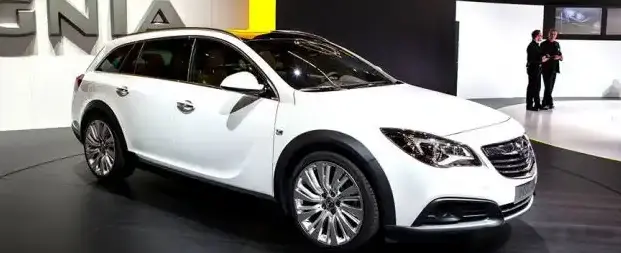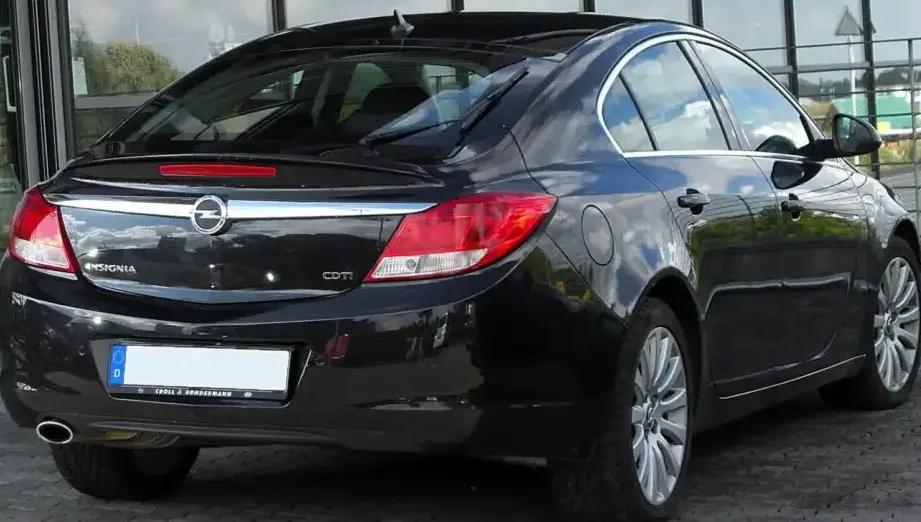
The Opel Insignia Hatchback (A), specifically the 2.0 Turbo 220 hp 4×4 variant, represented a significant step forward for Opel in the mid-size segment. Produced from November 2008 to June 2011, this model was a key component of the first generation Insignia (A) lineup, built on the GM Epsilon II platform. It aimed to offer a blend of practicality, performance, and technology, competing with established rivals like the Ford Mondeo, Volkswagen Passat, and Peugeot 508. The Insignia was Opel’s attempt to move upmarket and provide a more premium experience than previous offerings.
Technical Specifications
| Brand | Opel |
| Model | Insignia |
| Generation | Insignia Hatchback (A) |
| Type (Engine) | 2.0 Turbo (220 Hp) 4×4 |
| Start of production | November, 2008 |
| End of production | June, 2011 |
| Powertrain Architecture | Internal Combustion engine |
| Body type | Hatchback |
| Seats | 5 |
| Doors | 5 |
| Fuel consumption (urban) | 13 l/100 km (18.1 US mpg, 21.7 UK mpg, 7.7 km/l) |
| Fuel consumption (extra urban) | 7.7 l/100 km (30.5 US mpg, 36.7 UK mpg, 13 km/l) |
| Fuel consumption (combined) | 9.2 l/100 km (25.6 US mpg, 30.7 UK mpg, 10.9 km/l) |
| Fuel Type | Petrol (Gasoline) |
| Acceleration 0 – 100 km/h | 7.7 sec |
| Acceleration 0 – 62 mph | 7.7 sec |
| Acceleration 0 – 60 mph | 7.3 sec |
| Maximum speed | 240 km/h (149.13 mph) |
| Emission standard | Euro 5 |
| Weight-to-power ratio | 7.9 kg/Hp, 126.9 Hp/tonne |
| Weight-to-torque ratio | 5 kg/Nm, 202 Nm/tonne |
| Power | 220 Hp @ 5300 rpm |
| Power per litre | 110.1 Hp/l |
| Torque | 350 Nm @ 2000-4000 rpm (258.15 lb.-ft. @ 2000-4000 rpm) |
| Engine layout | Front, Transverse |
| Engine Model/Code | A20NHT |
| Engine displacement | 1998 cm3 (121.93 cu. in.) |
| Number of cylinders | 4 |
| Engine configuration | Inline |
| Cylinder Bore | 86 mm (3.39 in.) |
| Piston Stroke | 86 mm (3.39 in.) |
| Compression ratio | 9.3:1 |
| Number of valves per cylinder | 4 |
| Fuel injection system | Direct injection |
| Engine aspiration | Twin-scroll turbo, Intercooler |
| Engine oil capacity | 6 l (6.34 US qt | 5.28 UK qt) |
| Coolant | 7.3 l (7.71 US qt | 6.42 UK qt) |
| Kerb Weight | 1733 kg (3820.61 lbs.) |
| Max. weight | 2265 kg (4993.47 lbs.) |
| Max load | 532 kg (1172.86 lbs.) |
| Trunk (boot) space – minimum | 520 l (18.36 cu. ft.) |
| Trunk (boot) space – maximum | 1465 l (51.74 cu. ft.) |
| Fuel tank capacity | 70 l (18.49 US gal | 15.4 UK gal) |
| Length | 4830 mm (190.16 in.) |
| Width | 1858 mm (73.15 in.) |
| Height | 1498 mm (58.98 in.) |
| Wheelbase | 2737 mm (107.76 in.) |
| Front track | 1585 mm (62.4 in.) |
| Rear (Back) track | 1587 mm (62.48 in.) |
| Ride height (ground clearance) | 160 mm (6.3 in.) |
| Minimum turning circle (turning diameter) | 11.4 m (37.4 ft.) |
| Drive wheel | All wheel drive (4×4) |
| Number of gears and type of gearbox | 6 gears, manual transmission |
| Front brakes | Ventilated discs |
| Rear brakes | Disc |
| Assisting systems | ABS (Anti-lock braking system) |
| Tires size | 225/55 R17; 245/45 R18 |
| Wheel rims size | 17; 18 |
Powertrain & Engine Architecture
At the heart of the Insignia 2.0 Turbo 4×4 lies the A20NHT engine, a 1.998-liter inline-four cylinder gasoline engine. This engine utilizes direct fuel injection and a twin-scroll turbocharger, technologies aimed at improving both power output and fuel efficiency. The twin-scroll turbo design minimizes turbo lag, providing a more responsive driving experience. The engine produces 220 horsepower at 5300 rpm and 350 Nm (258 lb-ft) of torque between 2000 and 4000 rpm. This power is delivered to all four wheels through a six-speed manual transmission. The engine’s architecture is a relatively conventional layout, but the implementation of direct injection and turbocharging represented a modern approach for Opel at the time.
Driving Characteristics
The 2.0 Turbo 4×4 Insignia offered a noticeably more engaging driving experience than the lower-powered variants. The 220 hp output, combined with the all-wheel-drive system, resulted in a 0-60 mph time of around 7.3 seconds and a top speed of 149 mph. The all-wheel-drive system provided excellent traction, particularly in adverse weather conditions. While not a sports car, the Insignia 2.0 Turbo 4×4 offered a good balance of performance and comfort. The six-speed manual transmission allowed for precise control, although the gear ratios were geared more towards fuel economy than outright acceleration. Compared to the base 1.6L models, the 2.0 Turbo offered a significant performance upgrade, while remaining more affordable and practical than the range-topping V6 version.
Equipment & Trim Levels
The 2.0 Turbo 4×4 trim typically included a generous level of standard equipment. This often included features like automatic climate control, alloy wheels (typically 17 or 18 inch), a CD/MP3 stereo system, and electric windows and mirrors. Higher trim levels added features such as leather upholstery, heated front seats, a sunroof, and a more advanced infotainment system. Optional extras included navigation, parking sensors, and adaptive cruise control. The interior design was generally modern and well-built for its class, with a focus on ergonomics and practicality.
Chassis & Braking
The Insignia’s chassis was designed to provide a comfortable yet controlled ride. The front suspension utilized MacPherson struts, while the rear suspension employed a multi-link setup. The 4×4 models featured a more sophisticated all-wheel-drive system with electronic limited-slip differential. Braking duties were handled by ventilated discs at the front and solid discs at the rear, equipped with ABS (Anti-lock Braking System). The suspension tuning was generally biased towards comfort, but the 4×4 system and upgraded brakes provided increased stability and stopping power.
Market Reception & Comparison
The Opel Insignia 2.0 Turbo 4×4 was generally well-received by automotive critics. It was praised for its stylish design, spacious interior, and strong performance. However, some critics noted that the ride could be a bit firm on rough roads. Compared to rivals like the Ford Mondeo and Volkswagen Passat, the Insignia offered a more distinctive design and a slightly more engaging driving experience. Fuel economy was respectable, but not class-leading. Reliability proved to be generally good, although some owners reported minor issues with the electronic systems.
Legacy
The Opel Insignia 2.0 Turbo 4×4 remains a popular choice in the used car market. The A20NHT engine is known for its durability and relatively low maintenance costs. While not without its quirks, the Insignia offered a compelling package of performance, practicality, and style. The all-wheel-drive system continues to be a desirable feature, particularly in regions with harsh winters. Today, these Insignias represent a good value proposition for buyers seeking a comfortable and capable mid-size hatchback.