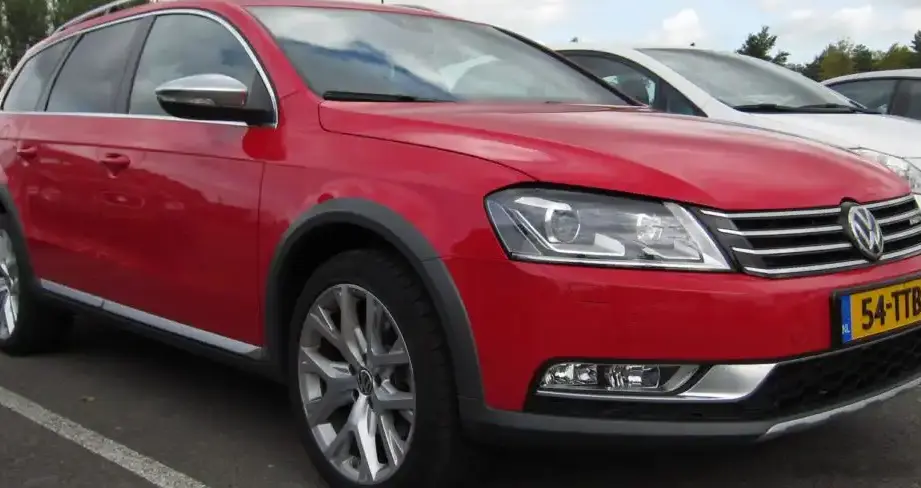
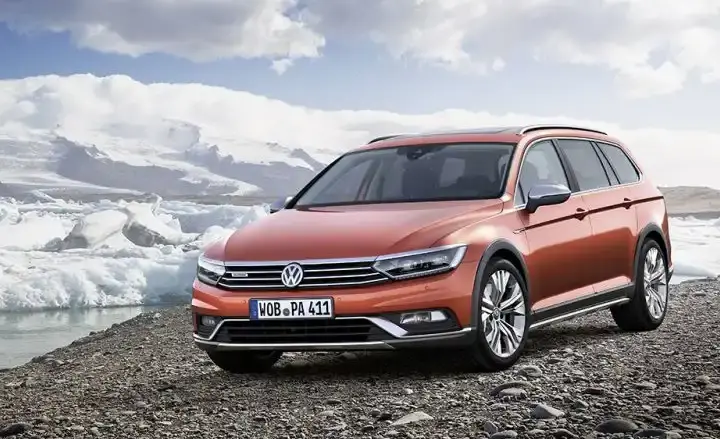
The Volkswagen Passat Variant (B5) 1.8 20V, produced between 1997 and 2000, represents a significant iteration of Volkswagen’s popular mid-size family car. This variant, a station wagon (estate) body style, was a key component of the B5 Passat lineup, which itself was built on the 1HX0/A3 platform shared with other Volkswagen Group vehicles like the Audi A4 and Škoda Octavia. The 1.8 20V engine, paired with a four-speed automatic transmission, occupied a middle ground in the Passat range, offering a balance between affordability, fuel efficiency, and practicality for family use. It was primarily marketed in Europe, where station wagons held a stronger market share than in North America.
Technical Specifications
| Brand | Volkswagen |
| Model | Passat |
| Generation | Passat Variant (B5) |
| Type (Engine) | 1.8 20V (125 Hp) |
| Start of production | 1997 |
| End of production | 2000 |
| Powertrain Architecture | Internal Combustion engine |
| Body type | Station wagon (estate) |
| Seats | 5 |
| Doors | 5 |
| Fuel consumption (urban) | 12.3 l/100 km (19.1 US mpg) |
| Fuel consumption (extra urban) | 6 l/100 km (39.2 US mpg) |
| Fuel Type | Petrol (Gasoline) |
| Acceleration 0 – 100 km/h | 11.2 sec |
| Acceleration 0 – 62 mph | 11.2 sec |
| Acceleration 0 – 60 mph | 10.6 sec |
| Maximum speed | 200 km/h (124.27 mph) |
| Weight-to-power ratio | 10.5 kg/Hp |
| Weight-to-torque ratio | 7.8 kg/Nm |
| Power | 125 Hp @ 5800 rpm |
| Torque | 168 Nm @ 3500 rpm (123.91 lb.-ft. @ 3500 rpm) |
| Engine layout | Front, Longitudinal |
| Engine Model/Code | ADR, APT, ARG |
| Engine displacement | 1781 cm3 (108.68 cu. in.) |
| Number of cylinders | 4 |
| Engine configuration | Inline |
| Cylinder Bore | 81 mm (3.19 in.) |
| Piston Stroke | 86.4 mm (3.4 in.) |
| Compression ratio | 10.3:1 |
| Number of valves per cylinder | 5 |
| Fuel injection system | Multi-port manifold injection |
| Engine aspiration | Naturally aspirated engine |
| Valvetrain | DOHC |
| Engine oil capacity | 3.5 l (3.7 US qt | 3.08 UK qt) |
| Coolant | 7 l (7.4 US qt | 6.16 UK qt) |
| Kerb Weight | 1315 kg (2899.08 lbs.) |
| Max. weight | 1865 kg (4111.62 lbs.) |
| Max load | 550 kg (1212.54 lbs.) |
| Trunk (boot) space – minimum | 495 l (17.48 cu. ft.) |
| Trunk (boot) space – maximum | 1600 l (56.5 cu. ft.) |
| Fuel tank capacity | 62 l (16.38 US gal | 13.64 UK gal) |
| Length | 4675 mm (184.06 in.) |
| Width | 1740 mm (68.5 in.) |
| Height | 1459 mm (57.44 in.) |
| Wheelbase | 2703 mm (106.42 in.) |
| Front track | 1498 mm (58.98 in.) |
| Rear (Back) track | 1500 mm (59.06 in.) |
| Drivetrain Architecture | The Internal combustion engine (ICE) drives the front wheels of the vehicle. |
| Drive wheel | Front wheel drive |
| Number of gears and type of gearbox | 5 gears, manual transmission |
| Front suspension | Coil spring |
| Rear suspension | Coil spring |
| Front brakes | Ventilated discs |
| Rear brakes | Disc |
| Assisting systems | ABS (Anti-lock braking system) |
| Steering type | Steering rack and pinion |
| Power steering | Hydraulic Steering |
| Tires size | 195/65 R15 |
| Wheel rims size | 6J x 15 |
INTRODUCTION
The Volkswagen Passat Variant (B5) 1.8 20V, produced from 1997 to 2000, was a popular choice for European families seeking a practical and reasonably priced vehicle. Positioned as a mid-range offering within the B5 Passat lineup, it slotted below the more powerful 2.3L and 2.8L V6 models, and above the entry-level 1.6L and diesel variants. The “Variant” designation signified the station wagon body style, offering increased cargo capacity compared to the sedan. The B5 generation represented a significant step forward for the Passat, introducing a more refined interior, improved ride quality, and a more modern aesthetic compared to its predecessor.
Powertrain & Engine Architecture
At the heart of the Passat Variant 1.8 20V lay the 1781cc, inline-four cylinder engine. Engine codes commonly found in this variant include ADR, APT, and ARG, with minor variations in calibration and emissions control equipment. This engine featured a dual overhead camshaft (DOHC) valvetrain with five valves per cylinder (20 valves total), contributing to its relatively high specific output for a naturally aspirated engine of its time. Fuel delivery was handled by a multi-port fuel injection system, providing precise fuel metering for optimal combustion. The four-speed automatic transmission, typically the 5HP19, was a conventional hydraulic automatic, known for its smoothness but not particularly for its fuel efficiency compared to later generations of automatic transmissions. The engine was longitudinally mounted, driving the front wheels.
Driving Characteristics
The 125 horsepower and 168 Nm (124 lb-ft) of torque produced by the 1.8 20V engine, when coupled with the four-speed automatic transmission, resulted in a comfortable but not particularly sporty driving experience. Acceleration from 0-60 mph took around 10.6 to 11.2 seconds, making it adequate for everyday driving but noticeably slower than the manual transmission versions or the higher-powered V6 models. The automatic transmission’s gear ratios were geared towards fuel economy and smooth cruising, rather than rapid acceleration. In real-world conditions, the 1.8 20V automatic felt most at home on the highway, providing sufficient power for overtaking maneuvers and maintaining a comfortable cruising speed. The automatic transmission did sap some of the engine’s responsiveness, making it feel less eager than its manual counterpart.
Equipment & Trim Levels
The Passat Variant 1.8 20V typically came equipped with a reasonable level of standard features. These included power windows, central locking, power steering, and an ABS anti-lock braking system. Interior upholstery was generally cloth, with options for upgraded velour or leather available. Dashboard configuration was fairly standard for the era, with analog gauges for speed, tachometer, fuel level, and coolant temperature. Optional extras included a sunroof, climate control, upgraded audio systems, and alloy wheels. Trim levels varied depending on the market, but generally followed a progression from base models with minimal features to more luxurious versions with a wider range of options.
Chassis & Braking
The Passat Variant (B5) utilized a MacPherson strut front suspension and a multi-link rear suspension, providing a comfortable and controlled ride. The suspension was tuned for a balance between comfort and handling, prioritizing ride quality over outright sportiness. Braking duties were handled by ventilated discs at the front and solid discs at the rear. ABS was standard, enhancing braking performance and stability, particularly on slippery surfaces. Stabilizer bars were fitted to both the front and rear axles to reduce body roll during cornering. The weight distribution was fairly balanced, contributing to predictable handling characteristics.
Market Reception & Comparison
The Passat Variant 1.8 20V automatic was generally well-received by automotive critics as a practical and reliable family car. However, it wasn’t often lauded for its performance. Comparisons to the manual transmission versions and the V6 models consistently highlighted the automatic’s slower acceleration and reduced responsiveness. Fuel economy was considered average for its class. The 1.8 20V offered a good compromise between performance and fuel efficiency compared to the more powerful V6 engines, but the diesel variants often provided superior fuel economy for those prioritizing cost savings. Reliability was generally good, although the automatic transmission could be prone to issues if not properly maintained.
Legacy
The Volkswagen Passat Variant (B5) 1.8 20V has proven to be a relatively durable and long-lasting vehicle. Many examples are still on the road today, testament to the build quality and engineering of the B5 generation. The 1.8 20V engine is known for its reliability, although regular maintenance, including timing belt replacement, is crucial. In the used car market, these Passats represent a good value proposition for buyers seeking a spacious, comfortable, and reasonably reliable station wagon. While not a performance icon, the 1.8 20V automatic Passat Variant remains a popular choice for those seeking a practical and affordable family vehicle.