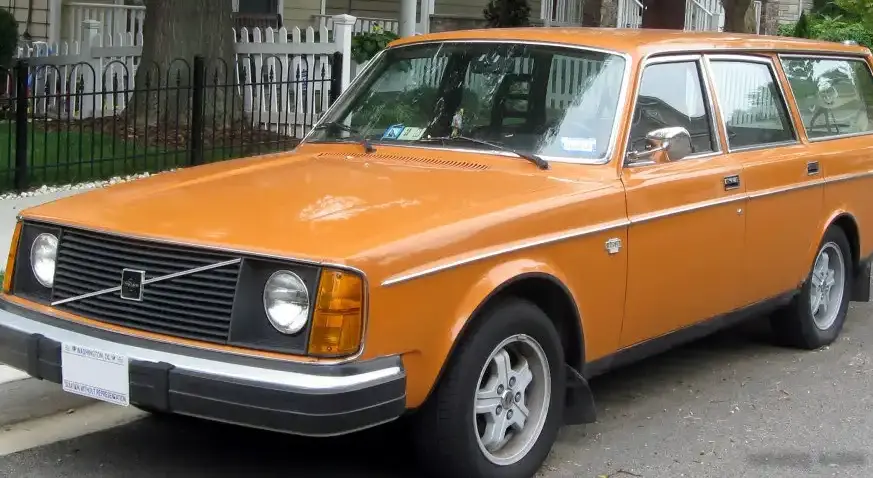
The Volvo 240 2.0, specifically the variant producing 82 horsepower, represents an important entry point into the long-running and highly respected 240 series. Produced between 1974 and 1976 (primarily as the P242 and P244 models denoting 2-door and 4-door configurations respectively), this version of the 240 was aimed at buyers seeking Volvo’s renowned safety and durability in a more affordable and economical package. It served as the base model, offering a balance between practicality and the brand’s core values. While often overshadowed by the more powerful six-cylinder versions, the 2.0-liter four-cylinder played a significant role in establishing the 240’s widespread appeal, particularly in markets prioritizing fuel efficiency and lower running costs.
Technical Specifications
| Brand | Volvo |
| Model | 240 |
| Generation | 240 (P242, P244) |
| Type (Engine) | 2.0 (82 Hp) |
| Start of Production | 1974 |
| End of Production | 1976 |
| Powertrain Architecture | Internal Combustion Engine |
| Body Type | Sedan (and Coupe – P242) |
| Fuel Type | Petrol (Gasoline) |
| Power | 82 Hp |
| Engine Model/Code | B20A |
| Engine Aspiration | Naturally Aspirated |
| Engine Oil Capacity | 3.8 l (4.02 US qt | 3.34 UK qt) |
| Coolant Capacity | 9.4 l (9.93 US qt | 8.27 UK qt) |
Powertrain & Engine Architecture
The heart of the Volvo 240 2.0 is the B20A engine, a 1,986 cc (121.1 cubic inch) inline-four cylinder powerplant. This engine is a robust, oversquare design (bore of 88.5 mm and stroke of 80 mm) featuring a cast iron block and an aluminum cylinder head. The B20A utilized a single overhead camshaft (SOHC) operating two valves per cylinder. Fuel delivery was managed by a Bosch mechanical fuel injection system, a relatively advanced feature for the time, offering improved efficiency and reduced emissions compared to carburetors. The engine’s relatively low compression ratio (around 8.5:1) was optimized for regular gasoline, contributing to its practicality. The 82 horsepower output was achieved at 5,200 rpm, with peak torque of approximately 118 lb-ft at 3,000 rpm.
The 240 2.0 was typically paired with either a four-speed manual transmission or a three-speed automatic transmission with overdrive. The automatic, while providing ease of use, was a key differentiator from the more driver-focused manual versions. The automatic transmission was designed for smooth, comfortable cruising rather than sporty performance. It featured a torque converter and relatively widely spaced gear ratios, prioritizing fuel economy and relaxed driving.
Driving Characteristics
The driving experience in a 240 2.0 with the automatic transmission is best described as comfortable and predictable. Acceleration was modest, taking around 13-15 seconds to reach 60 mph. This wasn’t a car built for speed, but rather for safe, reliable transportation. The automatic transmission, while smooth, did detract from the engine’s available power, as the torque converter inherently absorbs some energy. The gear ratios were geared towards fuel efficiency, meaning the engine often operated at lower RPMs during highway cruising. Compared to the manual transmission versions, the automatic felt noticeably slower, particularly during overtaking maneuvers. The 240 2.0’s strength lay in its stability and predictable handling, thanks to its well-engineered suspension and relatively low center of gravity.
Equipment & Trim Levels
The 240 2.0 served as the entry-level model, and as such, came with a fairly basic level of equipment. Standard features typically included cloth upholstery, vinyl floor covering, and a simple dashboard layout. Heating and ventilation were standard, but air conditioning was usually an optional extra. The steering wheel was typically a two-spoke design. Safety features, however, were prioritized even in the base model. These included disc brakes on all four wheels (a rarity for the time), seat belts, and a robust crumple zone design. Optional extras included a sunroof, upgraded audio systems, and more comfortable seating options. The trim level was generally consistent across both the P242 (coupe) and P244 (sedan) body styles.
Chassis & Braking
The Volvo 240 series utilized a robust, independent front suspension with coil springs and an anti-roll bar. The rear suspension employed a solid axle with leaf springs. This setup provided a comfortable ride and predictable handling, although it wasn’t particularly sporty. Braking was accomplished via disc brakes on all four wheels, a significant safety feature. The braking system was hydraulic, with dual-circuit master cylinder for added redundancy. The 240 2.0 typically featured smaller diameter tires compared to the higher-performance models, contributing to a slightly softer ride but also reducing grip. Rear drums were sometimes fitted depending on the specific market and year.
Market Reception & Comparison
The Volvo 240 2.0 was generally well-received by critics as a sensible and safe family car. While its performance wasn’t thrilling, its reliability and durability were highly praised. Compared to the six-cylinder 240 models (2.1, 2.3, and 2.7), the 2.0 offered significantly better fuel economy. The 2.0 automatic was often seen as a good choice for drivers who prioritized comfort and ease of use over performance. However, some reviewers noted that the automatic transmission could feel sluggish, particularly when compared to the more responsive manual versions. Against competitors like the BMW 2002 or the Mercedes-Benz 200, the 240 2.0 offered a different proposition – one focused on practicality, safety, and long-term reliability rather than outright performance or luxury.
Legacy
The Volvo 240 2.0, despite being the entry-level variant, has proven to be remarkably durable. Many examples are still on the road today, a testament to Volvo’s engineering and build quality. The B20A engine is known for its longevity and relatively simple maintenance requirements. The automatic transmission, while not as sought-after as the manual, is generally reliable if properly maintained. In the used car market, the 240 2.0 represents an affordable entry point into the classic Volvo world. It’s a popular choice for enthusiasts who appreciate the car’s simplicity, robustness, and iconic styling. Parts availability remains good, making it relatively easy to keep these cars running for years to come. The 240 2.0’s enduring appeal lies in its ability to provide safe, reliable, and practical transportation, embodying the core values that have defined the Volvo brand for decades.