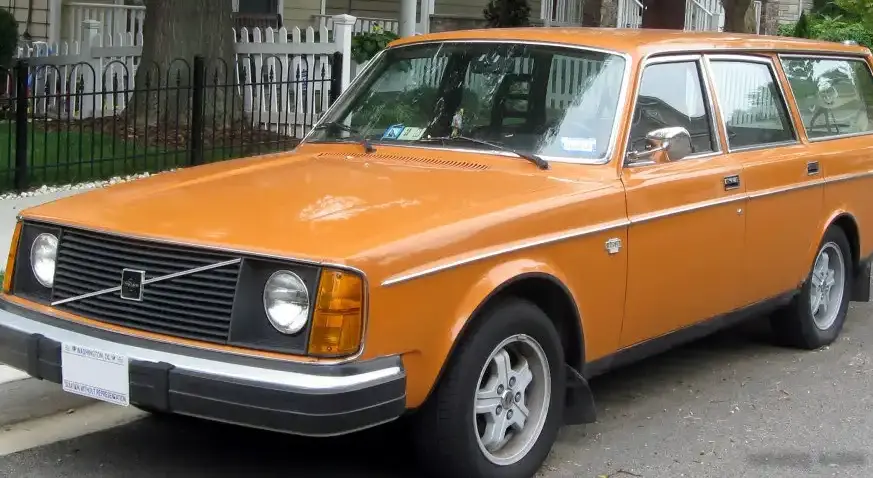
The Volvo 240 2.0, producing 90 horsepower, represents an important iteration within the long-running and highly respected 240 series. Produced between 1976 and 1978 (primarily for European and select export markets), this variant – designated as the P242 (coupe) and P244 (sedan) – served as a more accessible entry point into the 240 lineup, prioritizing fuel economy and affordability over outright performance. It occupied a position below the more powerful 2.1-liter and later 2.3-liter versions, appealing to buyers seeking Volvo’s renowned safety and durability in a practical package. This model is significant for being a transitional version, bridging the gap between the earlier B20 engine and the later, more refined B21 series.
Technical Specifications
| Brand | Volvo |
| Model | 240 |
| Generation | 240 (P242, P244) |
| Type (Engine) | 2.0 (90 Hp) |
| Start of Production | 1976 |
| End of Production | 1978 |
| Powertrain Architecture | Internal Combustion Engine |
| Body Type | Sedan/Coupe |
| Fuel Type | Petrol (Gasoline) |
| Power | 90 Hp |
| Engine Model/Code | B19A |
| Engine Aspiration | Naturally Aspirated |
Powertrain & Engine Architecture
The heart of the Volvo 240 2.0 is the B19A engine, a 1,986 cc (121.1 cubic inch) inline-four cylinder powerplant. This engine is a descendant of Volvo’s long-standing red-block series, known for its robustness and over-engineering. The B19A features a cast iron block and cylinder head, contributing to its durability. It utilizes a single overhead camshaft (SOHC) design, operating two valves per cylinder. Fuel delivery is managed by a Bosch mechanical fuel injection system, a relatively sophisticated setup for the time, offering improved efficiency and reduced emissions compared to carburetors. The B19A produces 90 horsepower at approximately 5,200 rpm and 104 lb-ft of torque at 3,000 rpm.
The 90 hp variant was typically paired with either a four-speed manual transmission (M46) or a three-speed automatic transmission (BW35). The Borg-Warner BW35 automatic, while providing convenience, was known for its relatively conservative gear ratios, prioritizing smooth operation and fuel economy over spirited acceleration. The automatic transmission was a popular choice for buyers prioritizing ease of use, particularly in urban environments. The engine’s relatively low compression ratio (8.5:1) allowed it to run reliably on lower octane gasoline, a consideration in many markets.
Driving Characteristics
The driving experience in a 240 2.0 with the automatic transmission is characterized by smooth, predictable performance. Acceleration is adequate for everyday driving, but it’s not a particularly quick car. The BW35 automatic transmission contributes to a relaxed driving style, with noticeable shift points and a tendency to hunt for gears on inclines. Compared to the manual transmission versions, the automatic 2.0 feels noticeably slower, especially during overtaking maneuvers. The gear ratios are optimized for fuel efficiency rather than performance. The 90 hp engine, while not powerful, provides sufficient torque for comfortable cruising on highways, although it may struggle when fully loaded with passengers and luggage. The steering is relatively heavy, typical of Volvo’s of this era, providing a solid and connected feel to the road.
Equipment & Trim Levels
The 240 2.0, as the entry-level model, typically came with a fairly basic level of equipment. Standard features included cloth upholstery, vinyl floor mats, and a simple dashboard layout. Power steering and central locking were often optional extras. The interior was functional and durable, prioritizing practicality over luxury. The seats were known for their comfort, even on long journeys. Available options included a sunroof, upgraded audio systems, and heated seats. Trim levels varied slightly depending on the market, but generally, the 2.0 was positioned as a value-oriented offering. The exterior featured minimal chrome trim, reflecting the car’s understated design philosophy.
Chassis & Braking
The Volvo 240 series is renowned for its robust chassis and excellent safety features. The 2.0 variant utilizes a MacPherson strut front suspension and a solid axle rear suspension. The rear suspension typically featured leaf springs, contributing to the car’s load-carrying capacity. Braking systems varied depending on the year and market. Early models often featured drum brakes on the rear wheels, while later models were upgraded to disc brakes all around. The braking system is hydraulically assisted and provides adequate stopping power for the car’s weight and performance. Stabilizer bars were fitted to both the front and rear axles, helping to reduce body roll during cornering. The chassis is exceptionally strong, contributing to the car’s legendary crashworthiness.
Market Reception & Comparison
The Volvo 240 2.0 was generally well-received by critics as a sensible and reliable family car. While not praised for its performance, it was lauded for its safety, durability, and practicality. Compared to the more powerful 2.1-liter and 2.3-liter versions, the 2.0 offered a more affordable entry point into the Volvo brand. Fuel economy was a key selling point, particularly during the oil crises of the 1970s. The automatic transmission, while convenient, was often criticized for its sluggishness compared to the manual gearbox. The 1.9 TDI versions of later Volvos offered significantly improved fuel economy and torque, but lacked the simplicity and robustness of the B19A engine. The 240 2.0 competed with other European sedans such as the Ford Taunus and Opel Ascona, offering a compelling combination of safety and reliability.
Legacy
The Volvo 240 2.0, and the B19A engine in particular, has earned a reputation for exceptional long-term reliability. Many examples are still on the road today, a testament to Volvo’s engineering prowess. The engine is relatively simple to maintain and repair, and spare parts are readily available. The automatic transmission, while not as durable as the manual gearbox, can provide years of reliable service with proper maintenance. In the used car market, the 240 2.0 is often sought after by enthusiasts and collectors who appreciate its simplicity, durability, and classic Volvo styling. It represents a significant piece of automotive history, embodying Volvo’s commitment to safety and reliability. The B19A engine, while superseded by later designs, remains a respected and well-regarded powerplant among Volvo aficionados.