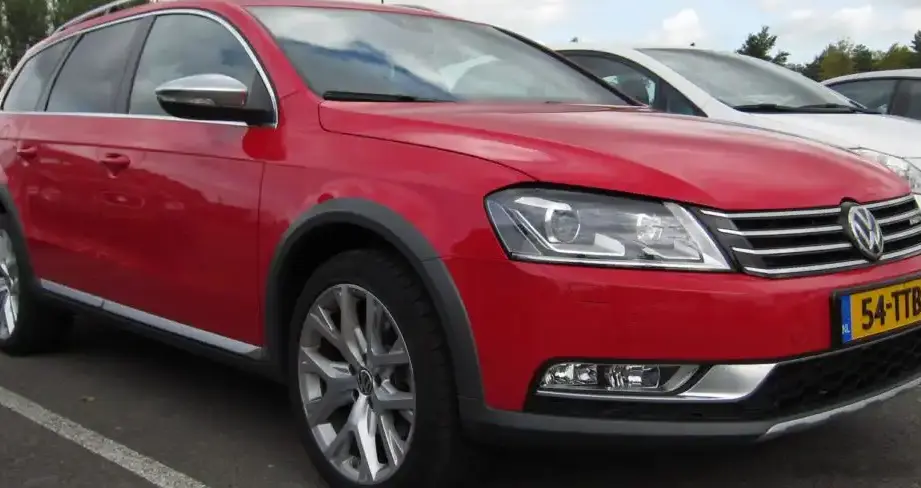
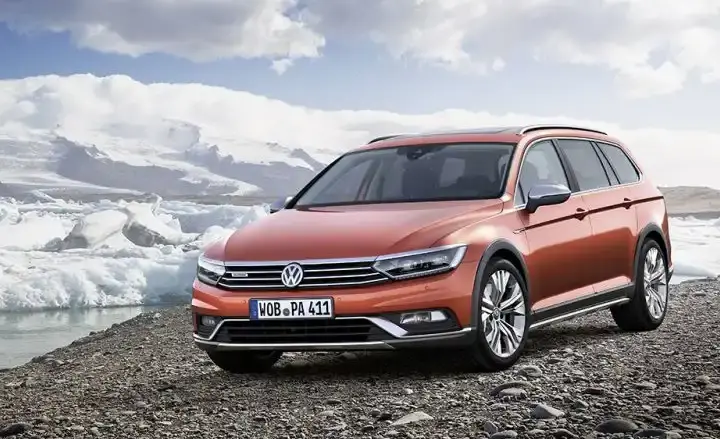
The Volkswagen Passat Variant (B5) 1.8 20V Syncro, produced between 1997 and 2000, represents a compelling blend of practicality, all-weather capability, and Volkswagen’s commitment to refined engineering. Positioned as a mid-range offering within the B5 Passat Variant lineup, this model catered to buyers seeking a spacious, comfortable wagon with the added security of Volkswagen’s Syncro all-wheel-drive system. It occupied a space between the more economical base models and the higher-performance, often turbocharged, variants. The B5 Passat, built on the 1HX0/A3 platform, marked a significant step forward in terms of design, build quality, and technology for Volkswagen’s mid-size offering.
Technical Specifications
| Brand | Volkswagen |
| Model | Passat |
| Generation | Passat Variant (B5) |
| Type (Engine) | 1.8 20V Syncro (125 Hp) |
| Start of production | 1997 |
| End of production | 2000 |
| Powertrain Architecture | Internal Combustion engine |
| Body type | Station wagon (estate) |
| Fuel Type | Petrol (Gasoline) |
| Power | 125 Hp @ 5800 rpm |
| Power per litre | 70.2 Hp/l |
| Torque | 168 Nm @ 3500 rpm / 123.91 lb.-ft. @ 3500 rpm |
| Engine layout | Front, Longitudinal |
| Engine Model/Code | ADR, APT, ARG |
| Engine displacement | 1781 cm3 / 108.68 cu. in. |
| Number of cylinders | 4 |
| Engine configuration | Inline |
| Cylinder Bore | 81 mm / 3.19 in. |
| Piston Stroke | 86.4 mm / 3.4 in. |
| Compression ratio | 10.3:1 |
| Number of valves per cylinder | 5 |
| Fuel injection system | Multi-port manifold injection |
| Engine aspiration | Naturally aspirated engine |
| Valvetrain | DOHC |
| Engine oil capacity | 3.5 l / 3.7 US qt | 3.08 UK qt |
| Coolant | 7 l / 7.4 US qt | 6.16 UK qt |
Powertrain & Engine Architecture
The heart of the Passat Variant 1.8 20V Syncro is the 1781cc, inline four-cylinder engine, designated with engine codes ADR, APT, or ARG depending on the specific market and year. This engine is a naturally aspirated unit featuring a dual overhead camshaft (DOHC) valvetrain with five valves per cylinder – three intake and two exhaust. This 20-valve configuration was a key feature, contributing to improved breathing and a broader powerband compared to earlier 8-valve designs. Fuel delivery is managed by a Bosch Motronic multi-port fuel injection system, optimizing fuel atomization and combustion efficiency. The engine’s longitudinal mounting allowed for a more balanced weight distribution, crucial for the Syncro all-wheel-drive system. The automatic transmission paired with this engine is typically a four-speed unit, designed for smooth operation and ease of use. While not offering the outright performance of a manual transmission, it provided a comfortable driving experience, particularly suited for everyday commuting and long-distance travel.
Driving Characteristics
The 125 horsepower and 168 Nm (124 lb-ft) of torque produced by the 1.8 20V engine, when coupled with the four-speed automatic transmission, resulted in a respectable, though not exhilarating, driving experience. Acceleration from 0 to 60 mph was typically in the 10-11 second range. The automatic transmission’s gear ratios were tuned for fuel efficiency and smooth transitions, rather than aggressive acceleration. Compared to the manual transmission versions of the same engine, the automatic offered slightly reduced performance due to drivetrain losses. However, the Syncro all-wheel-drive system significantly enhanced traction, particularly in adverse weather conditions. The system intelligently distributed power between the front and rear wheels, providing improved stability and control on slippery surfaces. The 1.8 20V Syncro felt composed and stable at highway speeds, making it a comfortable cruiser. It wasn’t a sports wagon, but it offered a balanced and predictable driving experience.
Equipment & Trim Levels
The Passat Variant 1.8 20V Syncro typically came equipped with a reasonable level of standard features. Interior upholstery was usually cloth, with options for leather available. Standard equipment often included power windows, power door locks, air conditioning, and an AM/FM radio with cassette player. Higher trim levels could add features like a sunroof, upgraded audio systems, and automatic climate control. The dashboard layout was functional and ergonomically designed, with easy-to-read gauges and intuitive controls. Optional extras included alloy wheels, fog lights, and a rear cargo organizer. The Syncro models generally received slightly upgraded suspension components to handle the added weight and demands of the all-wheel-drive system.
Chassis & Braking
The B5 Passat Variant featured an independent suspension system, with MacPherson struts at the front and a multi-link setup at the rear. This configuration provided a comfortable ride and good handling characteristics. The Syncro models often had slightly stiffer springs and dampers to compensate for the added weight of the all-wheel-drive components. Braking systems varied depending on the specific trim level and market. Base models typically featured disc brakes at the front and drum brakes at the rear. Higher-spec models often included disc brakes on all four wheels, providing improved stopping power. Anti-lock Braking System (ABS) was a common feature, enhancing safety and control during emergency braking situations. Stabilizer bars were fitted to both the front and rear axles, reducing body roll during cornering.
Market Reception & Comparison
The Passat Variant 1.8 20V Syncro was generally well-received by automotive critics. It was praised for its spacious interior, comfortable ride, and the added security of the Syncro all-wheel-drive system. However, some critics noted that the 1.8-liter engine, particularly when paired with the automatic transmission, felt somewhat underpowered, especially when fully loaded. Compared to the more powerful 2.8-liter V6 models, the 1.8 offered significantly less performance. However, it also offered better fuel economy. The 1.8 20V Syncro typically achieved fuel economy figures in the range of 22-28 mpg combined. Compared to the diesel-powered TDI variants, the 1.8 offered a more refined driving experience but lower fuel efficiency. The 1.8 Syncro appealed to buyers who prioritized practicality, comfort, and all-weather capability over outright performance.
Legacy
The Volkswagen Passat Variant B5 1.8 20V Syncro has proven to be a relatively reliable vehicle, with many examples still on the road today. The 1.8-liter engine is generally considered durable, although regular maintenance is essential. Common issues include oil leaks, sensor failures, and wear and tear on the automatic transmission. The Syncro all-wheel-drive system is generally robust, but the viscous coupling can require replacement over time. In the used car market, these Passat Variants are often sought after by enthusiasts who appreciate their practicality, comfort, and all-weather capability. They represent a good value for money, offering a spacious and well-equipped wagon at an affordable price. The B5 Passat, and particularly the Syncro variants, have earned a reputation as a solid and dependable family vehicle.