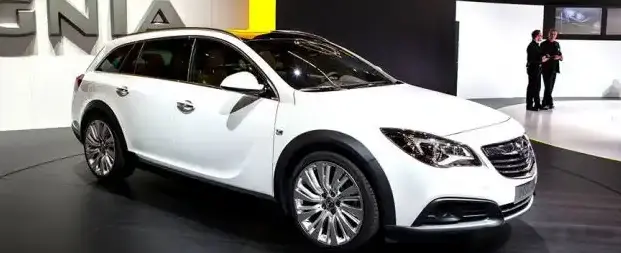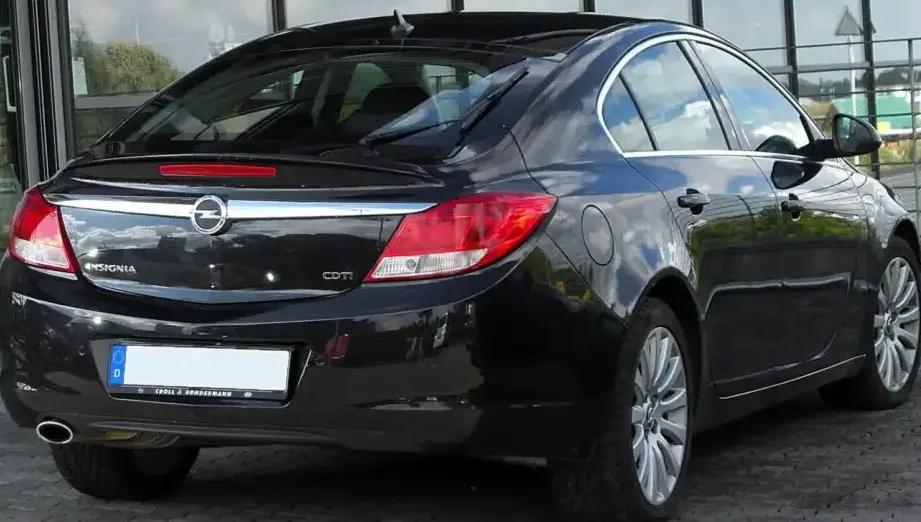
Technical Specifications
| Brand | Opel |
| Model | Insignia |
| Generation | Insignia Hatchback (A) |
| Type (Engine) | 2.0 Turbo (250 Hp) 4×4 Automatic |
| Start of production | July, 2011 |
| End of production | June, 2013 |
| Powertrain Architecture | Internal Combustion engine |
| Body type | Hatchback |
| Seats | 5 |
| Doors | 5 |
| Fuel consumption (urban) | 11.7 l/100 km (20.1 US mpg / 24.1 UK mpg / 8.5 km/l) |
| Fuel consumption (extra urban) | 6.3 l/100 km (37.3 US mpg / 44.8 UK mpg / 15.9 km/l) |
| Fuel consumption (combined) | 8.3 l/100 km (28.3 US mpg / 34 UK mpg / 12 km/l) |
| CO2 emissions | 194 g/km |
| Fuel Type | Petrol (Gasoline) |
| Acceleration 0 – 100 km/h | 7.7 sec |
| Acceleration 0 – 62 mph | 7.7 sec |
| Acceleration 0 – 60 mph | 7.3 sec |
| Maximum speed | 243 km/h (150.99 mph) |
| Emission standard | Euro 5 |
| Weight-to-power ratio | 6.9 kg/Hp, 144.3 Hp/tonne |
| Weight-to-torque ratio | 4.3 kg/Nm, 230.8 Nm/tonne |
| Power | 250 Hp @ 5300 rpm |
| Power per litre | 125.1 Hp/l |
| Torque | 400 Nm @ 2400-3600 rpm (295.02 lb.-ft. @ 2400-3600 rpm) |
| Engine layout | Front, Transverse |
| Engine Model/Code | A20NFT |
| Engine displacement | 1998 cm3 (121.93 cu. in.) |
| Number of cylinders | 4 |
| Engine configuration | Inline |
| Cylinder Bore | 86 mm (3.39 in.) |
| Piston Stroke | 86 mm (3.39 in.) |
| Compression ratio | 9.3:1 |
| Number of valves per cylinder | 4 |
| Fuel injection system | Direct injection |
| Engine aspiration | Twin-scroll turbo, Intercooler |
| Engine oil capacity | 5.7 l (6.02 US qt | 5.02 UK qt) |
| Coolant | 7.8 l (8.24 US qt | 6.86 UK qt) |
| Kerb Weight | 1733 kg (3820.61 lbs.) |
| Max. weight | 2250 kg (4960.4 lbs.) |
| Max load | 517 kg (1139.79 lbs.) |
| Trunk (boot) space – minimum | 520 l (18.36 cu. ft.) |
| Trunk (boot) space – maximum | 1465 l (51.74 cu. ft.) |
| Fuel tank capacity | 70 l (18.49 US gal | 15.4 UK gal) |
| Length | 4830 mm (190.16 in.) |
| Width | 1858 mm (73.15 in.) |
| Height | 1498 mm (58.98 in.) |
| Wheelbase | 2737 mm (107.76 in.) |
| Front track | 1585 mm (62.4 in.) |
| Rear (Back) track | 1587 mm (62.48 in.) |
| Ride height (ground clearance) | 160 mm (6.3 in.) |
| Minimum turning circle (turning diameter) | 10.8 m (35.43 ft.) |
| Drive wheel | All wheel drive (4×4) |
| Number of gears and type of gearbox | 6 gears, automatic transmission |
| Front brakes | Ventilated discs |
| Rear brakes | Disc |
| Assisting systems | ABS (Anti-lock braking system) |
| Tires size | 225/55 R17 |
| Wheel rims size | 17 |
The Opel Insignia Hatchback (A), specifically the 2.0 Turbo 250 hp 4×4 Automatic variant, was produced from July 2011 to June 2013. This model represented a significant step forward for Opel, aiming to compete with premium hatchbacks from German manufacturers. Positioned as a near-top-of-the-line trim, it offered a blend of performance, practicality, and technology within the Insignia range, which was based on the GM Delta II platform (also known as the Epsilon II). The Insignia, in general, was Opel’s flagship model intended to replace the Vectra and Signum, offering a more modern and dynamic driving experience.
Powertrain & Engine Architecture
At the heart of this Insignia variant lies the A20NFT engine, a 2.0-liter turbocharged inline-four cylinder gasoline engine. This engine utilizes direct injection technology, delivering fuel directly into the combustion chamber for improved efficiency and power. The A20NFT features a twin-scroll turbocharger, which minimizes turbo lag and provides a broader torque curve. The engine’s output of 250 horsepower at 5300 rpm and 400 Nm (295 lb-ft) of torque between 2400-3600 rpm provided a substantial performance boost compared to lower-spec Insignia models. The engine is paired with a six-speed automatic transmission, specifically designed to handle the engine’s torque output and provide smooth gear changes. This transmission wasn’t particularly focused on sporty performance, prioritizing comfort and efficiency over rapid shifts.
Driving Characteristics
The 2.0 Turbo 4×4 Automatic Insignia offered a comfortable and capable driving experience. The all-wheel-drive system provided excellent traction in various weather conditions, enhancing stability and confidence. While the automatic transmission wasn’t the quickest shifting, it offered smooth transitions and made for relaxed cruising. Acceleration from 0-60 mph took around 7.3 seconds, making it a reasonably quick hatchback. Compared to the 2.8L V6 Turbo models, this 2.0L offered a more balanced approach, sacrificing some outright power for improved fuel economy and lower running costs. The 1.8L and diesel variants felt noticeably slower and less refined.
Equipment & Trim Levels
The 2.0 Turbo 4×4 Automatic trim typically included a generous level of standard equipment. This often included leather upholstery, heated front seats, dual-zone climate control, a touchscreen infotainment system with navigation, and parking sensors. Optional extras could include a panoramic sunroof, adaptive cruise control, and a premium sound system. The interior design was generally modern and well-built, although some materials felt less premium than those found in competing German vehicles. The Insignia aimed for a comfortable and spacious cabin, offering ample room for passengers and luggage.
Chassis & Braking
The Insignia’s chassis was tuned for a balance between comfort and handling. The suspension utilized independent suspension all around, providing a relatively smooth ride. The 4×4 system employed a multi-plate clutch to distribute torque between the front and rear axles as needed. Braking duties were handled by ventilated discs at the front and solid discs at the rear, equipped with ABS and electronic stability control. The braking performance was adequate for the vehicle’s weight and power, but not particularly outstanding.
Market Reception & Comparison
The Opel Insignia 2.0 Turbo 4×4 Automatic was generally well-received by automotive critics. It was praised for its spacious interior, comfortable ride, and strong engine performance. However, some critics noted that the automatic transmission could feel sluggish at times and that the interior materials weren’t quite up to par with those of its premium rivals. Fuel economy was respectable for a vehicle of its size and performance, averaging around 28.3 US mpg in combined driving. Compared to the diesel variants, the 2.0 Turbo offered more power but consumed more fuel. The V6 Turbo models provided even greater performance but came with a higher price tag and increased running costs.
Legacy
The A20NFT engine, while generally reliable, can be susceptible to issues with the timing chain and carbon buildup on the intake valves, particularly if not regularly serviced with high-quality oil. The six-speed automatic transmission is generally durable but may require servicing at higher mileages. Today, the Insignia 2.0 Turbo 4×4 Automatic represents a relatively affordable option in the used car market. It offers a good balance of performance, practicality, and features, making it a compelling choice for buyers seeking a spacious and capable hatchback. However, potential buyers should be aware of the potential maintenance issues associated with the engine and transmission and ensure that the vehicle has been properly maintained.