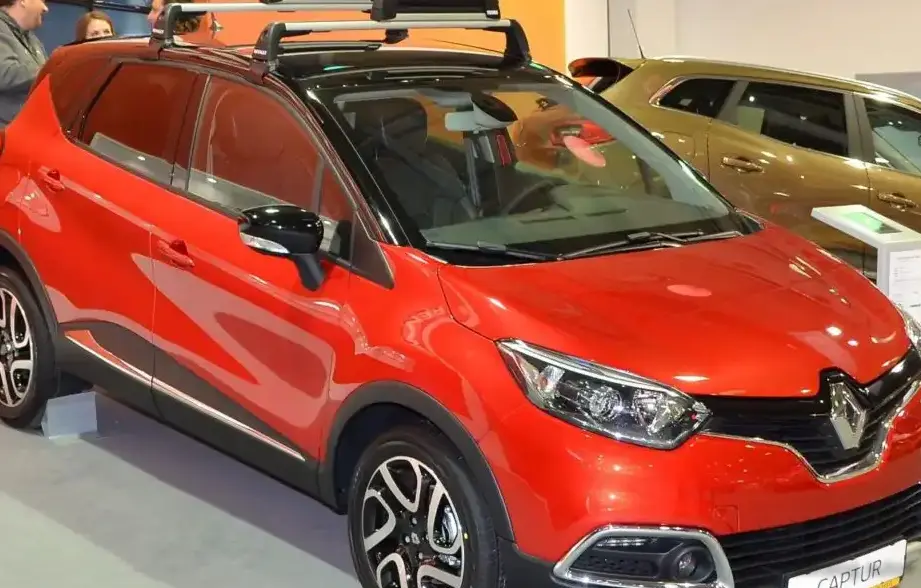
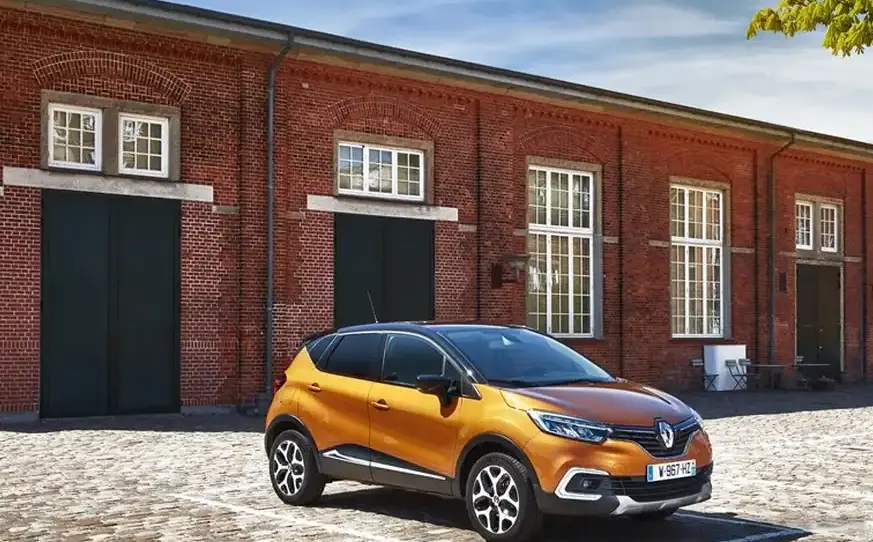
The Renault Captur II E-TECH 1.6 (158 Hp) Plug-in Hybrid Multimode is a compact crossover vehicle produced by the French manufacturer Renault from June 2020 to May 2022. It represents Renault’s entry into the plug-in hybrid market within the second generation Captur (Captur II) range, which utilizes the 1HX0/A3 platform shared with other Renault and Nissan models. This variant aimed to offer a balance between fuel efficiency, reduced emissions, and practicality for urban and suburban drivers. It occupied the mid-to-upper trim levels of the Captur II lineup, offering a more technologically advanced and environmentally conscious option compared to the standard petrol and diesel engines.
Technical Specifications
| Brand | Renault |
| Model | Captur |
| Generation | Captur II |
| Type (Engine) | E-TECH 1.6 (158 Hp) Plug-in Hybrid Multimode |
| Start of production | June, 2020 |
| End of production | May, 2022 |
| Powertrain Architecture | PHEV (Plug-in Hybrid Electric Vehicle) |
| Body type | Crossover |
| Seats | 5 |
| Doors | 5 |
| Combined fuel consumption (WLTP) | 1.5-1.6 l/100 km (156.8 – 147 US mpg, 188.3 – 176.6 UK mpg, 66.7 – 62.5 km/l) |
| CO2 emissions (WLTP) | 33-36 g/km |
| Fuel Type | Petrol / electricity |
| Acceleration 0 – 100 km/h | 10.1 sec |
| Acceleration 0 – 62 mph | 10.1 sec |
| Acceleration 0 – 60 mph | 9.6 sec |
| Maximum speed | 173 km/h (107.5 mph) |
| Emission standard | Euro 6d |
| Weight-to-power ratio | 9.9 kg/Hp, 101 Hp/tonne |
| Weight-to-torque ratio | 10.9 kg/Nm, 92.1 Nm/tonne |
| Gross battery capacity | 10.46 kWh |
| Net (usable) battery capacity | 9.8 kWh |
| Battery voltage | 346 V |
| Battery technology | Lithium-ion (Li-Ion) |
| Battery weight | 103 kg (227.08 lbs) |
| Battery location | Below the floor, under the rear seats |
| All-electric range (WLTP) | 50 km (31.07 mi) |
| Average Energy consumption (WLTP) | 17.3-18.3 kWh/100 km (27.84 – 29.45 kWh/100 mi, 121 – 114 MPGe, 5.8 – 5.5 km/kWh, 3.6 – 3.4 mi/kWh) |
| Max speed (electric) | 135 km/h (83.89 mph) |
| Electric motor power | 67 Hp |
| Electric motor Torque | 205 Nm (151.2 lb.-ft.) |
| Electric motor location | Integrated into the transmission |
| System power | 158 Hp |
| Power | 92 Hp @ 5600 rpm |
| Torque | 144 Nm @ 3200 rpm (106.21 lb.-ft. @ 3200 rpm) |
| Engine layout | Front, Transverse |
| Engine Model/Code | H4M 630 |
| Engine displacement | 1598 cm3 (97.52 cu. in.) |
| Number of cylinders | 4 |
| Engine configuration | Inline |
| Cylinder Bore | 78 mm (3.07 in.) |
| Piston Stroke | 83.6 mm (3.29 in.) |
| Number of valves per cylinder | 4 |
| Fuel injection system | Multi-port manifold injection |
| Engine aspiration | Naturally aspirated engine |
| Valvetrain | DOHC |
| Engine oil capacity | 4.5 l (4.76 US qt | 3.96 UK qt) |
| Kerb Weight | 1564 kg (3448.03 lbs) |
| Max. weight | 2060 kg (4541.52 lbs) |
| Max load | 496 kg (1093.49 lbs) |
| Trunk (boot) space – minimum | 265 l (9.36 cu. ft.) |
| Trunk (boot) space – maximum | 1118 l (39.48 cu. ft.) |
| Fuel tank capacity | 39 l (10.3 US gal | 8.58 UK gal) |
| Max. roof load | 80 kg (176.37 lbs) |
| Permitted trailer load with brakes (12%) | 750 kg (1653.47 lbs) |
| Permitted trailer load without brakes | 650 kg (1433 lbs) |
| Permitted towbar download | 75 kg (165.35 lbs) |
| Length | 4227 mm (166.42 in.) |
| Width with mirrors folded | 1797 mm (70.75 in.) |
| Width including mirrors | 2003 mm (78.86 in.) |
| Height | 1576 mm (62.05 in.) |
| Wheelbase | 2639 mm (103.9 in.) |
| Front track | 1560 mm (61.42 in.) |
| Rear (Back) track | 1547 mm (60.91 in.) |
| Front overhang | 876 mm (34.49 in.) |
| Rear overhang | 712 mm (28.03 in.) |
| Ride height (ground clearance) | 142 mm (5.59 in.) |
| Minimum turning circle (turning diameter) | 11.1 m (36.42 ft.) |
| Drivetrain Architecture | The Internal combustion engine (ICE) and electric motor drive the front wheels of the car with the ability to work in full electric or mixed mode. |
| Drive wheel | Front wheel drive |
| Number of gears and type of gearbox | automatic transmission Multimode |
| Front suspension | Independent, type McPherson with coil spring and anti-roll bar |
| Rear suspension | Coil spring, Torsion |
| Front brakes | Ventilated discs, 296×26 mm |
| Rear brakes | Disc, 290×13 mm |
| Assisting systems | ABS (Anti-lock braking system) |
| Steering type | Steering rack and pinion |
| Power steering | Electric Steering |
| Tires size | 215/65 R16; 215/60 R17; 215/55 R18 |
| Wheel rims size | 16; 17; 18 |
Powertrain & Engine Architecture
The E-TECH 1.6 powertrain is a sophisticated hybrid system centered around a 1.6-liter naturally aspirated inline-four cylinder engine (code H4M 630) producing 92 horsepower at 5600 rpm and 144 Nm (106.21 lb.-ft.) of torque at 3200 rpm. This engine operates on a Miller cycle for improved efficiency. It’s paired with two electric motors – a 67 hp electric motor integrated into the multimode automatic transmission and a high-voltage starter-generator. The system utilizes a complex power split architecture, allowing for electric-only driving, engine-only driving, or a combination of both. The multimode transmission, a key component of the E-TECH system, isn’t a traditional automatic; it features a dog-gear style shifting mechanism for faster and smoother transitions. Fuel is delivered via multi-port fuel injection. The 10.46 kWh lithium-ion battery pack, located under the rear seats, provides an all-electric range of up to 50 km (31.07 miles) under WLTP testing.
Driving Characteristics
The Captur E-TECH 1.6 offers a distinct driving experience compared to its petrol-only counterparts. In electric mode, acceleration is brisk and quiet, ideal for city driving. When the petrol engine engages, the transition is generally seamless, managed by the sophisticated control system. The combined system output of 158 hp provides adequate performance for highway cruising, with a 0-60 mph time of around 9.6 seconds. However, it doesn’t offer the sporty feel of some competitors. The multimode transmission prioritizes efficiency over outright performance, resulting in a slightly less responsive feel than a conventional automatic. The regenerative braking system effectively captures energy during deceleration, further enhancing efficiency. The weight of the battery pack does contribute to a slightly higher curb weight (1564 kg / 3448.03 lbs) compared to non-hybrid models, which can be noticeable in cornering.
Equipment & Trim Levels
The E-TECH 1.6 typically came in higher trim levels, such as the Intens or R.S. Line, offering a generous level of standard equipment. This included features like a 9.3-inch touchscreen infotainment system with Apple CarPlay and Android Auto compatibility, automatic climate control, keyless entry, and a suite of advanced driver-assistance systems (ADAS) such as lane departure warning, automatic emergency braking, and adaptive cruise control. Interior upholstery was typically a mix of cloth and synthetic leather, with options for full leather available. Optional extras included a panoramic sunroof, upgraded audio system, and parking assist features.
Chassis & Braking
The Captur II utilizes a McPherson strut front suspension and a torsion beam rear suspension. The E-TECH variant benefits from a slightly revised suspension tuning to accommodate the added weight of the battery pack. Braking duties are handled by ventilated discs at the front (296×26 mm) and solid discs at the rear (290×13 mm). ABS (Anti-lock Braking System) is standard. Steering is electrically assisted, providing a light and responsive feel.
Market Reception & Comparison
The Renault Captur E-TECH 1.6 was generally well-received by critics for its fuel efficiency and low emissions. It offered a competitive all-electric range compared to other plug-in hybrids in its class. However, some reviewers noted that the engine could feel strained under hard acceleration and that the overall driving experience wasn’t as engaging as some rivals. Compared to the standard 1.3-liter petrol engine, the E-TECH offered significantly better fuel economy and lower running costs, but at a higher initial purchase price. Compared to the diesel Captur, the E-TECH provided a cleaner alternative with comparable fuel efficiency in mixed driving conditions.
Legacy
The Renault Captur II E-TECH 1.6 represented a significant step forward for Renault in the realm of electrified vehicles. While production was relatively short-lived, the powertrain technology laid the groundwork for future Renault hybrid and electric models. On the used car market, these models are becoming increasingly sought after by buyers looking for a fuel-efficient and environmentally friendly compact crossover. The powertrain has proven to be relatively reliable, with few widespread issues reported. However, as with any hybrid vehicle, regular maintenance of the battery pack and hybrid components is crucial to ensure long-term reliability.