Technical Specifications
| Brand | Renault |
| Model | Captur |
| Generation | Captur II (facelift 2024) |
| Type (Engine) | 1.0 TCe (90 Hp) |
| Start of production | April, 2024 |
| Powertrain Architecture | Internal Combustion engine |
| Body type | Crossover |
| Seats | 5 |
| Doors | 5 |
| Combined fuel consumption (WLTP) | 5.8-5.9 l/100 km (40.6 – 39.9 US mpg, 48.7 – 47.9 UK mpg, 17.2 – 16.9 km/l) |
| CO2 emissions (WLTP) | 131 g/km |
| Fuel Type | Petrol (Gasoline) |
| Acceleration 0 – 100 km/h | 14 sec |
| Acceleration 0 – 62 mph | 14 sec |
| Acceleration 0 – 60 mph | 13.3 sec |
| Emission standard | Euro 6d |
| Power | 90 Hp |
| Power per litre | 90.1 Hp/l |
| Torque | 160 Nm @ 2750 rpm (118.01 lb.-ft. @ 2750 rpm) |
| Engine layout | Front, Transverse |
| Engine Model/Code | H4D 470 |
| Engine displacement | 999 cm3 (60.96 cu. in.) |
| Number of cylinders | 3 |
| Engine configuration | Inline |
| Number of valves per cylinder | 4 |
| Fuel injection system | Multi-port manifold injection |
| Engine aspiration | Turbocharger, Intercooler |
| Engine oil capacity | 4.2 l (4.44 US qt | 3.7 UK qt) |
| Coolant | 6.4 l (6.76 US qt | 5.63 UK qt) |
| Trunk (boot) space – minimum | 422 l (14.9 cu. ft.) |
| Trunk (boot) space – maximum | 1596 l (56.36 cu. ft.) |
| Length | 4239 mm (166.89 in.) |
| Width with mirrors folded | 1797 mm (70.75 in.) |
| Width including mirrors | 2003 mm (78.86 in.) |
| Height | 1575 mm (62.01 in.) |
| Wheelbase | 2639 mm (103.9 in.) |
| Front track | 1562 mm (61.5 in.) |
| Rear (Back) track | 1547 mm (60.91 in.) |
| Front overhang | 883 mm (34.76 in.) |
| Rear overhang | 717 mm (28.23 in.) |
| Ride height (ground clearance) | 169 mm (6.65 in.) |
| Drivetrain Architecture | The Internal combustion engine (ICE) drives the front wheels of the vehicle. |
| Drive wheel | Front wheel drive |
| Number of gears and type of gearbox | 6 gears, manual transmission |
| Front suspension | Independent type McPherson |
| Rear suspension | Elastic beam |
| Front brakes | Ventilated discs |
| Rear brakes | Drum |
| Assisting systems | ABS (Anti-lock braking system) |
| Steering type | Steering rack and pinion |
| Power steering | Electric Steering |
| Tires size | 215/65 R16 |
| Wheel rims size | 16 |
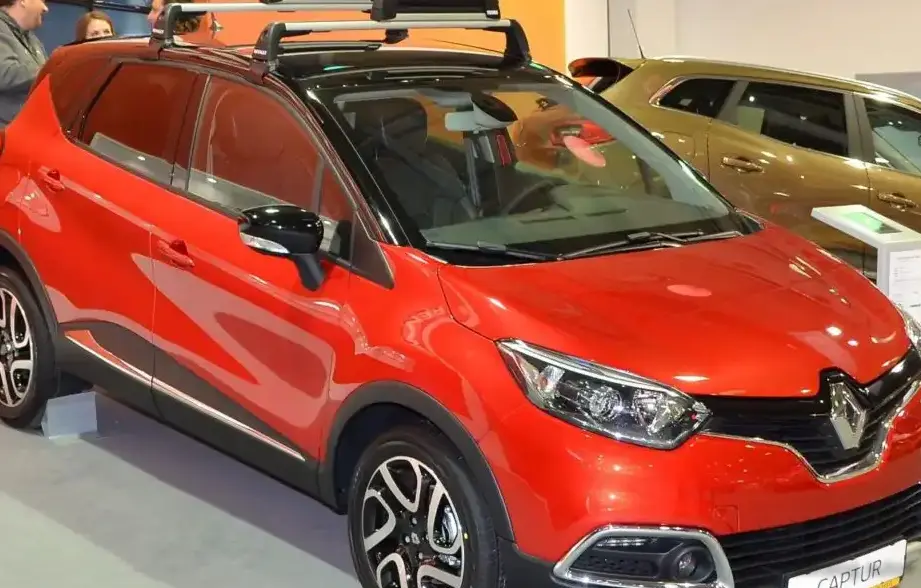
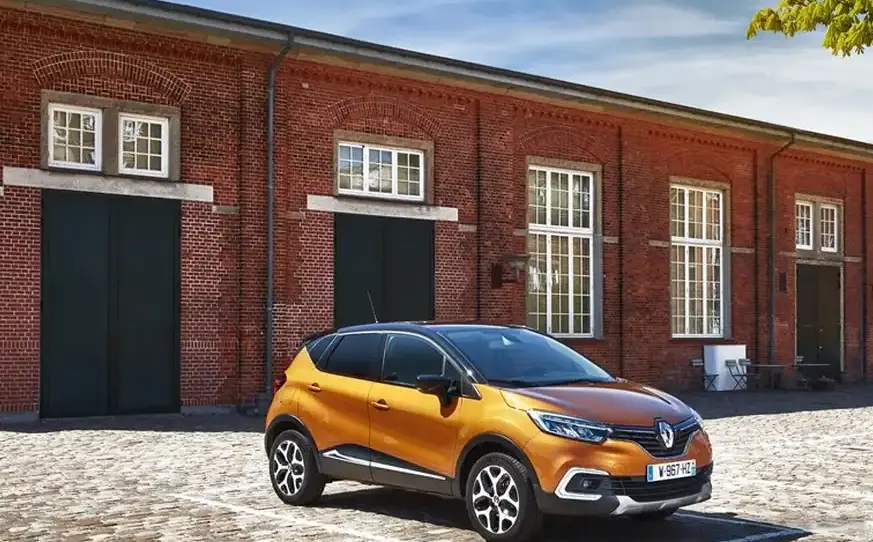
The Renault Captur II (facelift 2024) 1.0 TCe 90 hp represents an entry-level powertrain option within the updated second-generation Captur range, launched in April 2024. Positioned as a fuel-efficient and accessible variant, it caters to buyers prioritizing economy and practicality within the compact crossover segment. This model builds upon the success of the original Captur, continuing Renault’s strategy of offering a stylish and versatile vehicle for urban and family use. The facelift brought styling updates and revised technology, while the 1.0 TCe 90 hp engine provides a balance between performance and running costs.
Powertrain & Engine Architecture
The heart of this Captur variant is the Renault H4D 470 1.0 TCe engine, a three-cylinder turbocharged petrol unit. This engine is part of Renault’s broader range of downsized, turbocharged engines designed to improve fuel efficiency. The 999cc displacement is achieved through a relatively short stroke and oversquare bore, promoting responsiveness. It utilizes multi-point fuel injection and a single turbocharger with an intercooler to enhance power output. The engine is known for its relatively smooth operation for a three-cylinder unit, thanks to careful engineering and balancing. A 6-speed manual transmission is standard, chosen for its efficiency and driver engagement. While an automatic transmission is available on other Captur trims, it is not offered with this specific 90 hp engine.
Driving Characteristics
The 1.0 TCe 90 hp Captur delivers adequate performance for everyday driving, particularly in urban environments. Acceleration to 60 mph takes around 13.3 seconds, and 0-100 km/h (0-62 mph) in 14 seconds. While not particularly sporty, the engine provides sufficient torque (160 Nm / 118 lb-ft) at 2750 rpm for comfortable overtaking and merging onto highways. The manual transmission allows for precise control, and the gear ratios are well-suited to maximizing fuel economy. Compared to higher-powered Captur variants (like the 1.3 TCe), this version feels less eager to accelerate, but it offers a more relaxed and economical driving experience. The relatively light weight of the three-cylinder engine contributes to nimble handling.
Equipment & Trim Levels
The 1.0 TCe 90 hp typically serves as the entry point to the Captur II range. Standard equipment generally includes air conditioning, a touchscreen infotainment system with smartphone integration (Apple CarPlay and Android Auto), Bluetooth connectivity, and basic safety features like ABS, ESP, and multiple airbags. Higher trim levels add features such as alloy wheels, parking sensors, a rearview camera, automatic climate control, and more advanced driver-assistance systems. Interior upholstery is typically cloth, with options for upgraded materials on higher trims. The dashboard layout is modern and functional, with a focus on user-friendliness.
Chassis & Braking
The Captur II utilizes a McPherson strut front suspension and an elastic beam rear suspension. This setup provides a good balance between ride comfort and handling. The front brakes are ventilated discs, offering good stopping power, while the rear brakes are drums, a cost-saving measure common in entry-level variants. Electric power steering provides light and precise steering feel. The suspension is tuned for comfort, absorbing bumps and imperfections in the road surface effectively. Stabilizer bars are fitted to both axles to reduce body roll during cornering.
Market Reception & Comparison
The Renault Captur II (facelift 2024) 1.0 TCe 90 hp has been well-received as a practical and affordable crossover. Critics have praised its fuel efficiency and comfortable ride. Compared to other trims in the Captur lineup, this variant offers the lowest running costs but sacrifices some performance. It competes with other entry-level crossovers like the Peugeot 2008, Volkswagen T-Cross, and Opel/Vauxhall Crossland. The 1.0 TCe engine generally offers competitive fuel economy figures within its class, and its reliability has been generally good, although long-term data is still emerging for the facelifted model.
Legacy
The 1.0 TCe engine is expected to remain a key part of Renault’s powertrain strategy for the foreseeable future, as the automotive industry transitions towards electrification. While the Captur will eventually be offered with hybrid and electric powertrains, the 1.0 TCe 90 hp will likely continue to appeal to buyers seeking an affordable and efficient petrol-powered crossover. The long-term reliability of this powertrain remains to be seen, but Renault’s experience with similar engines suggests it should prove durable with proper maintenance. In the used car market, this variant is expected to hold its value as a practical and economical choice.