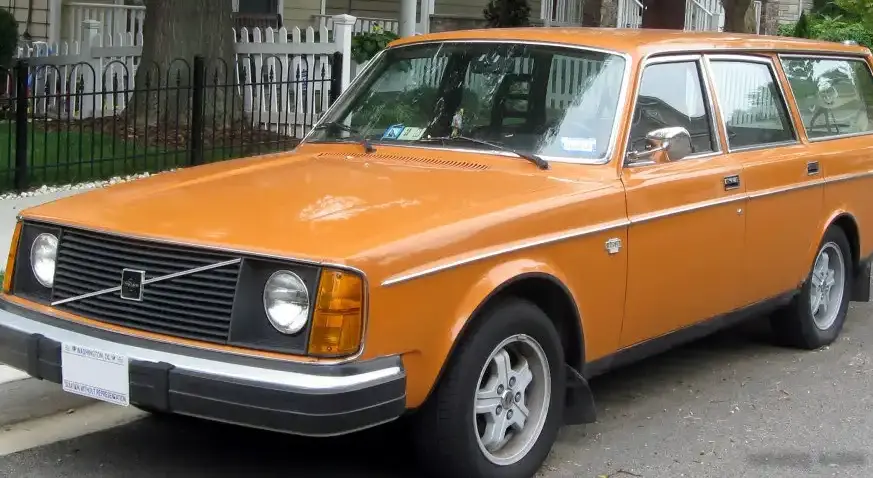
The Volvo 240 2.1, producing 107 horsepower, represented a significant iteration within the long-running and highly respected 240 series. Produced between 1980 and 1984 (primarily as the P242 and P244 models, denoting 2-door and 4-door sedan configurations respectively), this variant occupied a crucial middle ground in the 240 lineup, offering a balance between affordability, fuel economy, and the renowned Volvo safety and durability. It served as a popular choice for families and those seeking a reliable, long-lasting vehicle, particularly in North America and Europe.
Technical Specifications
| Brand | Volvo |
| Model | 240 |
| Generation | 240 (P242, P244) |
| Type (Engine) | 2.1 (107 Hp) |
| Start of Production | 1980 |
| End of Production | 1984 |
| Powertrain Architecture | Internal Combustion Engine |
| Body Type | Sedan |
| Fuel Type | Petrol (Gasoline) |
| Power | 107 Hp |
| Engine Model/Code | B21A |
| Engine Aspiration | Naturally Aspirated |
| Engine Oil Capacity | 3.9 l (4.12 US qt | 3.43 UK qt) |
| Fuel Tank Capacity | 60 l (15.85 US gal | 13.2 UK gal) |
Powertrain & Engine Architecture
The heart of the Volvo 240 2.1 was the B21A engine, a 2.1-liter inline-four cylinder powerplant. This engine was a continuation of Volvo’s robust red-block series, known for its over-engineered durability. The B21A featured a cast iron block and an aluminum cylinder head, contributing to its longevity. Fuel delivery was managed by Bosch mechanical fuel injection – a system chosen for its reliability and relative simplicity compared to emerging electronic fuel injection systems of the era. The engine utilized a single overhead camshaft (SOHC) valvetrain, operating two valves per cylinder. The 107 horsepower output was achieved at approximately 5200 rpm, with peak torque of around 128 lb-ft at 3100 rpm. This configuration was typically paired with a three-speed automatic transmission (ZF 3HP22), although a four-speed manual transmission was also available. The automatic transmission, while providing ease of use, was not known for its sporty performance, prioritizing smooth shifts and reliability over rapid acceleration.
Driving Characteristics
The 240 2.1 Automatic offered a comfortable, if not particularly exhilarating, driving experience. The automatic transmission’s gear ratios were geared towards fuel efficiency and relaxed cruising. Acceleration from a standstill was adequate, but not brisk, with 0-60 mph times typically falling in the 12-14 second range. Compared to the manual transmission versions, the automatic noticeably reduced responsiveness. The higher-output 2.3-liter engines, and especially the turbocharged variants, offered significantly more performance. However, the 2.1 Automatic excelled in everyday driving situations, providing smooth and predictable power delivery. The car’s relatively heavy weight (around 2,800-3,000 lbs) contributed to a stable and planted feel on the road, enhancing its reputation for safety. Steering was unassisted in many models, requiring a bit more effort at low speeds, but providing good road feel.
Equipment & Trim Levels
The 240 2.1 Automatic typically fell into the mid-range of the 240 trim levels. Standard equipment generally included cloth upholstery, a basic AM/FM radio, and manual windows and door locks. Volvo’s commitment to safety was evident even in this trim level, with standard features like front disc brakes, seat belts for all occupants, and a reinforced safety cage. Optional extras included power windows, power door locks, a sunroof, upgraded audio systems, and leather upholstery. The interior design was functional and understated, prioritizing ergonomics and durability over flashy aesthetics. Dashboard layouts were relatively simple, with clearly marked gauges and controls. The DL trim level, often paired with the 2.1 engine, added some additional comfort and convenience features, such as upgraded interior trim and a more comprehensive instrument cluster.
Chassis & Braking
The Volvo 240 utilized a traditional body-on-frame construction, contributing to its robustness and repairability. The front suspension consisted of MacPherson struts with coil springs and an anti-roll bar. The rear suspension employed a solid axle with leaf springs. Braking systems varied depending on the year and market. Early models often featured drum brakes on the rear wheels, while later models upgraded to disc brakes all around. The braking system was generally considered effective for its time, providing good stopping power and stability. Steering was typically unassisted, providing a direct connection to the road, but requiring more effort during parking maneuvers. The chassis was designed to prioritize safety and comfort, resulting in a relatively soft ride quality.
Market Reception & Comparison
The Volvo 240 2.1 Automatic was generally well-received by automotive critics and consumers alike. It was praised for its reliability, safety, and comfortable ride. However, its performance was often criticized as being somewhat lackluster, particularly when compared to more sporty competitors. Fuel economy was reasonable for the era, averaging around 20-25 mpg in mixed driving conditions. Compared to the higher-output 2.3-liter and turbocharged variants, the 2.1 offered a more affordable entry point into the 240 range, appealing to budget-conscious buyers. The 2.1 Automatic was also often compared to other mid-size sedans of the time, such as the Ford Granada and the Opel Ascona, generally holding its own in terms of build quality and safety features.
Legacy
The Volvo 240 series, and the 2.1 variant in particular, has achieved a legendary status among automotive enthusiasts. Its reputation for exceptional durability and reliability has ensured a strong following in the used car market. Many examples remain on the road today, often with remarkably high mileage. The B21A engine is known for its ability to withstand years of abuse, and parts availability remains relatively good. While the automatic transmission may require occasional maintenance, it is generally considered a robust unit. The 240 2.1 Automatic represents a classic example of Swedish engineering – a vehicle built to last, prioritizing safety and practicality over outright performance. It continues to be appreciated by those seeking a dependable and characterful classic car.