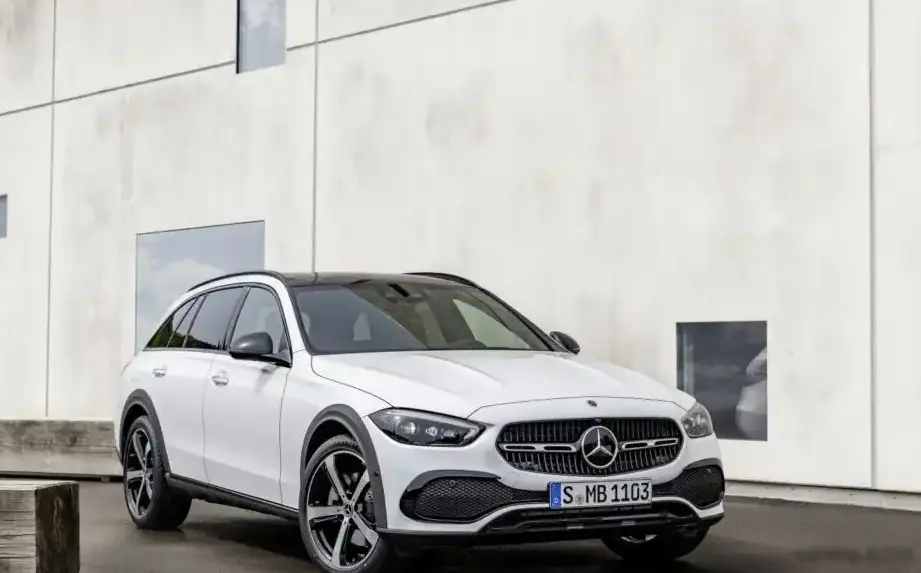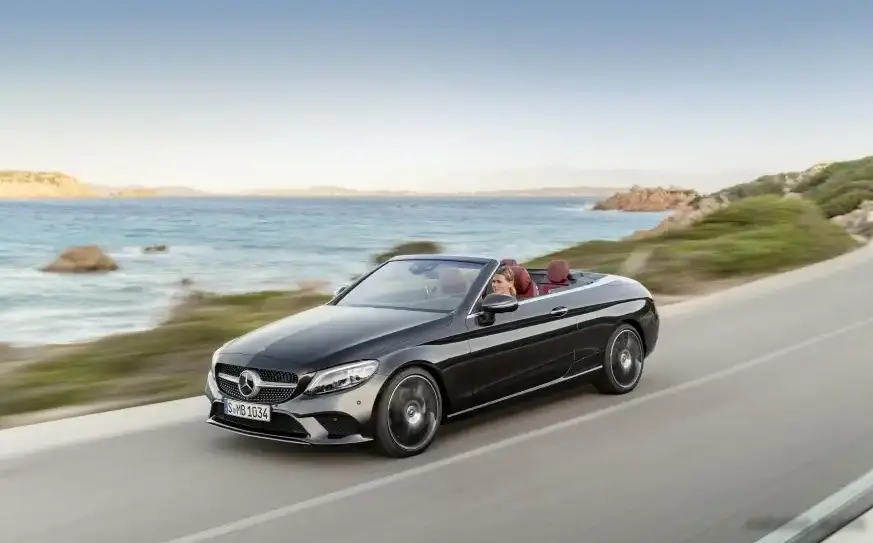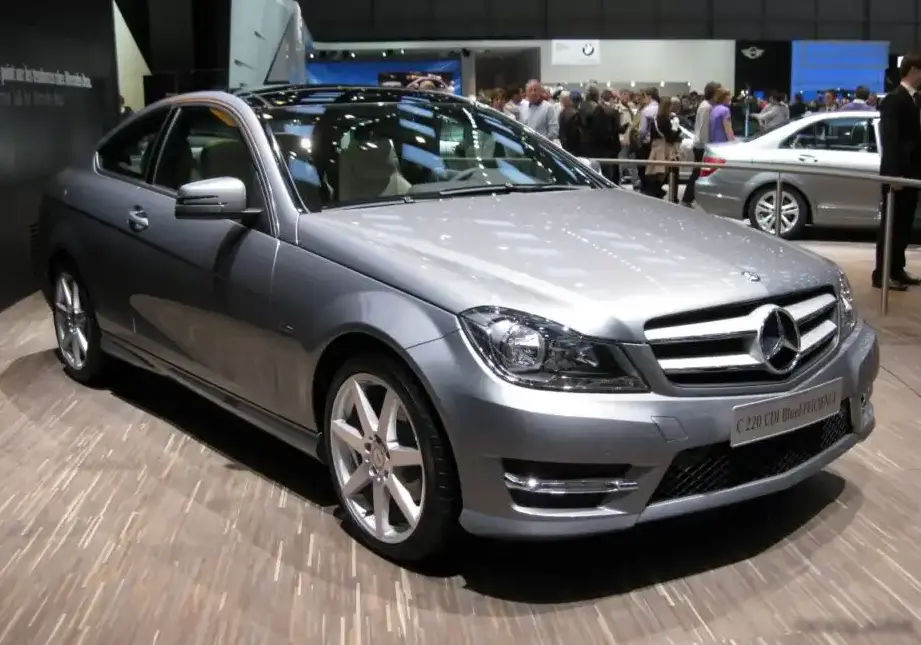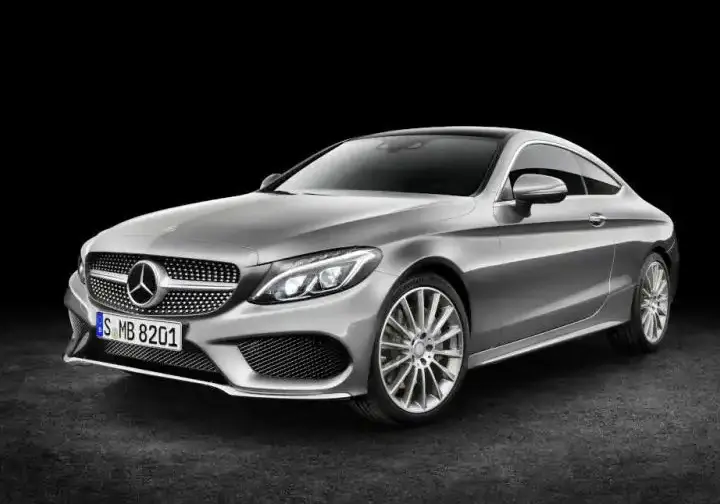
The Mercedes-Benz C-Class T-modell (S203) C 320 V6, produced from January 2001 to March 2004, represented a compelling blend of practicality and performance within the compact executive estate car segment. Positioned as a higher-end variant of the S203 series, it offered a more powerful engine option compared to the base models, appealing to buyers seeking a refined driving experience with ample cargo space. This model occupied a space between the more economical four-cylinder options and the high-performance AMG variants, targeting customers who prioritized a balance of power, comfort, and versatility. It was primarily sold in the European market, where the station wagon (estate) body style enjoys significant popularity.
Technical Specifications
| Brand | Mercedes-Benz |
| Model | C-class |
| Generation | C-class T-modell (S203) |
| Type (Engine) | C 320 V6 (218 Hp) |
| Start of production | January, 2001 |
| End of production | March, 2004 |
| Powertrain Architecture | Internal Combustion engine |
| Body type | Station wagon (estate) |
| Seats | 5 |
| Doors | 5 |
| Fuel consumption (economy) – urban (NEDC) | 16.7 l/100 km (14.1 US mpg, 16.9 UK mpg, 6 km/l) |
| Fuel consumption (economy) – extra urban (NEDC) | 8.2 l/100 km (28.7 US mpg, 34.4 UK mpg, 12.2 km/l) |
| Fuel consumption (economy) – combined (NEDC) | 11.4 l/100 km (20.6 US mpg, 24.8 UK mpg, 8.8 km/l) |
| CO2 emissions (NEDC) | 259 g/km |
| Fuel Type | Petrol (Gasoline) |
| Acceleration 0 – 100 km/h | 7.9 sec |
| Acceleration 0 – 62 mph | 7.9 sec |
| Acceleration 0 – 60 mph | 7.5 sec |
| Maximum speed | 244 km/h (151.61 mph) |
| Emission standard | Euro 4 |
| Weight-to-power ratio | 7.1 kg/Hp, 141.6 Hp/tonne |
| Weight-to-torque ratio | 5 kg/Nm, 200 Nm/tonne |
| Power | 218 Hp @ 5700 rpm |
| Power per litre | 68.1 Hp/l |
| Torque | 308 Nm @ 3000-4800 rpm (227.17 lb.-ft. @ 3000-4800 rpm) |
| Engine layout | Front, Longitudinal |
| Engine Model/Code | M 112.946 |
| Engine displacement | 3199 cm3 (195.21 cu. in.) |
| Number of cylinders | 6 |
| Engine configuration | V-engine |
| Cylinder Bore | 89.9 mm (3.54 in.) |
| Piston Stroke | 84 mm (3.31 in.) |
| Compression ratio | 10:1 |
| Number of valves per cylinder | 3 |
| Fuel injection system | Multi-port manifold injection |
| Engine aspiration | Naturally aspirated engine |
| Valvetrain | SOHC |
| Engine oil capacity | 8 l (8.45 US qt | 7.04 UK qt) |
| Coolant | 10.5 l (11.1 US qt | 9.24 UK qt) |
| Kerb Weight | 1540 kg (3395.12 lbs.) |
| Max. weight | 2120 kg (4673.8 lbs.) |
| Max load | 580 kg (1278.68 lbs.) |
| Trunk (boot) space – minimum | 470 l (16.6 cu. ft.) |
| Trunk (boot) space – maximum | 1384 l (48.88 cu. ft.) |
| Fuel tank capacity | 62 l (16.38 US gal | 13.64 UK gal) |
| Max. roof load | 100 kg (220.46 lbs.) |
| Permitted trailer load with brakes (12%) | 1500 kg (3306.93 lbs.) |
| Permitted trailer load without brakes | 750 kg (1653.47 lbs.) |
| Length | 4541 mm (178.78 in.) |
| Width | 1728 mm (68.03 in.) |
| Width including mirrors | 1980 mm (77.95 in.) |
| Height | 1466 mm (57.72 in.) |
| Wheelbase | 2715 mm (106.89 in.) |
| Front track | 1493 mm (58.78 in.) |
| Rear (Back) track | 1464 mm (57.64 in.) |
| Front overhang | 755 mm (29.72 in.) |
| Rear overhang | 1071 mm (42.17 in.) |
| Drag coefficient (Cd) | 0.31 |
| Minimum turning circle (turning diameter) | 10.76 m (35.3 ft.) |
| Drivetrain Architecture | The Internal combustion engine (ICE) drives the rear wheels of the vehicle. |
| Drive wheel | Rear wheel drive |
| Number of gears and type of gearbox | 6 gears, manual transmission |
| Front suspension | Independent type McPherson, Transverse stabilizer |
| Rear suspension | Independent multi-link suspension, Transverse stabilizer |
| Front brakes | Ventilated discs |
| Rear brakes | Disc |
| Assisting systems | ABS (Anti-lock braking system) |
| Steering type | Steering rack and pinion |
| Power steering | Hydraulic Steering |
| Tires size | 205/55 R 16 91 W |
| Wheel rims size | 7 J x 16 H 2 |
INTRODUCTION
The S203 C-Class T-modell, introduced in 2001, brought the practicality of a station wagon to the popular C-Class range. The C 320 V6 variant, powered by the M112.946 engine, was a significant step up from the base models, offering a more refined and powerful driving experience. It was positioned as a premium offering within the lineup, appealing to buyers who needed the space of an estate car but didn’t want to compromise on performance or luxury. The S203 platform was a substantial update over its predecessor (W202), offering improved ride quality, handling, and interior space.
Powertrain & Engine Architecture
The heart of the C 320 T-modell is the M112.946 3.2-liter V6 engine. This naturally aspirated engine features a 60-degree V-angle and utilizes a three-valve-per-cylinder (two intake, one exhaust) SOHC valvetrain. The engine employs multi-port fuel injection, delivering fuel directly into the intake ports. The M112 engine family was known for its smooth operation and relatively high power output for its displacement. The engine produces 218 horsepower at 5700 rpm and 308 Nm (227 lb-ft) of torque between 3000 and 4800 rpm. The engine is longitudinally mounted, driving the rear wheels. The standard transmission for this model was a 6-speed manual, though a 5-speed automatic transmission was also available, impacting acceleration slightly.
Driving Characteristics
The C 320 T-modell offered a noticeably more engaging driving experience than the four-cylinder variants. The V6 engine provided ample power for comfortable cruising and confident overtaking. While not a sports car, the C 320 delivered a smooth and refined ride, thanks to the well-tuned suspension. The 6-speed manual transmission allowed for precise gear changes and maximized engine performance, while the optional automatic provided convenience, albeit with a slight reduction in responsiveness. The rear-wheel-drive configuration contributed to balanced handling, although it could be less forgiving in slippery conditions compared to all-wheel-drive alternatives. The weight distribution, combined with the suspension setup, resulted in a stable and predictable ride, even when fully loaded with cargo.
Equipment & Trim Levels
The C 320 T-modell typically came well-equipped, reflecting its position as a higher-end variant. Standard features often included automatic climate control, power windows and mirrors, a multi-function steering wheel, and a high-quality audio system. Interior upholstery was typically a combination of cloth and leather, with options for full leather trim. Optional extras included a sunroof, navigation system, heated seats, and upgraded audio systems. The dashboard layout was typical of Mercedes-Benz at the time, with a focus on functionality and a premium feel. The estate body style itself added to the practicality, with a spacious cargo area that could be expanded by folding down the rear seats.
Chassis & Braking
The S203 C-Class utilized an independent suspension system all around. The front suspension featured McPherson struts with a transverse stabilizer bar, while the rear employed a multi-link setup, also with a stabilizer bar. This configuration provided a good balance between ride comfort and handling precision. Braking duties were handled by ventilated discs at the front and solid discs at the rear, equipped with ABS (Anti-lock Braking System) as standard. The braking system provided adequate stopping power for the vehicle’s weight and performance. Steering was via a rack-and-pinion system with hydraulic power assistance, offering a responsive and precise feel.
Market Reception & Comparison
The C 320 T-modell was generally well-received by automotive critics. It was praised for its powerful engine, comfortable ride, and spacious interior. Compared to the base C-Class models, the C 320 offered a significant performance upgrade. However, it was more expensive to purchase and operate, with higher fuel consumption than the four-cylinder variants. Compared to the C 32 AMG, the C 320 offered a more refined and comfortable driving experience, sacrificing some of the AMG’s outright performance. Fuel economy, while respectable for a V6 engine of this era, was not a strong point, averaging around 20.6 US mpg in combined driving.
Legacy
The M112 engine family, including the 3.2-liter V6 found in the C 320 T-modell, is generally considered to be a reliable and durable powerplant. With proper maintenance, these engines can accumulate high mileage without major issues. However, like any older vehicle, the C 320 T-modell may require attention to age-related issues such as suspension components, electrical systems, and rubber seals. On the used car market, these models are often sought after by enthusiasts who appreciate their blend of performance, practicality, and Mercedes-Benz build quality. Parts availability is generally good, although some specific components may be becoming increasingly difficult to find. The C 320 T-modell represents a well-rounded and enjoyable driving experience for those seeking a classic Mercedes-Benz estate car.