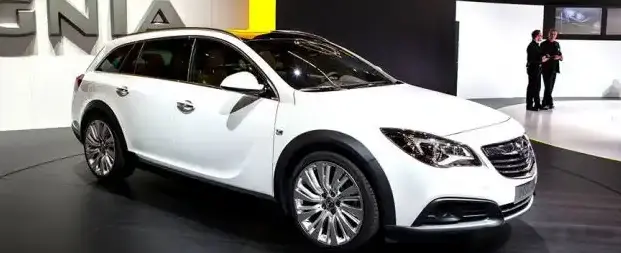
The Opel Insignia, particularly the hatchback variant, represented a significant step forward for the German automaker when it debuted in 2008. The facelifted version, introduced in 2013, refined the design and broadened the engine lineup. Among the available options was the 1.4 LPG (Liquefied Petroleum Gas) Turbo Ecotec, producing 140 horsepower. This variant was offered from July 2013 until January 2017 and aimed to provide a more economical alternative within the Insignia range, appealing to drivers seeking lower running costs without sacrificing all performance. It occupied a mid-range position in the Insignia lineup, slotting below the more powerful gasoline and diesel options, but offering a unique fuel flexibility.
Technical Specifications
| Brand | Opel |
| Model | Insignia |
| Generation | Insignia Hatchback (A, facelift 2013) |
| Type (Engine) | 1.4 LPG (140 Hp) Turbo Ecotec |
| Start of production | July, 2013 |
| End of production | January, 2017 |
| Powertrain Architecture | Internal Combustion engine |
| Body type | Hatchback |
| Seats | 5 |
| Doors | 5 |
| Fuel consumption (economy) – urban | 7.9 l/100 km (29.8 US mpg, 35.8 UK mpg, 12.7 km/l) |
| Fuel consumption (economy) – urban (LPG) | 10.1 l/100 km |
| Fuel consumption (economy) – extra urban | 4.8 l/100 km (49 US mpg, 58.9 UK mpg, 20.8 km/l) |
| Fuel consumption (economy) – extra urban (LPG) | 6.1 l/100 km |
| Fuel consumption (economy) – combined | 5.9 l/100 km (39.9 US mpg, 47.9 UK mpg, 16.9 km/l) |
| Fuel consumption (economy) – combined (LPG) | 7.6 l/100 km |
| CO2 emissions | 139 g/km |
| CO2 emissions (LPG) | 124 g/km |
| Fuel Type | Petrol / LPG |
| Acceleration 0 – 100 km/h | 11.9 sec |
| Acceleration 0 – 62 mph | 11.9 sec |
| Acceleration 0 – 60 mph | 11.3 sec |
| Maximum speed | 195 km/h (121.17 mph) |
| Emission standard | Euro 5 |
| Power | 140 Hp @ 4900-6000 rpm |
| Power per litre | 102.6 Hp/l |
| Torque | 200 Nm @ 1850-4900 rpm (147.51 lb.-ft. @ 1850-4900 rpm) |
| Engine layout | Front, Transverse |
| Engine Model/Code | B14NET |
| Engine displacement | 1364 cm3 (83.24 cu. in.) |
| Number of cylinders | 4 |
| Engine configuration | Inline |
| Cylinder Bore | 72.5 mm (2.85 in.) |
| Piston Stroke | 82.6 mm (3.25 in.) |
| Compression ratio | 9.5:1 |
| Number of valves per cylinder | 4 |
| Fuel injection system | Multi-port manifold injection |
| Engine aspiration | Turbocharger |
| Engine oil capacity | 4 l (4.23 US qt | 3.52 UK qt) |
| Coolant | 9 l (9.51 US qt | 7.92 UK qt) |
| Trunk (boot) space – minimum | 530 l (18.72 cu. ft.) |
| Trunk (boot) space – maximum | 1470 l (51.91 cu. ft.) |
| Fuel tank capacity | 41 l (10.83 US gal | 9.02 UK gal) |
| Length | 4842 mm (190.63 in.) |
| Width | 1856 mm (73.07 in.) |
| Width including mirrors | 2084 mm (82.05 in.) |
| Height | 1498 mm (58.98 in.) |
| Wheelbase | 2737 mm (107.76 in.) |
| Front track | 1587 mm (62.48 in.) |
| Rear (Back) track | 1590 mm (62.6 in.) |
| Minimum turning circle | 10.9 m (35.76 ft.) |
| Drivetrain Architecture | The Internal combustion engine (ICE) drives the front wheels of the vehicle. |
| Drive wheel | Front wheel drive |
| Number of gears and type of gearbox | 6 gears, manual transmission |
| Assisting systems | ABS (Anti-lock braking system) |
| Steering type | Steering rack and pinion |
Introduction
The Opel Insignia A, launched in 2008, was a crucial model for Opel, aiming to elevate the brand’s image and compete with established players in the mid-size segment. The 2013 facelift brought updated styling, improved technology, and a refined engine range. The 1.4 LPG Turbo Ecotec variant, introduced during this refresh, offered a compelling alternative fuel option, particularly in European markets where LPG infrastructure was more developed. This model combined a turbocharged gasoline engine with the ability to run on LPG, providing drivers with the flexibility to choose between fuels and potentially reduce running costs. It was positioned as a practical and economical choice for families and commuters.
Powertrain & Engine Architecture
The heart of the Insignia 1.4 LPG is the B14NET engine, a 1364cc inline-four cylinder unit. This engine utilizes a turbocharger to boost power output, achieving 140 horsepower between 4900 and 6000 rpm and 200 Nm (147.51 lb-ft) of torque from 1850 to 4900 rpm. The engine employs multi-point fuel injection for precise fuel delivery. The LPG system is a dedicated conversion, meaning it runs on LPG when available and automatically switches to gasoline when the LPG tank is empty. The engine management system seamlessly handles the transition between fuels. The 6-speed manual transmission was standard, providing a balance between fuel efficiency and driver engagement. While an automatic transmission was available on other Insignia trims, it wasn’t offered with the 1.4 LPG engine.
Driving Characteristics
The 1.4 LPG Insignia offered a respectable driving experience, though it wasn’t designed for outright performance. Acceleration from 0-100 km/h (0-62 mph) took around 11.9 seconds, making it slower than the more powerful gasoline and diesel variants. However, the turbocharger provided a noticeable boost in power during overtaking maneuvers. The manual transmission allowed for precise gear selection, and the engine felt responsive within its optimal rev range. The LPG operation didn’t significantly alter the driving characteristics, although some drivers reported a slight reduction in power when running on LPG. The suspension provided a comfortable ride, absorbing bumps and imperfections in the road effectively. The steering was precise and well-weighted, offering a confident feel.
Equipment & Trim Levels
The 1.4 LPG Insignia typically came with a reasonable level of standard equipment. This included air conditioning, electric front windows, a CD/MP3 stereo system, and ABS brakes. Higher trim levels added features such as alloy wheels, cruise control, a touchscreen infotainment system, and parking sensors. Interior upholstery was typically cloth, with options for leather upgrades. The dashboard layout was functional and well-designed, with clear instrumentation. Optional extras included a panoramic sunroof, heated seats, and a navigation system.
Chassis & Braking
The Insignia A featured a front-wheel-drive layout with a MacPherson strut suspension at the front and a multi-link suspension at the rear. This setup provided a good balance between ride comfort and handling. The braking system consisted of disc brakes at the front and drum brakes at the rear. ABS (Anti-lock Braking System) was standard, enhancing safety during emergency braking situations. The steering system utilized a rack and pinion setup, providing precise and responsive steering feel.
Market Reception & Comparison
The 1.4 LPG Insignia was generally well-received by critics as a practical and economical option. It offered a lower total cost of ownership compared to the gasoline-only models, thanks to the lower price of LPG fuel. However, some reviewers noted the performance deficit compared to the more powerful engines. Compared to the 1.6L gasoline engine, the 1.4 LPG offered similar performance but with the added benefit of fuel flexibility. Against the diesel variants, the LPG model lacked the low-end torque and fuel efficiency of the diesel engines, but it offered a cleaner-burning alternative. The LPG version was particularly popular in countries with established LPG infrastructure and incentives.
Legacy
The Opel Insignia 1.4 LPG represents an interesting chapter in the model’s history, showcasing Opel’s willingness to explore alternative fuel options. While LPG conversions are less common today, the 1.4 LPG Insignia remains a viable option for those seeking a fuel-efficient and economical mid-size hatchback. The B14NET engine is generally considered reliable, although regular maintenance is essential. On the used car market, these models tend to be priced competitively, making them an attractive option for budget-conscious buyers. The Insignia, in general, helped to establish Opel as a serious contender in the mid-size segment, and the 1.4 LPG variant broadened its appeal to a wider range of customers.