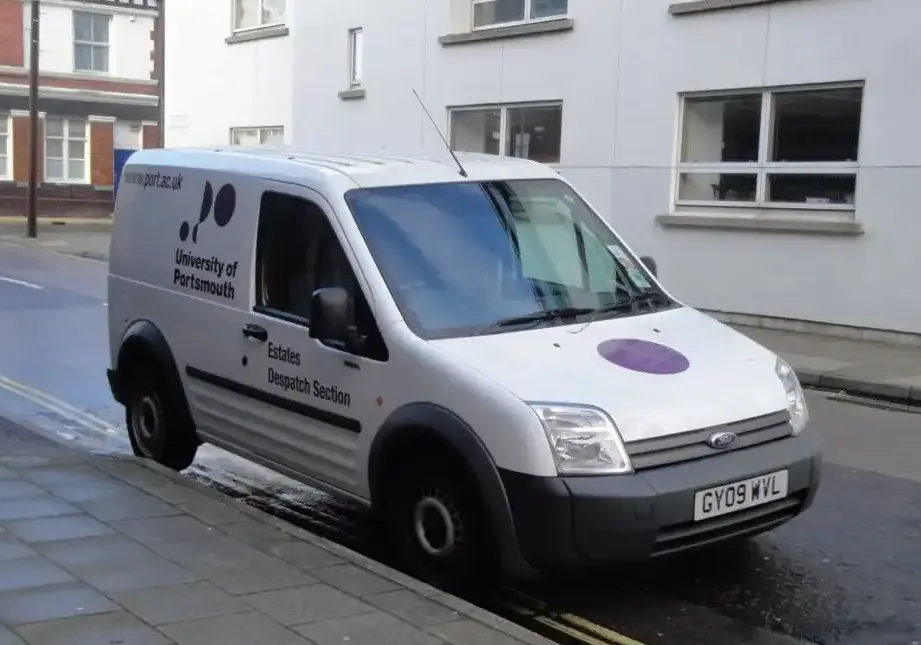
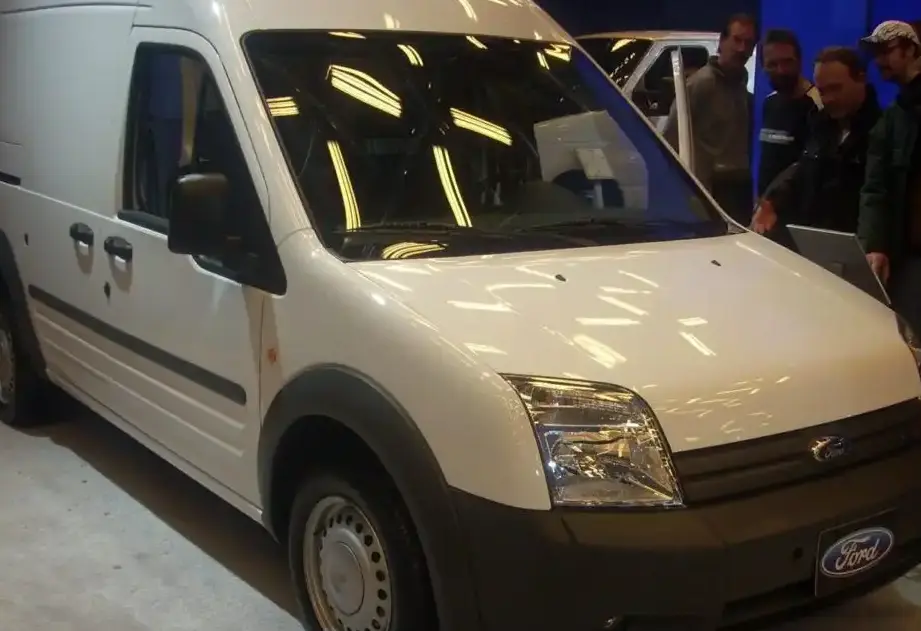
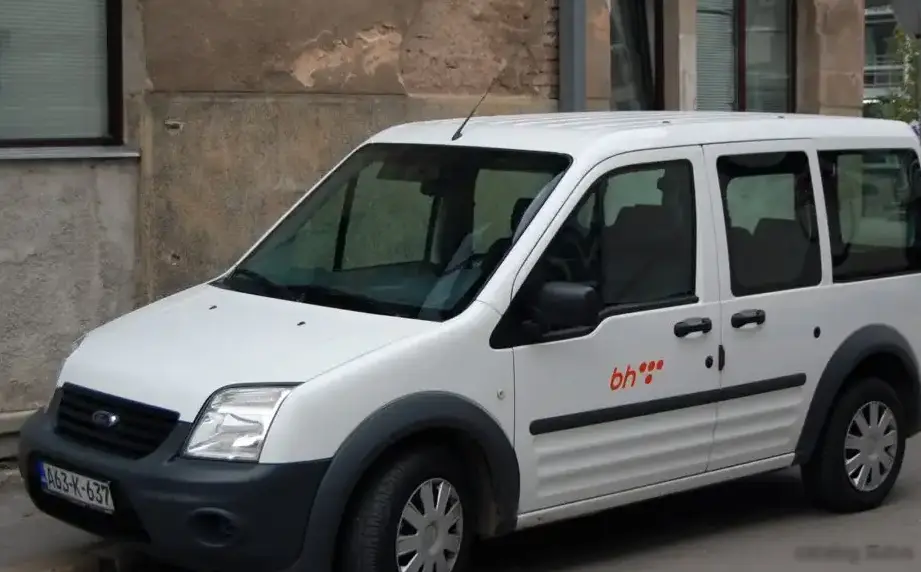
The Ford Transit Connect III Panel Van L2 1.5 EcoBoost (150 Hp) Plug-in Hybrid DSG represents a significant step in Ford’s commercial vehicle strategy, blending internal combustion with electric power to offer a versatile and efficient solution for businesses and tradespeople. Introduced in 2024, this variant is part of the third generation of the Transit Connect, known internally as the P650 platform, and builds upon the success of its predecessors by incorporating advanced hybrid technology. This particular configuration, combining a 1.5-liter EcoBoost engine with a plug-in hybrid system and a dual-clutch transmission (DSG), positions itself as a premium offering within the Transit Connect L2 lineup, prioritizing fuel economy and reduced emissions without sacrificing utility.
Technical Specifications
| Brand | Ford |
| Model | Transit Connect |
| Generation | Transit Connect III Panel Van L2 |
| Type (Engine) | 1.5 EcoBoost (150 Hp) Plug-in Hybrid DSG |
| Start of production | 2024 |
| Powertrain Architecture | PHEV (Plug-in Hybrid Electric Vehicle) |
| Body type | Minivan |
| Seats | 2 |
| Doors | 4-5 |
| Combined fuel consumption (WLTP) | 0.5 l/100 km (470.4 US mpg, 565 UK mpg, 200 km/l) |
| CO2 emissions (WLTP) | 11-12 g/km |
| Fuel Type | Petrol / electricity |
| Emission standard | Euro 6e |
| Weight-to-power ratio | 11.6 kg/Hp, 86.3 Hp/tonne |
| Weight-to-torque ratio | 5 kg/Nm, 201.3 Nm/tonne |
| Gross battery capacity | 25.7 kWh |
| Net (usable) battery capacity | 19.7 kWh |
| Battery technology | Lithium nickel manganese cobalt oxides (Li-NMC) |
| All-electric range (WLTP) | 110-118 km (68.35 – 73.32 mi) |
| Average Energy consumption (WLTP) | 19 kWh/100 km (30.58 kWh/100 mi, 110 MPGe, 5.3 km/kWh, 3.3 mi/kWh) |
| Electric motor power | 116 Hp @ 2500-4500 rpm |
| Electric motor Torque | 330 Nm (243.4 lb.-ft.) |
| Electric motor location | Integrated into the transmission |
| Electric motor type | Synchronous |
| System power | 150 Hp |
| System torque | 350 Nm (258.15 lb.-ft.) |
| Power | 116 Hp @ 3500-6000 rpm |
| Torque | 250 Nm @ 1500-3000 rpm (184.39 lb.-ft. @ 1500-3000 rpm) |
| Engine layout | Front, Transverse |
| Engine Model/Code | EA211 evo2 / DUCC |
| Engine displacement | 1498 cm3 (91.41 cu. in.) |
| Number of cylinders | 4 |
| Engine configuration | Inline |
| Cylinder Bore | 74.5 mm (2.93 in.) |
| Piston Stroke | 85.9 mm (3.38 in.) |
| Number of valves per cylinder | 4 |
| Fuel injection system | Direct injection |
| Engine aspiration | Turbocharger, Intercooler |
| Valvetrain | DOHC |
| Engine oil capacity | 4.3 l (4.54 US qt | 3.78 UK qt) |
| Kerb Weight | 1739 kg (3833.84 lbs.) |
| Max. weight | 2500 kg (5511.56 lbs.) |
| Max load | 761 kg (1677.72 lbs.) |
| Trunk (boot) space – maximum | 3700 l (130.66 cu. ft.) |
| Fuel tank capacity | 32.5 l (8.59 US gal | 7.15 UK gal) |
| Permitted trailer load with brakes (12%) | 1400 kg (3086.47 lbs.) |
| Permitted trailer load without brakes | 750 kg (1653.47 lbs.) |
| Permitted towbar download | 75 kg (165.35 lbs.) |
| Length | 4853 mm (191.06 in.) |
| Width | 1855 mm (73.03 in.) |
| Width with mirrors folded | 1931 mm (76.02 in.) |
| Width including mirrors | 2100 mm (82.68 in.) |
| Height | 1860 mm (73.23 in.) |
| Wheelbase | 2970 mm (116.93 in.) |
| Front track | 1565-1572 mm (61.61 – 61.89 in.) |
| Rear (Back) track | 1603-1606 mm (63.11 – 63.23 in.) |
| Front overhang | 890 mm (35.04 in.) |
| Rear overhang | 993 mm (39.09 in.) |
| Ride height (ground clearance) | 159 mm (6.26 in.) |
| Minimum turning circle (turning diameter) | 12.1 m (39.7 ft.) |
| Drivetrain Architecture | The Internal combustion engine (ICE) and electric motor drive the front wheels of the car with the ability to work in full electric or mixed mode. |
| Drive wheel | Front wheel drive |
| Number of gears and type of gearbox | 6 gears, automatic transmission DSG |
| Front suspension | Independent, type McPherson with coil spring and anti-roll bar |
| Rear suspension | Rigid axle suspension, Trailing arm, Coil spring |
| Front brakes | Ventilated discs |
| Rear brakes | Disc |
| Assisting systems | ABS (Anti-lock braking system) |
| Steering type | Steering rack and pinion |
| Power steering | Electric Steering |
| Tires size | 215/55 R17 |
| Wheel rims size | 6.5J x 17; 7J x 17 |
INTRODUCTION
The Ford Transit Connect III Panel Van L2 1.5 EcoBoost (150 Hp) Plug-in Hybrid DSG, launched in 2024, represents Ford’s commitment to electrifying its commercial vehicle lineup. Built on the P650 platform, this variant offers a compelling blend of practicality, efficiency, and reduced environmental impact. The “L2” designation indicates the long wheelbase version, providing increased cargo capacity. This plug-in hybrid model is primarily targeted at urban delivery services, tradespeople operating in low-emission zones, and businesses seeking to lower their total cost of ownership through fuel savings and potential tax incentives. It’s a direct response to growing demand for eco-friendly commercial vehicles in Europe and other markets with stringent emissions regulations.
Powertrain & Engine Architecture
At the heart of the Transit Connect PHEV lies Ford’s 1.5-liter EcoBoost turbocharged inline-four cylinder engine (engine code DUCC), producing 116 horsepower and 184 lb-ft of torque. This engine operates on the Atkinson cycle, maximizing efficiency. Coupled with this is a 116 hp electric motor integrated into the transmission, contributing an additional 243 lb-ft of torque. The combined system output is 150 horsepower and 258 lb-ft of torque. The engine utilizes direct fuel injection and a single scroll turbocharger. The electric motor is powered by a 19.7 kWh (usable) lithium-nickel-manganese-cobalt oxide (Li-NMC) battery pack, enabling an all-electric range of 110-118 kilometers (68-73 miles) under WLTP testing. Power is delivered to the front wheels via a six-speed dual-clutch transmission (DSG), chosen for its responsiveness and efficiency. The hybrid system intelligently manages the transition between electric and gasoline power, prioritizing electric operation whenever possible.
Driving Characteristics
The 1.5 EcoBoost Plug-in Hybrid DSG offers a noticeably different driving experience compared to the standard gasoline or diesel Transit Connect models. In electric mode, acceleration is brisk and quiet, making it ideal for navigating congested city streets. The electric motor provides instant torque, resulting in responsive performance. When the gasoline engine engages, the transition is generally seamless. The DSG transmission provides quick and smooth gear changes. While not designed for outright speed, the combined system delivers adequate power for typical commercial applications. The long wheelbase (L2) configuration contributes to a stable ride, even when fully loaded. Compared to the 1.0 EcoBoost engine, this hybrid offers significantly more power and torque, while the fuel economy is substantially better than the 1.5 EcoBoost non-hybrid version.
Equipment & Trim Levels
The Transit Connect III Panel Van L2 1.5 EcoBoost Plug-in Hybrid DSG typically comes well-equipped, reflecting its position as a premium variant. Standard features generally include air conditioning, a touchscreen infotainment system with smartphone integration (Apple CarPlay and Android Auto), Bluetooth connectivity, and a suite of driver-assistance technologies such as automatic emergency braking and lane-keeping assist. Interior upholstery is typically durable cloth, with options for upgraded materials. The dashboard layout is functional and driver-focused. Optional extras may include a rearview camera, parking sensors, upgraded audio systems, and additional safety features. The focus is on providing a comfortable and practical work environment for the driver.
Chassis & Braking
The Transit Connect L2 utilizes an independent McPherson strut front suspension with a coil spring and anti-roll bar, providing a comfortable ride and predictable handling. The rear suspension employs a rigid axle setup with trailing arms and coil springs, optimized for load-carrying capacity. Braking duties are handled by ventilated discs at the front and solid discs at the rear, providing adequate stopping power. The vehicle is equipped with ABS (Anti-lock Braking System) and electronic stability control as standard. The electric powertrain adds regenerative braking, which helps to recapture energy and extend the electric range.
Market Reception & Comparison
The Ford Transit Connect Plug-in Hybrid has been generally well-received by critics and fleet operators. Its exceptional fuel economy, particularly in urban environments, is a major selling point. The all-electric range is sufficient for many short-haul delivery routes, reducing operating costs and emissions. Compared to the diesel-powered Transit Connect, the hybrid offers significantly lower emissions and a quieter driving experience. While the initial purchase price is higher, the potential for fuel savings and tax incentives can offset this cost over the vehicle’s lifespan. Compared to competitors like the Renault Kangoo E-Tech and the Citroen e-Berlingo, the Ford offers a competitive range and payload capacity.
Legacy
The Ford Transit Connect III Panel Van L2 1.5 EcoBoost Plug-in Hybrid DSG represents a pivotal moment in the evolution of the Transit Connect. As regulations surrounding emissions become increasingly stringent, plug-in hybrid and fully electric commercial vehicles are expected to become more prevalent. The long-term reliability of the powertrain remains to be fully assessed, but Ford’s experience with hybrid technology suggests a robust and dependable system. On the used car market, these models are likely to hold their value due to their fuel efficiency and environmental benefits, appealing to businesses and individuals seeking a sustainable transportation solution.