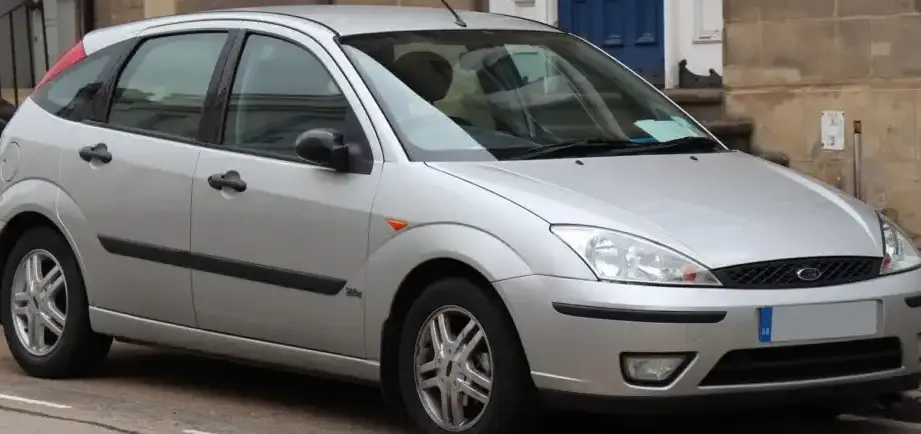
The Ford Focus Electric, specifically the hatchback variant produced from July 2013 to February 2017, represented Ford’s initial foray into mass-market, fully electric vehicles. This iteration, based on the facelifted third-generation Focus (Mk3), was primarily aimed at the European and North American markets as a compliance car and an early adopter offering. It utilized a 23 kWh battery pack to deliver a range suitable for daily commuting and urban driving. The 145 horsepower (Hp) electric motor positioned it as a relatively efficient and practical option within the burgeoning electric vehicle landscape of the early 2010s.
Technical Specifications
| Brand | Ford |
| Model | Focus |
| Generation | Focus III Hatchback (facelift 2014) |
| Type (Engine) | 23 kWh (145 Hp) Electric |
| Start of production | July, 2013 |
| End of production | February, 2017 |
| Powertrain Architecture | BEV (Electric Vehicle) |
| Body type | Hatchback |
| Seats | 5 |
| Doors | 5 |
| Fuel Type | Electricity |
| Maximum speed | 135 km/h (83.89 mph) |
| Weight-to-power ratio | 11.3 kg/Hp, 88.3 Hp/tonne |
| Weight-to-torque ratio | 6.6 kg/Nm, 152.2 Nm/tonne |
| Gross battery capacity | 23 kWh |
| Battery voltage | 325 V |
| Battery technology | Lithium-ion (Li-Ion) |
| Battery location | Under the rear seats / Inside the trunk |
| Average Energy consumption | 19.9 kWh/100 km (32.03 kWh/100 mi, 105 MPGe, 5 km/kWh, 3.1 mi/kWh) |
| Electric motor power | 145 Hp |
| Electric motor Torque | 250 Nm (184.39 lb.-ft.) |
| Electric motor location | Front, Transverse |
| System power | 145 Hp |
| System torque | 250 Nm (184.39 lb.-ft.) |
| Kerb Weight | 1643 kg (3622.19 lbs.) |
| Trunk (boot) space – minimum | 402 l (14.2 cu. ft.) |
| Length | 4392 mm (172.91 in.) |
| Width | 1824 mm (71.81 in.) |
| Width with mirrors folded | 1882 mm (74.09 in.) |
| Width including mirrors | 2045 mm (80.51 in.) |
| Height | 1478 mm (58.19 in.) |
| Wheelbase | 2649 mm (104.29 in.) |
| Front track | 1537 mm (60.51 in.) |
| Rear (Back) track | 1514 mm (59.61 in.) |
| Drivetrain Architecture | One electric motor drives the front wheels. |
| Drive wheel | Front wheel drive |
| Number of gears and type of gearbox | 1 gears, automatic transmission |
| Front suspension | Independent type McPherson |
| Rear suspension | Independent multi-link suspension |
| Front brakes | Ventilated discs, 278 mm |
| Rear brakes | Disc, 271 mm |
| Assisting systems | ABS (Anti-lock braking system) |
| Steering type | Steering rack and pinion |
| Power steering | Electric Steering |
| Tires size | 225/50 R17 |
| Wheel rims size | 17 |
Powertrain & Engine Architecture
The Ford Focus Electric employed a permanent magnet synchronous electric motor producing 145 horsepower and 250 Nm (184 lb-ft) of torque. This motor was transversely mounted at the front of the vehicle, driving the front wheels. Power was delivered via a single-speed automatic transmission, typical of most electric vehicles. The heart of the system was the 23 kWh lithium-ion battery pack, composed of 84 pouch cells. This battery pack was uniquely positioned – partially under the rear seats and extending into the trunk space, impacting cargo capacity. The onboard charger was capable of Level 1 (120V) and Level 2 (240V) charging, with charging times varying significantly depending on the voltage and amperage available. The vehicle utilized a regenerative braking system to recapture energy during deceleration, increasing overall efficiency.
Driving Characteristics
The Focus Electric offered a smooth and quiet driving experience, characteristic of electric vehicles. Acceleration was brisk, particularly from a standstill, due to the instant torque delivery of the electric motor. While 145 horsepower isn’t a high output, it was sufficient for typical urban and highway driving. Compared to the gasoline-powered Focus models, the electric version felt more responsive at lower speeds. However, the single-speed transmission meant that sustained high-speed cruising could be less efficient. The regenerative braking system took some getting used to, but ultimately contributed to a more intuitive driving experience. Compared to higher-performance Focus variants like the ST, the Electric prioritized efficiency and refinement over outright speed and handling.
Equipment & Trim Levels
The Focus Electric was generally well-equipped, reflecting its position as a relatively premium offering within the Focus lineup. Standard features typically included alloy wheels, a touchscreen infotainment system with Ford’s SYNC connectivity, automatic climate control, and a suite of safety features like ABS and multiple airbags. Higher trim levels added features such as leather upholstery, a premium sound system, and parking sensors. The interior design was largely consistent with the standard Focus facelift, but with unique instrument cluster graphics displaying energy consumption and battery status. Options were limited, primarily focusing on paint colors and accessory packages.
Chassis & Braking
The Focus Electric retained the MacPherson strut front suspension and multi-link rear suspension found in other Focus Mk3 models. However, the suspension was tuned to accommodate the added weight of the battery pack. The vehicle featured ventilated disc brakes at the front and solid disc brakes at the rear. The ABS system was standard, providing enhanced braking performance and stability. The added weight of the battery pack did impact handling somewhat, making the electric version feel slightly less agile than its gasoline-powered counterparts. Tire size was typically 225/50 R17, providing a balance of grip and ride comfort.
Market Reception & Comparison
The Ford Focus Electric received mixed reviews. Critics praised its smooth and quiet operation, as well as its relatively spacious interior. However, the limited range (approximately 76 miles) and the impact on trunk space were frequently cited as drawbacks. Compared to other electric vehicles available at the time, such as the Nissan Leaf and the Chevrolet Volt, the Focus Electric offered a more engaging driving experience but lacked the extended range of some competitors. Fuel economy, measured in MPGe, was competitive, but the overall cost of ownership was higher due to the vehicle’s initial price. Compared to the gasoline-powered Focus models, the Electric appealed to a different demographic – environmentally conscious buyers willing to trade some practicality for zero tailpipe emissions.
Legacy
The Ford Focus Electric, while not a commercial blockbuster, played a significant role in Ford’s early electric vehicle development. It provided valuable data and experience that informed the development of subsequent electric vehicles, such as the Ford Mustang Mach-E. On the used car market, the Focus Electric remains a relatively affordable entry point into electric vehicle ownership. However, battery degradation is a concern, and potential buyers should carefully assess the battery’s remaining capacity. The powertrain, while generally reliable, may require specialized servicing due to its complexity. Despite its limitations, the Focus Electric represents an important step in Ford’s journey towards electrification and a testament to the company’s early commitment to sustainable transportation.