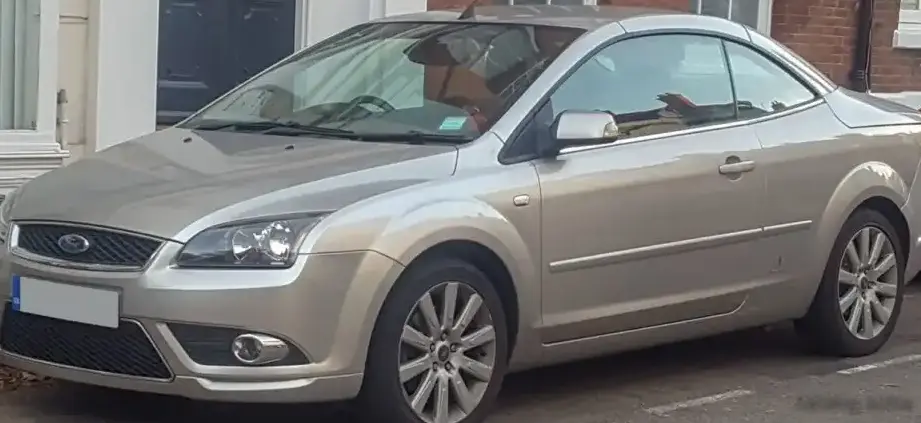
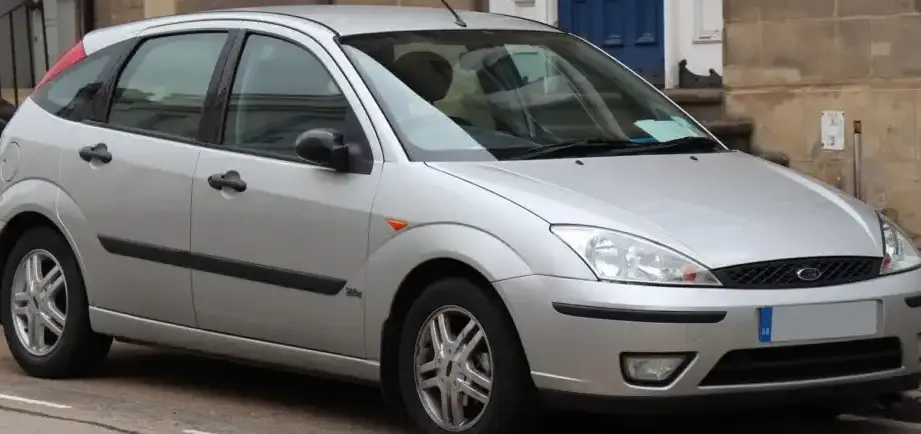
The Ford Focus III Hatchback, specifically the 33.5 kWh (147 horsepower) electric variant, represents Ford’s initial foray into a fully electric hatchback within the highly competitive European and, to a lesser extent, North American markets. Production spanned a relatively short period, from 2017 to 2018, positioning it as an early adopter model within the third generation Focus (Mk3) lineup, which underwent a significant facelift in 2014. This electric Focus aimed to provide a zero-emission alternative to traditional internal combustion engine models, leveraging the established practicality and driving dynamics of the Focus platform. It was designed to appeal to environmentally conscious consumers seeking a compact, versatile vehicle for urban and suburban driving.
Technical Specifications
| Brand | Ford |
| Model | Focus |
| Generation | Focus III Hatchback (facelift 2014) |
| Type (Engine) | 33.5 kWh (147 Hp) Electric |
| Start of production | 2017 |
| End of production | 2018 |
| Powertrain Architecture | BEV (Electric Vehicle) |
| Body type | Hatchback |
| Seats | 5 |
| Doors | 5 |
| Fuel Type | Electricity |
| Acceleration 0 – 100 km/h | 11.4 sec |
| Acceleration 0 – 62 mph | 11.4 sec |
| Acceleration 0 – 60 mph | 10.8 sec |
| Maximum speed | 137 km/h (85.13 mph) |
| Weight-to-power ratio | 11.2 kg/Hp, 89 Hp/tonne |
| Weight-to-torque ratio | 6.6 kg/Nm, 151.4 Nm/tonne |
| Gross battery capacity | 33.5 kWh |
| Battery technology | Lithium-ion (Li-Ion) |
| Battery weight | 300 kg (661.39 lbs) |
| Battery location | Under the rear seats / Inside the trunk |
| All-electric range | 225 km (139.81 mi) |
| Average Energy consumption | 16.4 kWh/100 km (26.39 kWh/100 mi) |
| MPGe | 128 |
| km/kWh | 6.1 |
| mi/kWh | 3.8 |
| Electric motor power | 147 Hp |
| Electric motor Torque | 250 Nm (184.39 lb.-ft.) |
| Electric motor model/code | KDDA |
| Electric motor location | Front axle, Transverse |
| System power | 147 Hp |
| System torque | 250 Nm (184.39 lb.-ft.) |
| Kerb Weight | 1651 kg (3639.83 lbs) |
| Trunk (boot) space – minimum | 237 l (8.37 cu. ft.) |
| Trunk (boot) space – maximum | 1125 l (39.73 cu. ft.) |
| Length | 4391 mm (172.87 in) |
| Width | 1823 mm (71.77 in) |
| Width with mirrors folded | 1858 mm (73.15 in) |
| Width including mirrors | 2010 mm (79.13 in) |
| Height | 1477 mm (58.15 in) |
| Wheelbase | 2649 mm (104.29 in) |
| Front track | 1537 mm (60.51 in) |
| Rear (Back) track | 1514 mm (59.61 in) |
| Minimum turning circle | 11 m (36.09 ft) |
| Drivetrain Architecture | One electric motor drives the front wheels |
| Drive wheel | Front wheel drive |
| Number of gears | 1 |
| Gearbox type | Automatic transmission |
| Front suspension | Independent type McPherson |
| Rear suspension | Independent multi-link suspension |
| Front brakes | Ventilated discs |
| Rear brakes | Ventilated discs |
| Assisting systems | ABS (Anti-lock braking system) |
| Steering type | Steering rack and pinion |
| Power steering | Electric |
| Tires size | 215/55 R17 |
| Wheel rims size | 7J x 17 |
Powertrain & Engine Architecture
The Ford Focus Electric utilizes a fully Battery Electric Vehicle (BEV) powertrain. At its heart is a liquid-cooled 33.5 kWh lithium-ion battery pack, strategically positioned under the rear seats and extending into the trunk space. This placement was a compromise to maintain a reasonable center of gravity while accommodating the battery. The electric motor, designated KDDA, is a transverse-mounted unit driving the front wheels. It produces 147 horsepower and 250 Nm (184 lb-ft) of torque, providing instant torque delivery characteristic of electric motors. The single-speed automatic transmission simplifies operation, eliminating the need for gear changes. The charging port location was dependent on regional specifications.
Driving Characteristics
The 147 hp electric motor delivers brisk acceleration, achieving 0-60 mph in approximately 10.8 seconds. While not a performance-oriented variant, the instant torque provides responsive acceleration in urban environments. The single-speed transmission offers seamless power delivery, but lacks the gear ratios found in conventional automatic transmissions, potentially impacting efficiency at higher speeds. Compared to the 1.0L EcoBoost or 1.5L gasoline variants, the electric Focus offers a quieter and smoother driving experience. However, the range of 225 km (139.81 miles) on a full charge was relatively limited compared to later electric vehicles, making it best suited for shorter commutes and city driving.
Equipment & Trim Levels
The electric Focus typically came with a fairly comprehensive standard equipment list, reflecting its positioning as a technologically advanced model. Standard features included air conditioning, Ford’s SYNC infotainment system with a touchscreen display, Bluetooth connectivity, and a suite of safety features such as ABS, electronic stability control, and multiple airbags. Higher trim levels offered upgrades such as leather upholstery, heated front seats, a premium sound system, and advanced driver-assistance systems like lane-keeping assist and adaptive cruise control. Interior aesthetics were largely consistent with the facelifted Mk3 Focus, featuring a modern dashboard design and comfortable seating.
Chassis & Braking
The electric Focus retained the well-regarded chassis of the standard Mk3 Focus, featuring an independent McPherson strut front suspension and an independent multi-link rear suspension. However, the added weight of the battery pack (approximately 300 kg / 661 lbs) necessitated some adjustments to the suspension tuning to maintain handling balance. The braking system utilized ventilated discs on all four wheels, providing adequate stopping power. Regenerative braking was also incorporated, capturing kinetic energy during deceleration to recharge the battery and improve efficiency. The electric Focus featured electric power steering, offering light and precise steering feel.
Market Reception & Comparison
The Ford Focus Electric received mixed reviews. Critics praised its quiet operation, smooth acceleration, and comfortable ride. However, the limited range and relatively high price point compared to gasoline-powered Focus models were significant drawbacks. Fuel economy, expressed as 128 MPGe, was competitive with other electric vehicles of the time. Compared to the diesel variants (like the 1.5 TDCi), the electric Focus offered zero tailpipe emissions but lacked the long-range capability of the diesel. Against the gasoline-powered 1.0L EcoBoost, the electric model provided a more refined driving experience but came at a higher initial cost.
Legacy
The Ford Focus Electric, while a short-lived model, served as an important stepping stone for Ford in the development of electric vehicles. The powertrain proved relatively reliable, with few widespread issues reported. However, the limited battery capacity and range have made it less desirable in the used car market compared to newer electric vehicles with significantly improved range and charging infrastructure. Today, the 2017-2018 Focus Electric represents a piece of automotive history, showcasing Ford’s early efforts to embrace electric mobility. Its legacy lies in the lessons learned that paved the way for future electric Ford models, such as the Mustang Mach-E and the F-150 Lightning.