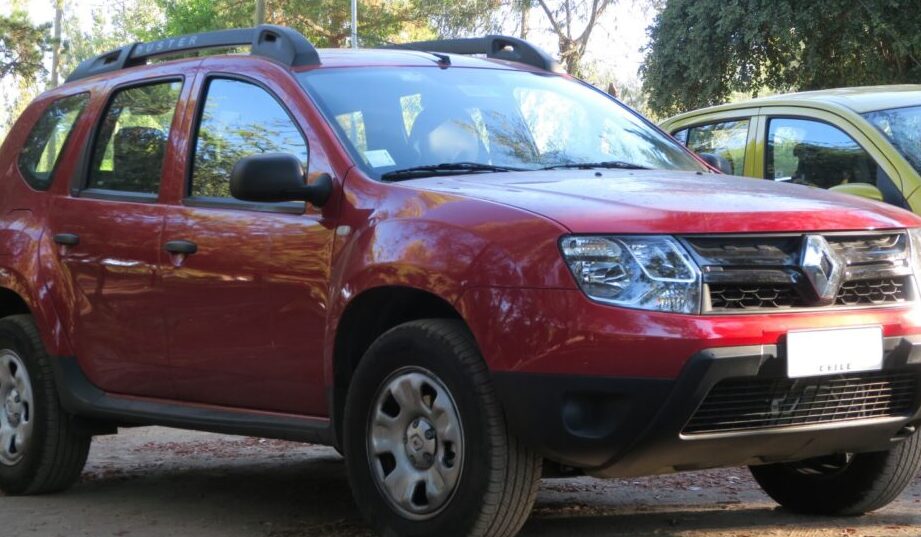
The Renault Duster I 1.5 dCi 86 hp variant, produced from 2011 to June 2015, represents an entry-level offering within the first generation of the highly successful Duster compact SUV. Introduced as a budget-friendly option, particularly in European and emerging markets, this model aimed to provide affordable, no-frills transportation with reasonable fuel economy. It played a crucial role in establishing the Duster’s reputation for practicality and value. This specific configuration, pairing the 1.5-liter diesel engine with a five-speed manual transmission, was designed to appeal to buyers prioritizing efficiency and low running costs over outright performance.
Technical Specifications
| Brand | Renault |
| Model | Duster |
| Generation | Duster I |
| Type (Engine) | 1.5 dCi (86 Hp) |
| Start of production | 2011 |
| End of production | June, 2015 |
| Powertrain Architecture | Internal Combustion engine |
| Body type | SUV |
| Seats | 5 |
| Doors | 5 |
| Fuel consumption (urban) | 5.7 l/100 km (41.3 US mpg, 49.6 UK mpg, 17.5 km/l) |
| Fuel consumption (extra urban) | 4.9 l/100 km (48 US mpg, 57.6 UK mpg, 20.4 km/l) |
| Fuel consumption (combined) | 5.1 l/100 km (46.1 US mpg, 55.4 UK mpg, 19.6 km/l) |
| CO2 emissions | 135 g/km |
| Fuel Type | Diesel |
| Acceleration 0 – 100 km/h | 13.9 sec |
| Acceleration 0 – 62 mph | 13.9 sec |
| Acceleration 0 – 60 mph | 13.2 sec |
| Maximum speed | 155 km/h (96.31 mph) |
| Emission standard | Euro 4 |
| Weight-to-power ratio | 13.7 kg/Hp, 72.9 Hp/tonne |
| Weight-to-torque ratio | 5.9 kg/Nm, 169.5 Nm/tonne |
| Power | 86 Hp @ 3750 rpm |
| Power per litre | 58.9 Hp/l |
| Torque | 200 Nm @ 1900 rpm (147.51 lb.-ft. @ 1900 rpm) |
| Engine layout | Front, Transverse |
| Engine Model/Code | K9K |
| Engine displacement | 1461 cm3 (89.16 cu. in.) |
| Number of cylinders | 4 |
| Engine configuration | Inline |
| Cylinder Bore | 76 mm (2.99 in.) |
| Piston Stroke | 80.5 mm (3.17 in.) |
| Compression ratio | 17.6:1 |
| Number of valves per cylinder | 2 |
| Fuel injection system | Diesel Commonrail |
| Engine aspiration | Turbocharger, Intercooler |
| Engine oil capacity | 4.5 l (4.76 US qt | 3.96 UK qt) |
| Coolant capacity | 4.5 l (4.76 US qt | 3.96 UK qt) |
| Kerb Weight | 1180 kg (2601.45 lbs.) |
| Max. weight | 1730 kg (3814 lbs.) |
| Max load | 550 kg (1212.54 lbs.) |
| Trunk (boot) space – minimum | 408 l (14.41 cu. ft.) |
| Trunk (boot) space – maximum | 1570 l (55.44 cu. ft.) |
| Fuel tank capacity | 50 l (13.21 US gal | 11 UK gal) |
| Length | 4315 mm (169.88 in.) |
| Width | 1822 mm (71.73 in.) |
| Height | 1690 mm (66.54 in.) |
| Wheelbase | 2673 mm (105.24 in.) |
| Front track | 1560 mm (61.42 in.) |
| Rear track | 1567 mm (61.69 in.) |
| Front overhang | 822 mm (32.36 in.) |
| Rear overhang | 820 mm (32.28 in.) |
| Ride height (ground clearance) | 205 mm (8.07 in.) |
| Drivetrain Architecture | Front wheel drive |
| Number of gears | 5 |
| Gearbox type | Manual transmission |
| Front suspension | Independent, type McPherson with coil spring and anti-roll bar |
| Rear suspension | Independent coil spring |
| Front brakes | Ventilated discs |
| Rear brakes | Drum |
| Assisting systems | ABS (Anti-lock braking system) |
| Tires size | 215/65 R16 |
| Wheel rims size | 16 |
Powertrain & Engine Architecture
The heart of this Duster variant is the Renault K9K 1.5-liter inline-four diesel engine. This engine, a mainstay in Renault’s lineup for many years, is known for its robustness and fuel efficiency. The 86 hp version utilizes a turbocharger with an intercooler to boost power output, while a diesel commonrail fuel injection system ensures precise fuel delivery for optimized combustion. The engine features two valves per cylinder and a compression ratio of 17.6:1, contributing to its thermal efficiency. The five-speed manual transmission was the sole gearbox option for this trim level, chosen for its simplicity and cost-effectiveness. The K9K engine is a relatively simple design, making it easier and cheaper to maintain compared to more complex engines.
Driving Characteristics
The 1.5 dCi 86 hp Duster is not a performance-oriented vehicle. Acceleration is modest, taking approximately 13.9 seconds to reach 62 mph (100 km/h). However, the engine delivers a usable amount of torque – 200 Nm (147.51 lb.-ft.) – from 1900 rpm, providing adequate pulling power for everyday driving and moderate loads. The five-speed gearbox is well-matched to the engine’s characteristics, with gear ratios optimized for fuel economy rather than rapid acceleration. Compared to higher-output versions of the Duster, such as those with the 1.6-liter petrol engine or the more powerful 1.5 dCi variants, this model feels noticeably slower, particularly when fully loaded or tackling steep inclines. However, its lower power output also translates to improved fuel economy.
Equipment & Trim Levels
The 86 hp 1.5 dCi Duster typically represented the base trim level. Standard equipment generally included power steering, central locking, electric front windows, and an ABS anti-lock braking system. Interior appointments were basic, with durable cloth upholstery and a functional, if somewhat spartan, dashboard layout. Optional extras, such as air conditioning, alloy wheels, and a radio/CD player, were available but often added to the vehicle’s cost. The focus was on providing essential features at an affordable price point.
Chassis & Braking
The Duster I utilizes a relatively simple chassis design. Front suspension consists of independent McPherson struts with a coil spring and anti-roll bar, while the rear suspension employs an independent coil spring setup. This configuration provides a reasonable balance between ride comfort and handling. Braking duties are handled by ventilated discs at the front and drum brakes at the rear. The drum brakes on the rear were a cost-saving measure typical of entry-level models. The Duster’s high ground clearance of 205 mm (8.07 in.) contributes to its off-road capability, although the front-wheel-drive configuration limits its performance on challenging terrain.
Market Reception & Comparison
The Renault Duster I 1.5 dCi 86 hp was generally well-received in markets where affordability was a key consideration. Critics praised its practicality, spacious interior, and fuel efficiency. However, the engine’s lack of power was often noted as a drawback. Compared to the petrol-powered Dusters, the diesel variant offered significantly better fuel economy, making it a popular choice for high-mileage drivers. Against other compact SUVs in its class, the Duster stood out for its value for money and its robust construction. The 1.5 dCi 90 hp version, while slightly more expensive, offered a noticeable improvement in performance and was often preferred by those willing to spend a little extra.
Legacy
The Renault Duster I 1.5 dCi 86 hp has proven to be a reliable and durable vehicle. The K9K engine, while not particularly refined, is known for its longevity and relatively low maintenance costs. In the used car market, these models remain popular due to their affordability and practicality. Common issues are typically related to wear and tear on suspension components and the occasional failure of the turbocharger. Overall, the 1.5 dCi 86 hp Duster represents a sensible and economical choice for buyers seeking a no-nonsense compact SUV.