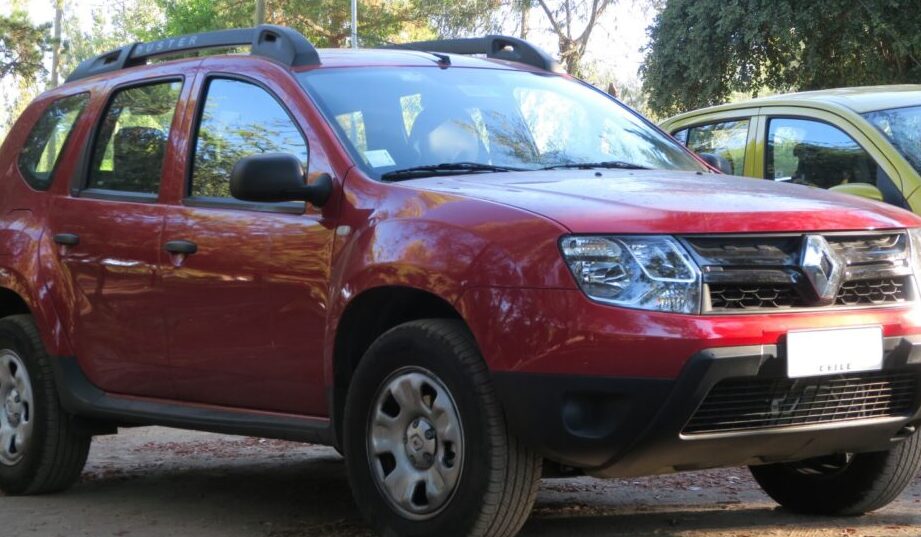
The Renault Duster I 2.0 (135 hp) AWD, produced between 2011 and June 2015, represents a significant offering in Renault’s lineup, particularly within the burgeoning compact SUV segment. This variant, powered by the F4R engine and featuring an all-wheel-drive system, was designed to appeal to buyers seeking a versatile and affordable vehicle capable of handling varied terrains. It occupied a mid-to-high position within the Duster I range, offering increased capability compared to the standard two-wheel-drive models while remaining more accessible than potential future, more luxurious trims. The Duster I, launched in 2010, was a pivotal model for Renault, aimed at expanding their reach into emerging markets and providing a robust, no-frills SUV option for European consumers.
Technical Specifications
| Brand | Renault |
| Model | Duster |
| Generation | Duster I |
| Type (Engine) | 2.0 (135 Hp) AWD |
| Start of production | 2011 |
| End of production | June, 2015 |
| Powertrain Architecture | Internal Combustion engine |
| Body type | SUV |
| Seats | 5 |
| Doors | 5 |
| Fuel consumption (urban) | 10.3 l/100 km (22.8 US mpg) |
| Fuel consumption (extra urban) | 6.5 l/100 km (36.2 US mpg) |
| Fuel consumption (combined) | 7.8 l/100 km (30.2 US mpg) |
| CO2 emissions | 177 g/km |
| Fuel Type | Petrol (Gasoline) |
| Acceleration 0 – 100 km/h | 10.4 sec |
| Acceleration 0 – 62 mph | 10.4 sec |
| Acceleration 0 – 60 mph | 9.9 sec |
| Maximum speed | 177 km/h (109.98 mph) |
| Emission standard | Euro 4 |
| Weight-to-power ratio | 10.2 kg/Hp |
| Weight-to-torque ratio | 7.1 kg/Nm |
| Power | 135 Hp @ 5500 rpm |
| Torque | 195 Nm @ 3750 rpm (143.82 lb.-ft. @ 3750 rpm) |
| Engine layout | Front, Transverse |
| Engine Model/Code | F4R |
| Engine displacement | 1998 cm3 (121.93 cu. in.) |
| Number of cylinders | 4 |
| Engine configuration | Inline |
| Cylinder Bore | 82.7 mm (3.26 in.) |
| Piston Stroke | 93 mm (3.66 in.) |
| Compression ratio | 11.05:1 |
| Number of valves per cylinder | 4 |
| Fuel injection system | Multi-port manifold injection |
| Engine aspiration | Naturally aspirated engine |
| Engine oil capacity | 5.4 l (5.71 US qt | 4.75 UK qt) |
| Coolant capacity | 4.5 l (4.76 US qt | 3.96 UK qt) |
| Kerb Weight | 1377 kg (3035.77 lbs.) |
| Max. weight | 1877 kg (4138.08 lbs.) |
| Max load | 500 kg (1102.31 lbs.) |
| Trunk (boot) space – minimum | 408 l (14.41 cu. ft.) |
| Trunk (boot) space – maximum | 1570 l (55.44 cu. ft.) |
| Fuel tank capacity | 50 l (13.21 US gal | 11 UK gal) |
| Length | 4315 mm (169.88 in.) |
| Width | 1822 mm (71.73 in.) |
| Height | 1690 mm (66.54 in.) |
| Wheelbase | 2673 mm (105.24 in.) |
| Front track | 1560 mm (61.42 in.) |
| Rear track | 1567 mm (61.69 in.) |
| Front overhang | 822 mm (32.36 in.) |
| Rear overhang | 820 mm (32.28 in.) |
| Ride height (ground clearance) | 210 mm (8.27 in.) |
| Drive wheel | All wheel drive (4×4) |
| Number of gears | 6 |
| Gearbox type | Manual transmission |
| Front suspension | Independent, type McPherson with coil spring and anti-roll bar |
| Rear suspension | Independent coil spring |
| Front brakes | Ventilated discs |
| Rear brakes | Drum |
| Assisting systems | ABS (Anti-lock braking system) |
| Tires size | 215/65 R16 |
| Wheel rims size | 16 |
Powertrain & Engine Architecture
The Renault Duster I 2.0 AWD is powered by the F4R engine, a 1.998-liter inline-four cylinder gasoline engine. This engine, a mainstay in Renault’s portfolio for many years, is known for its relative simplicity and durability. The F4R utilizes a multi-point fuel injection system, delivering fuel directly into the intake ports. The engine features a double overhead camshaft (DOHC) valvetrain with four valves per cylinder, contributing to its respectable power output for its displacement. The 135 horsepower peak is achieved at 5500 rpm, while the 195 Nm (143.82 lb-ft) of torque is available at 3750 rpm. The engine is transversely mounted, driving all four wheels through a six-speed manual transmission. This transmission was chosen for its balance of fuel efficiency and driver engagement, although an automatic transmission was not offered with this specific engine and drivetrain combination.
Driving Characteristics
The 2.0-liter engine and manual transmission pairing in the Duster I AWD provides a reasonably engaging driving experience. While not exceptionally quick – 0-60 mph takes approximately 9.9 seconds – the engine delivers adequate power for everyday driving and confidently handles highway speeds. The all-wheel-drive system significantly enhances traction, particularly on loose surfaces like gravel or snow. The six-speed gearbox is well-matched to the engine’s characteristics, offering a good spread of ratios for both acceleration and fuel economy. Compared to the lower-powered 1.6-liter versions, the 2.0 AWD offers a noticeable performance improvement, especially when fully loaded or tackling inclines. However, it doesn’t possess the refined power delivery of more modern turbocharged engines.
Equipment & Trim Levels
The Duster I 2.0 AWD typically came equipped with a fairly basic, yet functional, level of standard equipment. This included power steering, central locking, electric front windows, and an ABS anti-lock braking system. Interior upholstery was generally cloth, with a durable and practical design. Higher trim levels offered options such as air conditioning, a radio/CD player, and alloy wheels. The focus was on providing a robust and affordable vehicle, so luxury features were kept to a minimum. The dashboard layout was straightforward and easy to use, prioritizing functionality over aesthetics.
Chassis & Braking
The Duster I utilizes a McPherson strut front suspension and an independent coil spring rear suspension. This setup provides a comfortable ride quality, capable of absorbing bumps and irregularities in the road surface. The all-wheel-drive system adds to the vehicle’s stability and handling. Braking duties are handled by ventilated discs at the front and drum brakes at the rear. While adequate for most driving situations, the rear drum brakes are a point of criticism compared to the all-disc setups found on some competitors. The Duster I’s relatively high ground clearance of 210mm (8.27 inches) contributes to its off-road capability.
Market Reception & Comparison
The Renault Duster I 2.0 AWD was generally well-received by automotive critics as a practical and affordable SUV. It was praised for its spacious interior, robust build quality, and all-wheel-drive capability. However, some reviewers noted the engine’s lack of refinement and the somewhat basic interior appointments. Compared to other SUVs in its class, such as the Nissan Qashqai or the Skoda Yeti, the Duster offered a more utilitarian approach, prioritizing value for money over luxury. Fuel economy was respectable for a vehicle of its size and capability, averaging around 30.2 US mpg in combined driving conditions.
Legacy
The Renault Duster I 2.0 AWD has proven to be a reliable and durable vehicle, with many examples still on the road today. The F4R engine is known for its longevity, provided it receives regular maintenance. The all-wheel-drive system has also proven to be robust and dependable. In the used car market, the Duster I 2.0 AWD remains a popular choice for buyers seeking an affordable and capable SUV. Its simplicity and relatively low running costs make it an attractive option for those who prioritize practicality and value over prestige.