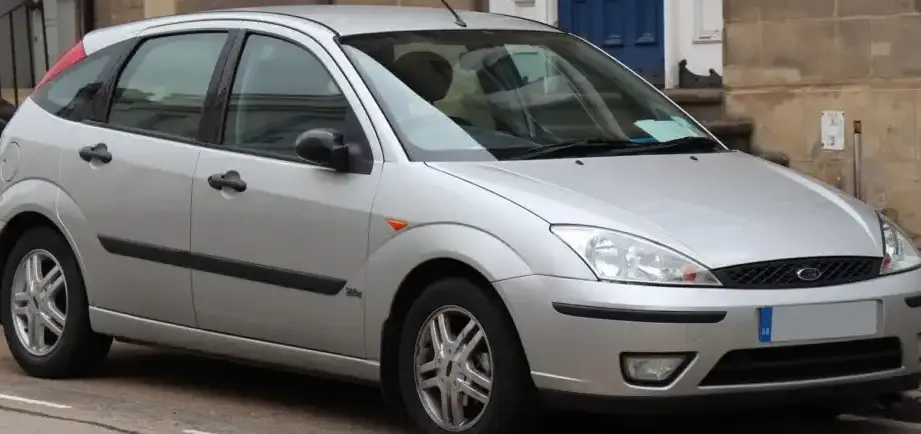
The Ford Focus III Sedan 1.6 EcoBoost (182 hp) start/stop, produced from 2010 to 2014, represented a significant step forward for the compact sedan segment. Part of the global Ford Focus III generation (internally designated as the 2HX platform), this variant was primarily aimed at the European and Asian markets, offering a blend of performance, fuel efficiency, and modern technology. While the Focus had been a mainstay in Europe for decades, the third generation marked a concerted effort to create a truly global vehicle, with the sedan body style gaining prominence in regions where traditional three-box designs were preferred. The 1.6 EcoBoost model occupied a mid-range position within the Focus III Sedan lineup, slotting above the naturally aspirated 1.6-liter engine and below the more powerful 2.0-liter options.
Technical Specifications
| Brand | Ford |
| Model | Focus |
| Generation | Focus III Sedan |
| Type (Engine) | 1.6 EcoBoost (182 Hp) start/stop |
| Start of production | 2010 |
| End of production | 2014 |
| Powertrain Architecture | Internal Combustion engine |
| Body type | Sedan |
| Seats | 5 |
| Doors | 4 |
| Fuel consumption (urban) | 7.6 l/100 km (30.9 US mpg) |
| Fuel consumption (extra urban) | 4.9 l/100 km (48 US mpg) |
| Fuel consumption (combined) | 5.9 l/100 km (39.9 US mpg) |
| Fuel Type | Petrol (Gasoline) |
| Acceleration 0 – 100 km/h | 8 sec |
| Acceleration 0 – 62 mph | 8 sec |
| Acceleration 0 – 60 mph | 7.6 sec |
| Maximum speed | 224 km/h (139.19 mph) |
| Power | 182 Hp |
| Engine layout | Front, Transverse |
| Engine Model/Code | JTDA, JTDB |
| Engine configuration | Inline |
| Fuel injection system | Direct injection |
| Engine aspiration | Turbocharger, Intercooler |
| Engine oil capacity | 4.1 l (4.33 US qt) |
| Coolant capacity | 6.3 l (6.66 US qt) |
| Engine systems | Start & Stop System |
| Drivetrain Architecture | Front wheel drive |
| Number of gears and type of gearbox | 6 gears, manual transmission |
| Assisting systems | ABS (Anti-lock braking system) |
| Steering type | Steering rack and pinion |
Powertrain & Engine Architecture
The heart of this Focus variant is the 1.6-liter EcoBoost inline-four cylinder engine, identified by engine codes JTDA and JTDB. This engine is a key example of Ford’s early adoption of direct fuel injection and turbocharging technology in mainstream vehicles. Direct injection, coupled with a twin-scroll turbocharger and intercooler, allowed for a high compression ratio and precise fuel delivery, resulting in increased power and efficiency. The engine utilizes a variable valve timing system (Ti-VCT) to optimize performance across the rev range. The 182 horsepower output was a significant improvement over the naturally aspirated 1.6-liter engine offered in base models. The engine is paired with a six-speed manual transmission, providing precise gear changes and contributing to the car’s overall responsiveness. The Start/Stop system, a relatively new feature at the time, automatically shut off the engine when the vehicle came to a halt, further enhancing fuel economy in urban driving conditions.
Driving Characteristics
The 1.6 EcoBoost-equipped Focus III Sedan offered a noticeably more engaging driving experience than its lower-powered counterparts. The turbocharger provides a surge of torque in the mid-range, making overtaking maneuvers and highway merging easier. While not as brutally fast as the higher-output 2.0-liter versions, the 1.6 EcoBoost delivered a respectable 0-60 mph time of around 7.6 seconds. The six-speed manual transmission allowed drivers to fully exploit the engine’s powerband, while the well-tuned suspension provided a comfortable yet controlled ride. The steering was precise and responsive, contributing to a confident feel behind the wheel. Compared to the base 1.6L, the EcoBoost offered a substantial performance upgrade, while remaining more economical than the larger engine options.
Equipment & Trim Levels
The 1.6 EcoBoost trim typically included features such as air conditioning, power windows and mirrors, a basic audio system with USB connectivity, and alloy wheels. Higher trim levels added features like automatic climate control, a more advanced audio system with navigation, leather upholstery, and parking sensors. Safety features included ABS, electronic stability control, and multiple airbags. The interior design was modern and functional, with a focus on ergonomics. The dashboard layout was clean and intuitive, with easy-to-read gauges and controls. Optional extras included a sunroof, heated seats, and a rear-view camera.
Chassis & Braking
The Focus III Sedan utilized a MacPherson strut front suspension and a multi-link rear suspension, providing a good balance between ride comfort and handling. The chassis was designed to be lightweight yet rigid, contributing to the car’s agility. The braking system consisted of ventilated front disc brakes and drum brakes at the rear. ABS (Anti-lock Braking System) was standard, enhancing braking performance and stability in emergency situations. The steering system employed an electric power-assisted steering (EPAS) system, which provided precise steering feel and reduced fuel consumption compared to traditional hydraulic systems.
Market Reception & Comparison
The Ford Focus III Sedan 1.6 EcoBoost received generally positive reviews from automotive critics. It was praised for its combination of performance, fuel efficiency, and handling. The EcoBoost engine was particularly well-regarded for its responsiveness and refinement. Compared to competitors like the Volkswagen Jetta and the Chevrolet Cruze, the Focus offered a more engaging driving experience and a more modern interior. However, some critics noted that the rear seat space was somewhat limited. Fuel economy figures of around 39.9 US mpg combined were competitive for the segment. Reliability was generally good, although some owners reported minor issues with the turbocharger and fuel injection system.
Legacy
The 1.6 EcoBoost engine proved to be a reliable and durable powertrain when properly maintained. While not without its occasional issues, the engine’s overall longevity has been commendable. In the used car market, the Focus III Sedan 1.6 EcoBoost remains a popular choice for buyers seeking a well-rounded and fuel-efficient compact sedan. Its combination of performance, features, and affordability makes it a compelling option. The introduction of the EcoBoost engine in the Focus III Sedan helped to establish Ford as a leader in small-displacement, turbocharged engine technology, paving the way for future EcoBoost engines in other Ford vehicles. The 1.6 EcoBoost engine, while eventually superseded by larger and more powerful EcoBoost variants, remains a significant milestone in Ford’s engine development history.