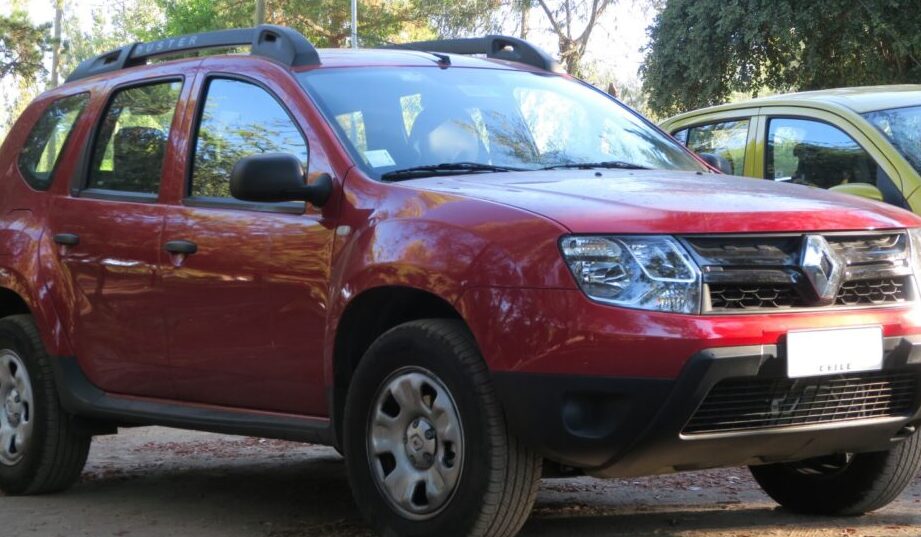
The Renault Duster I 2.0 (135 hp) AWD Automatic, produced between 2011 and June 2015, represents a significant offering in Renault’s compact SUV lineup. Positioned as a mid-range to upper-mid-range trim within the first generation Duster (2010-2018), this variant combined a naturally aspirated 2.0-liter gasoline engine with a four-speed automatic transmission and Renault’s all-wheel-drive system. It was primarily marketed in Europe, Latin America, and emerging markets, offering a blend of affordability, practicality, and all-weather capability. The Duster I, built on the B0 platform (shared with other Renault and Nissan models), aimed to provide SUV functionality at a competitive price point, and the 2.0L AWD Automatic catered to buyers needing enhanced traction and ease of use.
Technical Specifications
| Brand | Renault |
| Model | Duster |
| Generation | Duster I |
| Type (Engine) | 2.0 (135 Hp) AWD Automatic |
| Start of production | 2011 |
| End of production | June, 2015 |
| Powertrain Architecture | Internal Combustion engine |
| Body type | SUV |
| Seats | 5 |
| Doors | 5 |
| Fuel consumption (urban) | 11.3 l/100 km (20.8 US mpg, 25 UK mpg, 8.8 km/l) |
| Fuel consumption (extra urban) | 7.2 l/100 km (32.7 US mpg, 39.2 UK mpg, 13.9 km/l) |
| Fuel consumption (combined) | 8.7 l/100 km (27 US mpg, 32.5 UK mpg, 11.5 km/l) |
| CO2 emissions | 195 g/km |
| Fuel Type | Petrol (Gasoline) |
| Acceleration 0 – 100 km/h | 11.7 sec |
| Acceleration 0 – 62 mph | 11.7 sec |
| Acceleration 0 – 60 mph | 11.1 sec |
| Maximum speed | 172 km/h (106.88 mph) |
| Emission standard | Euro 4 |
| Weight-to-power ratio | 10.4 kg/Hp, 96.4 Hp/tonne |
| Weight-to-torque ratio | 7.2 kg/Nm, 139.3 Nm/tonne |
| Power | 135 Hp @ 5500 rpm |
| Power per litre | 67.6 Hp/l |
| Torque | 195 Nm @ 3750 rpm (143.82 lb.-ft. @ 3750 rpm) |
| Engine layout | Front, Transverse |
| Engine Model/Code | F4R |
| Engine displacement | 1998 cm3 (121.93 cu. in.) |
| Number of cylinders | 4 |
| Engine configuration | Inline |
| Cylinder Bore | 82.7 mm (3.26 in.) |
| Piston Stroke | 93 mm (3.66 in.) |
| Compression ratio | 11.05:1 |
| Number of valves per cylinder | 4 |
| Fuel injection system | Multi-port manifold injection |
| Engine aspiration | Naturally aspirated engine |
| Engine oil capacity | 5.4 l (5.71 US qt | 4.75 UK qt) |
| Coolant capacity | 4.5 l (4.76 US qt | 3.96 UK qt) |
| Kerb Weight | 1400 kg (3086.47 lbs.) |
| Max. weight | 1900 kg (4188.78 lbs.) |
| Max load | 500 kg (1102.31 lbs.) |
| Trunk (boot) space – minimum | 408 l (14.41 cu. ft.) |
| Trunk (boot) space – maximum | 1570 l (55.44 cu. ft.) |
| Fuel tank capacity | 50 l (13.21 US gal | 11 UK gal) |
| Length | 4315 mm (169.88 in.) |
| Width | 1822 mm (71.73 in.) |
| Height | 1690 mm (66.54 in.) |
| Wheelbase | 2673 mm (105.24 in.) |
| Front track | 1560 mm (61.42 in.) |
| Rear track | 1567 mm (61.69 in.) |
| Front overhang | 822 mm (32.36 in.) |
| Rear overhang | 820 mm (32.28 in.) |
| Ride height (ground clearance) | 205 mm (8.07 in.) |
| Drive wheel | All wheel drive (4×4) |
| Number of gears | 4 |
| Gearbox type | automatic transmission |
| Front suspension | Independent, type McPherson with coil spring and anti-roll bar |
| Rear suspension | Independent coil spring |
| Front brakes | Ventilated discs |
| Rear brakes | Drum |
| Assisting systems | ABS (Anti-lock braking system) |
| Tires size | 215/65 R16 |
| Wheel rims size | 16 |
Powertrain & Engine Architecture
The Renault Duster I 2.0 (135 hp) AWD Automatic utilizes the F4R engine, a 1.998-liter inline-four cylinder gasoline engine. This engine, a mainstay in Renault’s lineup for many years, features multi-point fuel injection and a single overhead camshaft (SOHC) valvetrain with four valves per cylinder. The F4R is known for its relative simplicity and durability, though it lacks the sophistication of more modern direct-injection engines. The four-speed automatic transmission, a DP0 (also known as AL4) unit, was chosen for its cost-effectiveness and ease of use. While providing smooth shifts, it’s not known for its responsiveness or fuel efficiency compared to more modern automatic transmissions with more gears. The all-wheel-drive system is a part-time system, typically operating in front-wheel drive and engaging the rear wheels when traction is lost.
Driving Characteristics
The 2.0-liter engine, producing 135 horsepower, provides adequate performance for everyday driving, but it’s not particularly sporty. Acceleration from 0-60 mph takes around 11.1 seconds. The four-speed automatic transmission contributes to a somewhat leisurely driving experience, with noticeable gear changes and a lack of the quick responsiveness found in transmissions with more ratios. The AWD system provides enhanced traction on slippery surfaces, making it suitable for light off-road use and inclement weather. Compared to the base 1.6-liter engine, the 2.0L offers significantly more power, while the manual transmission versions of the 2.0L provide quicker acceleration and better fuel economy. The automatic transmission prioritizes comfort and ease of use over performance.
Equipment & Trim Levels
The 2.0 AWD Automatic trim typically included features such as air conditioning, power windows, central locking, and an audio system with CD player. Higher trim levels added features like alloy wheels, fog lights, a trip computer, and upgraded interior upholstery. Optional extras included a navigation system, parking sensors, and leather seats. The interior design was functional and durable, prioritizing practicality over luxury. The dashboard layout was straightforward, with easy-to-use controls.
Chassis & Braking
The Duster I features a McPherson strut front suspension and an independent coil spring rear suspension. This setup provides a comfortable ride, although it’s not particularly sporty. The front brakes are ventilated discs, while the rear brakes are drums. ABS (Anti-lock Braking System) is standard. The suspension is tuned for a balance between ride comfort and handling, and the relatively high ground clearance (205mm) allows for moderate off-road capability. Stabilizer bars are present on both axles to reduce body roll during cornering.
Market Reception & Comparison
The Renault Duster I 2.0 AWD Automatic was generally well-received as a practical and affordable SUV. Critics praised its spacious interior, good ground clearance, and all-wheel-drive capability. However, the four-speed automatic transmission was often criticized for its lack of responsiveness and fuel efficiency. Compared to other SUVs in its class, the Duster offered a compelling value proposition, particularly in markets where affordability was a key consideration. The 1.6-liter versions were more fuel-efficient but lacked the power of the 2.0L, while diesel variants (not available with the automatic transmission) offered better fuel economy and torque.
Legacy
The Renault Duster I, including the 2.0 AWD Automatic variant, established a strong reputation for reliability and affordability. The F4R engine is known to be durable, although regular maintenance is essential. The DP0 automatic transmission can be prone to issues if not properly maintained, particularly regarding fluid changes. On the used car market, these Dusters represent a good value for buyers seeking a practical and capable SUV at a reasonable price. Parts availability is generally good, and the relatively simple mechanical design makes it relatively easy to repair. The Duster I paved the way for the successful second-generation model, continuing Renault’s presence in the competitive compact SUV segment.