
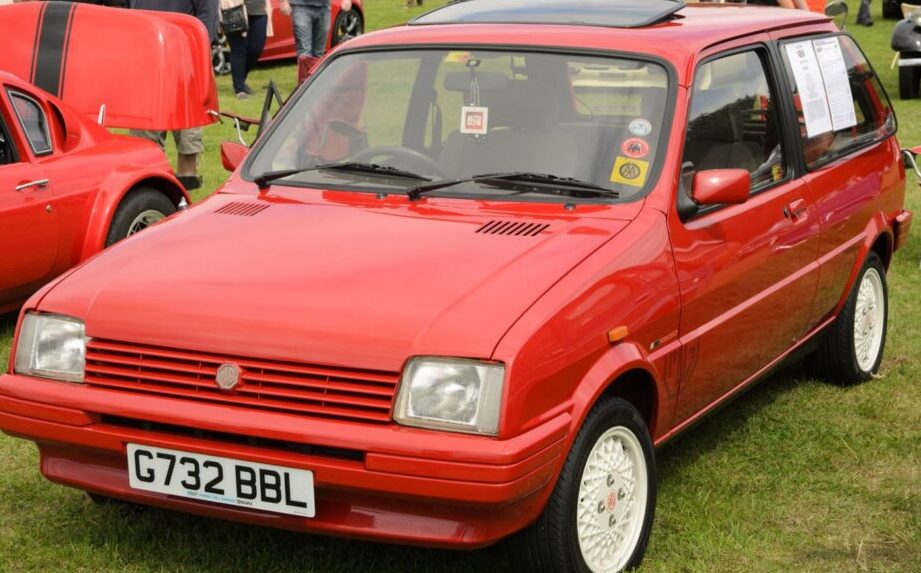
The MG Metro 1300, produced from 1982 to 1990, represents a significant iteration of the Austin/MG Metro, a supermini originally launched in 1980. This 73 horsepower variant occupied a crucial mid-range position within the Metro lineup, offering a balance between affordability and performance. It was designed to appeal to buyers seeking a practical, economical city car with a touch more refinement than the base models. The 1300 model aimed to address criticisms of the initial 998cc versions, which were considered underpowered by some. It played a key role in keeping the Metro competitive in the increasingly crowded European small car market, particularly in the United Kingdom, its primary market.
Technical Specifications
| Brand | MG |
| Model | Metro |
| Generation | Metro |
| Type (Engine) | 1300 (73 Hp) |
| Start of Production | 1982 |
| End of Production | 1990 |
| Powertrain Architecture | Internal Combustion Engine |
| Body Type | Hatchback |
| Fuel Type | Petrol (Gasoline) |
| Power | 73 Hp |
| Engine Aspiration | Naturally Aspirated |
Powertrain & Engine Architecture
The MG Metro 1300 was powered by the A-Series engine, specifically the 1275cc version. This engine, a long-running and highly developed unit within the British Leyland/Austin Rover group, had its roots in designs dating back to the 1950s. The 1275cc unit featured a cast iron block and cylinder head, with a single overhead valve (OHV) configuration. It utilized a single SU HS4 carburetor for fuel delivery, a relatively simple but effective system for the time. While not technologically advanced by the 1980s standards, the A-Series was known for its robustness and relatively easy maintenance. The 73 horsepower output was achieved through a slightly higher compression ratio and revised camshaft timing compared to lower-spec A-Series engines.
The transmission paired with the 1300 engine was typically a four-speed manual gearbox, although a three-speed automatic transmission was also offered, albeit less commonly. The automatic version, while providing convenience, noticeably impacted performance. The gearbox was front-wheel drive, a configuration becoming increasingly standard in the supermini segment. The clutch was a single-plate dry clutch, and the final drive was a standard hypoid gear set.
Driving Characteristics
The MG Metro 1300 offered a noticeable improvement in performance over the 998cc models. Acceleration was brisk for a car of its size and class, with a 0-60 mph time of around 12-13 seconds. The engine provided adequate torque for everyday driving, making it reasonably comfortable for both city and highway use. However, it wasn’t a particularly high-revving engine, and its power began to taper off noticeably above 5,000 rpm. The four-speed manual gearbox was relatively light and easy to operate, although the shift quality wasn’t as precise as some contemporary rivals. The automatic transmission, while smooth, further dulled acceleration and increased fuel consumption. Handling was generally considered good for a supermini, with a relatively nimble feel thanks to its compact size and lightweight construction. The suspension, consisting of an independent front suspension with MacPherson struts and a leaf-sprung rear axle, provided a reasonable compromise between ride comfort and handling.
Equipment & Trim Levels
The MG Metro 1300 typically came equipped with a reasonable level of standard features for its price point. These included reclining front seats, a heater, and a basic instrument panel with speedometer, fuel gauge, and temperature gauge. The interior trim was generally functional rather than luxurious, with cloth upholstery and plastic dashboard components. The MG version of the Metro typically featured a more sporty interior trim than the Austin variants, with upgraded seat fabrics and a leather-wrapped steering wheel often included. Optional extras included a sunroof, metallic paint, and a radio/cassette player. Higher trim levels, such as the MG Metro 1300 HLS, added features like electric front windows and central locking.
Chassis & Braking
The MG Metro 1300 utilized a monocoque chassis construction, providing a good balance of strength and weight. The front suspension featured MacPherson struts with an anti-roll bar, while the rear suspension employed a leaf spring setup. This combination provided a reasonably comfortable ride, although the leaf-sprung rear could be prone to bouncing over uneven surfaces. Braking was initially provided by front disc brakes and rear drum brakes. Later models saw the introduction of rear disc brakes on some trim levels, improving stopping performance. The braking system was hydraulic, with dual-circuit master cylinder for added safety. Steering was rack and pinion, providing precise and responsive handling.
Market Reception & Comparison
The MG Metro 1300 was generally well-received by automotive critics. It was praised for its improved performance over the 998cc models, its nimble handling, and its relatively low price. However, it was also criticized for its somewhat dated interior design and its lack of advanced features compared to some of its rivals, such as the Peugeot 205 and the Renault 5. Compared to the 998cc Metro, the 1300 offered a significant performance boost, making it a more enjoyable car to drive, particularly on longer journeys. Compared to the more expensive MG Metro 1.0, the 1300 offered a better balance of performance and value. Fuel economy was reasonable for the time, averaging around 40-45 mpg in mixed driving conditions. Reliability was generally good, although the A-Series engine could be prone to oil leaks if not properly maintained.
Legacy
The MG Metro 1300 remains a popular classic car among enthusiasts. Its simple mechanical design and readily available parts make it relatively easy to maintain and repair. The 1275cc A-Series engine is known for its durability and tunability, and many owners have modified their Metros to improve performance. While not a particularly rare car, well-maintained examples are becoming increasingly sought after by collectors. The MG Metro 1300 represents a significant chapter in British automotive history, and it continues to be appreciated for its practicality, affordability, and charming character. The car’s enduring appeal lies in its ability to provide a fun and engaging driving experience, even by modern standards. Finding a rust-free example is the biggest challenge for potential buyers in the used car market today.
