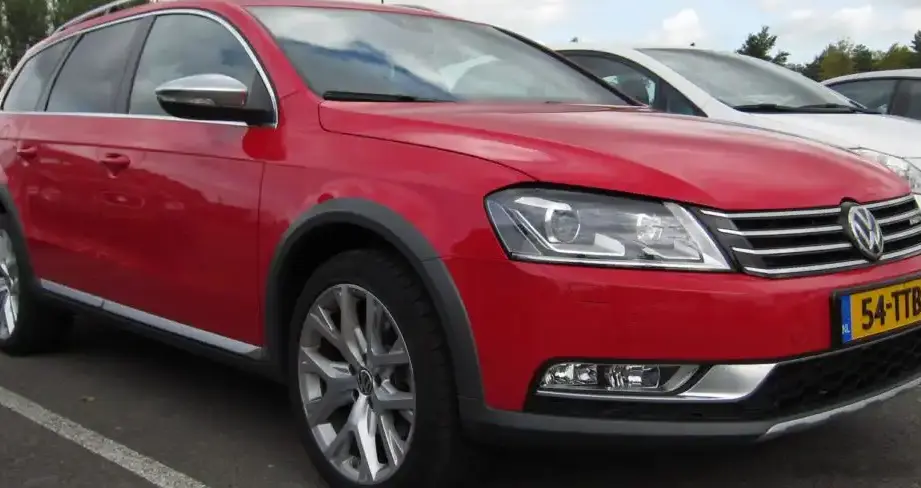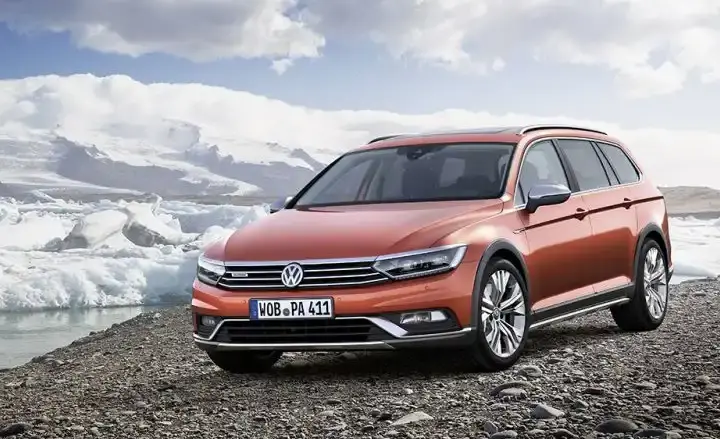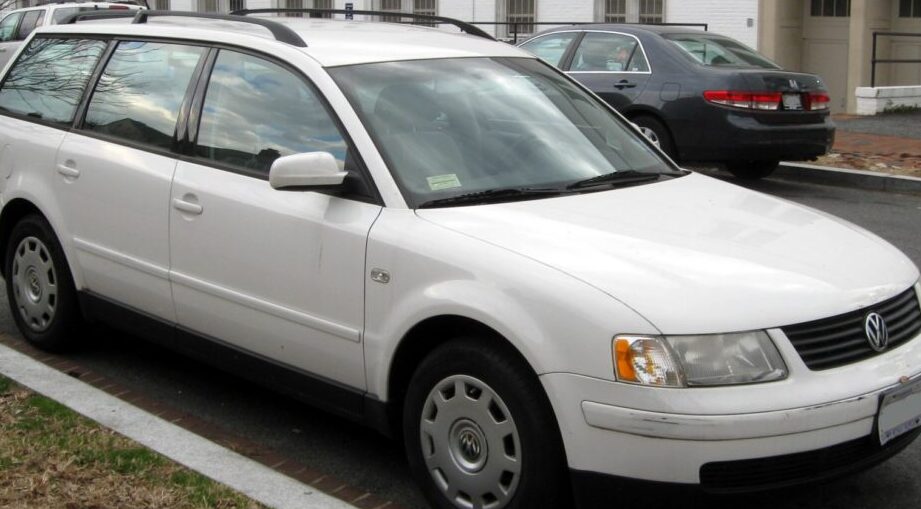
The Volkswagen Passat Variant (B5) 2.5 TDI 150 hp Syncro, produced between 1998 and 2000, represents a compelling blend of practicality, performance, and all-weather capability within the broader B5 Passat range. Positioned as a premium offering, it catered to buyers seeking a spacious, comfortable wagon with the added security of Volkswagen’s Syncro all-wheel-drive system. This variant was a key part of the B5 generation (1996-2005), which marked a significant step forward in Passat design, build quality, and technology, moving the model further upmarket. The “Variant” designation denotes the station wagon (estate) body style, popular in Europe and increasingly sought after in other markets for its versatility.
Technical Specifications
| Brand | Volkswagen |
| Model | Passat |
| Generation | Passat Variant (B5) |
| Type (Engine) | 2.5 TDI (150 Hp) Syncro |
| Start of production | 1998 |
| End of production | 2000 |
| Powertrain Architecture | Internal Combustion engine |
| Body type | Station wagon (estate) |
| Seats | 5 |
| Doors | 5 |
| Fuel consumption (urban) | 11.5 l/100 km (20.5 US mpg) |
| Fuel consumption (extra urban) | 6.3 l/100 km (37.3 US mpg) |
| Fuel Type | Diesel |
| Acceleration 0 – 100 km/h | 10.8 sec |
| Acceleration 0 – 62 mph | 10.8 sec |
| Acceleration 0 – 60 mph | 10.3 sec |
| Maximum speed | 208 km/h (129.25 mph) |
| Weight-to-power ratio | 10.1 kg/Hp |
| Weight-to-torque ratio | 4.9 kg/Nm |
| Power | 150 Hp @ 4000 rpm |
| Power per litre | 60.1 Hp/l |
| Torque | 310 Nm @ 1500 rpm (228.64 lb.-ft. @ 1500 rpm) |
| Engine layout | Front, Longitudinal |
| Engine Model/Code | AFB, AKN |
| Engine displacement | 2496 cm3 (152.32 cu. in.) |
| Number of cylinders | 6 |
| Engine configuration | V-engine |
| Cylinder Bore | 78.3 mm (3.08 in.) |
| Piston Stroke | 86.4 mm (3.4 in.) |
| Compression ratio | 19.5:1 |
| Number of valves per cylinder | 4 |
| Fuel injection system | Direct injection |
| Engine aspiration | Turbocharger, Intercooler |
| Valvetrain | DOHC |
| Engine oil capacity | 5.4 l (5.71 US qt | 4.75 UK qt) |
| Coolant | 10 l (10.57 US qt | 8.8 UK qt) |
| Kerb Weight | 1520 kg (3351.03 lbs.) |
| Max. weight | 2070 kg (4563.57 lbs.) |
| Max load | 550 kg (1212.54 lbs.) |
| Trunk (boot) space – minimum | 495 l (17.48 cu. ft.) |
| Trunk (boot) space – maximum | 1600 l (56.5 cu. ft.) |
| Fuel tank capacity | 62 l (16.38 US gal | 13.64 UK gal) |
| Length | 4675 mm (184.06 in.) |
| Width | 1740 mm (68.5 in.) |
| Height | 1459 mm (57.44 in.) |
| Wheelbase | 2703 mm (106.42 in.) |
| Front track | 1498 mm (58.98 in.) |
| Rear (Back) track | 1500 mm (59.06 in.) |
| Drive wheel | All wheel drive (4×4) |
| Number of gears | 5 |
| Gearbox type | Manual transmission |
| Front suspension | Coil spring |
| Rear suspension | Coil spring |
| Front brakes | Ventilated discs |
| Rear brakes | Disc |
| Assisting systems | ABS (Anti-lock braking system) |
| Steering type | Steering rack and pinion |
| Power steering | Hydraulic Steering |
| Tires size | 205/55 R16 |
| Wheel rims size | 7J x 16 |
INTRODUCTION
The Volkswagen Passat Variant (B5) 2.5 TDI Syncro, produced from 1998 to 2000, was a significant offering in Volkswagen’s lineup. Built on the 1HX0/A3 platform, it combined the practicality of a station wagon with the enhanced traction of the Syncro all-wheel-drive system. This model was primarily aimed at the European market, where demand for versatile, all-weather vehicles was high. It represented a step up from the base Passat models, offering a more refined driving experience and increased capability. The 2.5 TDI engine, a mainstay of Volkswagen’s diesel offerings, provided a balance of power and fuel efficiency.
Powertrain & Engine Architecture
The heart of the Passat Variant 2.5 TDI Syncro is the 2.5-liter inline-six cylinder diesel engine, designated either AFB or AKN depending on minor variations and market specifications. This engine utilizes direct injection technology, a key feature for maximizing fuel efficiency and reducing emissions. The direct injection system, employing high-pressure fuel delivery, ensures precise fuel atomization for optimal combustion. The engine also features a turbocharger with an intercooler, boosting power output to 150 horsepower and 310 Nm (228.64 lb-ft) of torque. The valvetrain is a dual overhead camshaft (DOHC) design, contributing to efficient gas exchange and improved engine breathing. The engine is longitudinally mounted, a configuration common in Volkswagen’s higher-end models. The Syncro system is paired with a robust five-speed manual transmission, chosen for its durability and ability to handle the increased torque. While an automatic transmission was available on other Passat variants, it wasn’t typically offered with the 2.5 TDI Syncro due to the transmission’s limitations in handling the engine’s torque output.
Driving Characteristics
The 2.5 TDI Syncro offered a distinctly different driving experience compared to its front-wheel-drive counterparts and other Passat trims. The Syncro all-wheel-drive system provided significantly improved traction, particularly in adverse weather conditions like snow or rain. The 150 hp engine, while not exceptionally powerful, delivered ample torque from low engine speeds, making it well-suited for everyday driving and hauling loads. The five-speed manual transmission allowed for precise control over gear selection, maximizing efficiency and responsiveness. Acceleration from 0-60 mph took around 10.3 seconds, respectable for a wagon of its size and weight. Compared to the 1.8-liter gasoline models, the 2.5 TDI offered superior torque and fuel economy, but lacked the higher-revving character of the gasoline engines. Against the more powerful V6 gasoline variants, the TDI traded outright speed for efficiency and all-weather capability. The Syncro system added a noticeable weight increase, slightly impacting handling agility compared to front-wheel-drive models, but the added stability and grip were generally considered a worthwhile trade-off.
Equipment & Trim Levels
The Passat Variant 2.5 TDI Syncro typically came well-equipped, reflecting its position as a premium trim level. Standard features included power windows, central locking, power steering, and an ABS anti-lock braking system. Interior upholstery was typically cloth, with optional leather available. Dashboard configuration was functional and ergonomically designed, with clear instrumentation. Optional extras included a sunroof, upgraded audio system, climate control, and alloy wheels. The Syncro models often featured unique badging to distinguish them from other Passat variants. The overall interior ambiance was one of understated elegance and practicality, prioritizing comfort and usability.
Chassis & Braking
The Passat Variant 2.5 TDI Syncro utilized a coil spring suspension system at both the front and rear, providing a comfortable ride quality. The Syncro system necessitated a more robust rear differential and driveshaft to handle the increased torque delivery to all four wheels. Braking duties were handled by ventilated discs at the front and solid discs at the rear, providing adequate stopping power. The ABS system helped to maintain steering control during emergency braking maneuvers. Stabilizer bars were fitted to both the front and rear axles to reduce body roll during cornering. The chassis was designed to accommodate the added weight of the Syncro system without compromising handling stability.
Market Reception & Comparison
The Passat Variant 2.5 TDI Syncro was generally well-received by automotive critics, who praised its practicality, all-weather capability, and fuel efficiency. The diesel engine was lauded for its torque and economy, while the Syncro system was recognized as a significant advantage in challenging driving conditions. Compared to other trims in the Passat lineup, the 2.5 TDI Syncro offered a unique combination of features and performance. Fuel economy was notably better than the gasoline-powered models, and reliability was generally good, although diesel engines can be more susceptible to issues with the fuel injection system over time. The higher price point of the Syncro variant limited its appeal to a more discerning buyer willing to pay a premium for the added capability.
Legacy
The Volkswagen Passat Variant (B5) 2.5 TDI Syncro has developed a loyal following among enthusiasts and practical drivers alike. The 2.5 TDI engine, while no longer in production, is known for its durability and relatively straightforward maintenance. The Syncro system remains a highly sought-after feature, particularly in regions with harsh winters. Today, well-maintained examples of this variant command a premium in the used car market. While modern vehicles offer more advanced technology and safety features, the B5 Passat Variant 2.5 TDI Syncro continues to represent a compelling blend of practicality, performance, and all-weather capability, cementing its place as a classic Volkswagen wagon.