
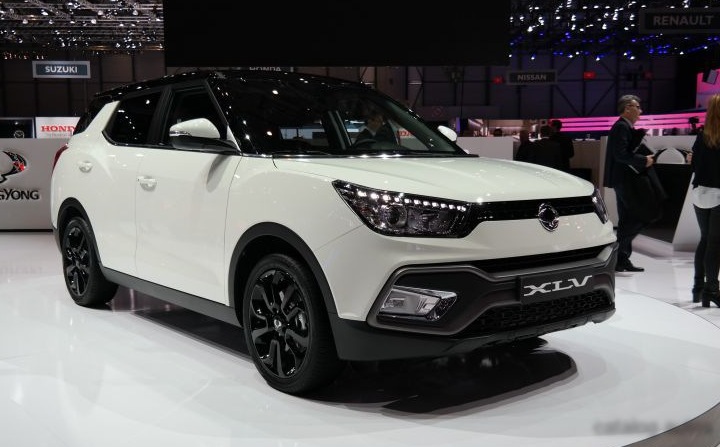
The SsangYong XLV 1.6 (128 hp) Automatic, produced between 2016 and 2021, represents a key variant within the XLV model range. The XLV, a subcompact crossover SUV, was SsangYong’s attempt to capitalize on the growing popularity of the segment, particularly in European and Asian markets. Positioned as a more practical and spacious alternative to smaller hatchbacks, the XLV aimed to offer value and versatility. This 1.6-liter gasoline engine paired with a six-speed automatic transmission served as a mid-range offering, balancing affordability with reasonable performance and convenience. It sat below the more powerful diesel options and above any potential base-level manual transmission variants, targeting buyers prioritizing ease of driving over outright performance.
Technical Specifications
| Brand | SsangYong |
| Model | XLV |
| Generation | XLV |
| Type (Engine) | 1.6 (128 Hp) Automatic |
| Start of production | 2016 |
| End of production | 2021 |
| Powertrain Architecture | Internal Combustion engine |
| Body type | SUV, Crossover |
| Seats | 5 |
| Doors | 5 |
| Fuel consumption (urban) | 10.3 l/100 km (22.8 US mpg) |
| Fuel consumption (extra urban) | 6 l/100 km (39.2 US mpg) |
| Fuel consumption (combined) | 7.6 l/100 km (30.9 US mpg) |
| CO2 emissions | 176 g/km |
| Fuel Type | Petrol (Gasoline) |
| Maximum speed | 172 km/h (106.88 mph) |
| Emission standard | Euro 6 |
| Weight-to-power ratio | 10.5 kg/Hp |
| Weight-to-torque ratio | 8.4 kg/Nm |
| Power | 128 Hp @ 6000 rpm |
| Torque | 160 Nm @ 4600 rpm (118.01 lb.-ft. @ 4600 rpm) |
| Engine layout | Front, Transverse |
| Engine Model/Code | G16DF |
| Engine displacement | 1597 cm3 (97.45 cu. in.) |
| Number of cylinders | 4 |
| Engine configuration | Inline |
| Cylinder Bore | 76 mm (2.99 in.) |
| Piston Stroke | 88 mm (3.46 in.) |
| Compression ratio | 10.5:1 |
| Number of valves per cylinder | 4 |
| Fuel injection system | Multi-port manifold injection |
| Engine aspiration | Naturally aspirated engine |
| Engine oil capacity | 4 l (4.23 US qt | 3.52 UK qt) |
| Coolant capacity | 6.5 l (6.87 US qt | 5.72 UK qt) |
| Kerb Weight | 1345 kg (2965.22 lbs.) |
| Max. weight | 1870 kg (4122.64 lbs.) |
| Max load | 525 kg (1157.43 lbs.) |
| Trunk (boot) space – minimum | 720 l (25.43 cu. ft.) |
| Trunk (boot) space – maximum | 1440 l (50.85 cu. ft.) |
| Fuel tank capacity | 47 l (12.42 US gal | 10.34 UK gal) |
| Permitted trailer load with brakes (12%) | 1000 kg (2204.62 lbs.) |
| Permitted trailer load without brakes | 500 kg (1102.31 lbs.) |
| Length | 4440 mm (174.8 in.) |
| Width | 1798 mm (70.79 in.) |
| Height | 1605 mm (63.19 in.) |
| Wheelbase | 2600 mm (102.36 in.) |
| Front track | 1555 mm (61.22 in.) |
| Rear track | 1555 mm (61.22 in.) |
| Ride height (ground clearance) | 167 mm (6.57 in.) |
| Approach angle | 20° |
| Departure angle | 21° |
| Drivetrain Architecture | Front wheel drive |
| Number of gears | 6 |
| Gearbox type | Automatic transmission |
| Front suspension | Independent, McPherson with coil spring and anti-roll bar |
| Rear suspension | Independent torsion suspension |
| Front brakes | Ventilated discs |
| Rear brakes | Disc |
| Assisting systems | ABS (Anti-lock braking system) |
| Steering type | Steering rack and pinion |
| Power steering | Electric |
| Tires size | 205/60 R16; 215/45 R18 |
| Wheel rims size | 16; 18 |
Powertrain & Engine Architecture
The XLV 1.6 Automatic utilizes SsangYong’s G16DF engine, a 1.6-liter inline-four cylinder gasoline engine. This engine is a naturally aspirated unit, meaning it doesn’t employ turbocharging or supercharging. It features multi-point fuel injection, delivering fuel directly into the intake ports. The engine’s valvetrain consists of four valves per cylinder (DOHC – Double Overhead Camshaft), contributing to improved breathing and efficiency. The G16DF is known for its relatively simple design, prioritizing reliability over outright performance. Paired with this engine is a six-speed automatic transmission. This transmission, while providing convenient gear changes, isn’t known for particularly rapid shifts or advanced features like paddle shifters. It’s a conventional torque-converter automatic, designed for smooth operation and ease of use.
Driving Characteristics
The 128 hp output and 160 Nm of torque delivered by the 1.6-liter engine, combined with the automatic transmission, result in adequate, but not exhilarating, performance. Acceleration is best described as leisurely, with a 0-60 mph time estimated around 11-12 seconds. The automatic transmission’s gear ratios are tuned for fuel efficiency and comfortable cruising rather than aggressive acceleration. Compared to the diesel variants of the XLV, the 1.6L automatic feels noticeably slower, particularly when fully loaded or tackling inclines. The automatic transmission does a reasonable job of selecting the appropriate gear for most driving situations, but can sometimes feel hesitant during quick overtaking maneuvers. The focus is on providing a relaxed and undemanding driving experience.
Equipment & Trim Levels
The XLV 1.6 Automatic typically came equipped with a reasonable level of standard features. These generally included air conditioning, power windows, central locking, a basic audio system with USB connectivity, and alloy wheels. Safety features such as ABS, electronic stability control, and multiple airbags were also standard. Higher trim levels offered upgrades like a touchscreen infotainment system with navigation, rear parking sensors, a sunroof, and leather upholstery. Interior materials were generally of acceptable quality for the price point, but not particularly luxurious. The dashboard layout was functional and straightforward, prioritizing usability over aesthetic flair.
Chassis & Braking
The XLV utilizes a front-wheel-drive layout. Suspension consists of independent McPherson struts at the front and an independent torsion beam setup at the rear. This configuration provides a reasonable balance between ride comfort and handling. The front brakes are ventilated discs, offering adequate stopping power, while the rear brakes are solid discs. The steering is electrically assisted, providing light and easy steering feel. The XLV’s chassis is tuned for comfort rather than sporty handling, resulting in a predictable but not particularly engaging driving experience.
Market Reception & Comparison
The SsangYong XLV 1.6 Automatic received mixed reviews. Critics generally praised its spacious interior and competitive pricing, but noted its lackluster performance and somewhat unrefined driving experience. Compared to rivals like the Nissan Juke or Renault Captur, the XLV offered more interior space but lacked the same level of polish and driving dynamics. Fuel economy was average for the class, and reliability reports were generally positive, though not exceptional. The 1.6L automatic was often seen as a compromise option, appealing to buyers who prioritized affordability and convenience over performance.
Legacy
The SsangYong XLV, while not a runaway success, played a role in SsangYong’s efforts to expand its presence in the competitive crossover SUV market. The 1.6-liter engine and automatic transmission combination proved to be relatively reliable, and used examples remain available today at attractive price points. However, potential buyers should be aware of the engine’s modest performance and the transmission’s lack of advanced features. The XLV’s legacy is one of a practical and affordable crossover, offering good value for money but lacking the refinement and driving excitement of some of its rivals. Parts availability can sometimes be a challenge, given SsangYong’s relatively limited market presence in some regions.


