
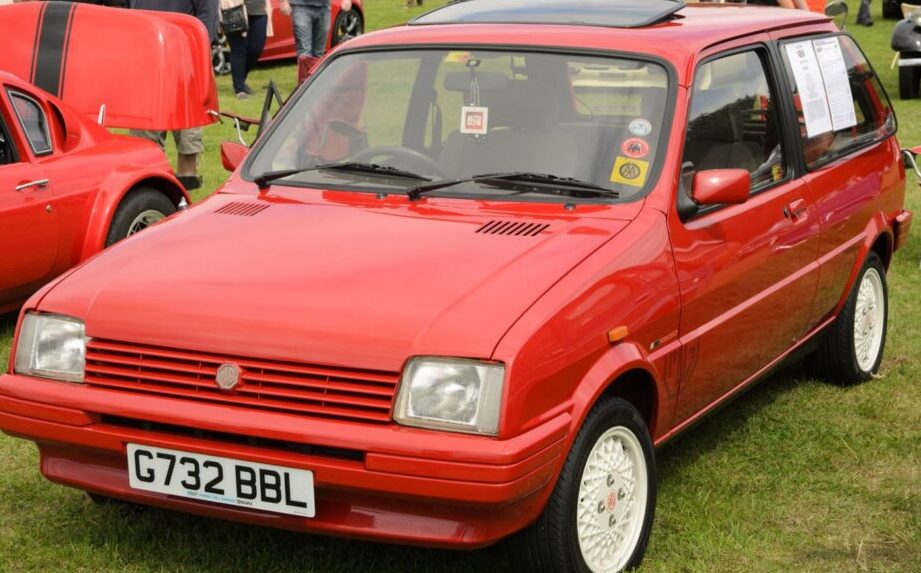
The MG Metro 6R4 was a limited-production, high-performance hatchback built between 1985 and 1986. Developed by Austin Rover Group (ARG) and specifically engineered for rallying, the 6R4 represented a significant departure from the standard Metro, aiming to compete in the increasingly popular Group B rally championship. While the Group B class was ultimately cancelled, the 6R4 remains a highly collectible and iconic vehicle, celebrated for its potent engine and aggressive styling. Only approximately 200 road-going versions were produced to meet homologation requirements for rallying, making it a rare and sought-after classic. This article focuses on the 3.0-liter, 253 horsepower variant, the pinnacle of the 6R4’s development.
Technical Specifications
| Brand | MG |
| Model | Metro |
| Generation | Metro |
| Type (Engine) | 6R4 3.0 (253 Hp) |
| Start of Production | 1985 |
| End of Production | 1986 |
| Powertrain Architecture | Internal Combustion Engine |
| Body Type | Hatchback |
| Fuel Type | Petrol (Gasoline) |
| Power | 253 Hp |
| Engine Aspiration | Naturally Aspirated |
Powertrain & Engine Architecture
The heart of the MG Metro 6R4 is its 2991cc V6 engine, a completely new design unrelated to any other engine produced by British Leyland or ARG. Developed by Cosworth, the engine featured a 90-degree V6 configuration with four valves per cylinder and a dry-sump lubrication system, essential for maintaining oil supply during the extreme cornering forces experienced in rallying. The engine utilized Lucas fuel injection, carefully tuned to deliver a responsive and powerful performance. Unlike many contemporary turbocharged engines, the 6R4 relied on naturally aspirated induction, contributing to its linear power delivery. The engine’s block was cast from aluminum alloy, reducing weight, while the cylinder heads were also aluminum, further enhancing the power-to-weight ratio. The 6R4 did *not* use a conventional transmission. Instead, it employed a unique five-speed sequential gearbox, designed for rapid gear changes during competition. This gearbox, coupled with a limited-slip differential, ensured optimal power distribution to all four wheels.
Driving Characteristics
The driving experience in a Metro 6R4 is visceral and demanding. The 253 horsepower output, combined with a relatively lightweight chassis (approximately 2,400 lbs), resulted in exhilarating acceleration. The sequential gearbox, while requiring a deliberate technique, allowed for incredibly fast upshifts and downshifts. The four-wheel-drive system provided exceptional grip, particularly on loose surfaces, but the car’s short wheelbase and stiff suspension meant it could be challenging to control at the limit. Compared to the earlier 2.0-liter versions of the 6R4, the 3.0-liter engine offered a significant increase in torque throughout the rev range, making it more tractable on the road but even more potent in rally applications. The power delivery was aggressive, requiring respect and skill from the driver. The lack of modern driver aids meant that controlling the 6R4 demanded a high level of driver involvement and precision.
Equipment & Trim Levels
Given its purpose as a homologation special, the MG Metro 6R4 was sparsely equipped by modern standards. The interior was functional and focused on weight reduction. Seats were typically lightweight bucket seats, often trimmed in a combination of cloth and leather. The dashboard was largely carried over from the standard Metro, but featured additional gauges to monitor engine parameters such as oil pressure and temperature. Electric windows and central locking were not standard features. The emphasis was on creating a lightweight and durable interior capable of withstanding the rigors of rallying. Road-going versions did receive some concessions to comfort, such as a basic stereo system, but the overall ambiance remained distinctly spartan. Exterior features included widened wheel arches to accommodate the larger wheels and tires, a distinctive rear wing, and unique badging.
Chassis & Braking
The chassis of the MG Metro 6R4 was significantly reinforced compared to the standard Metro. Strengthened suspension components, including uprated springs and dampers, were employed to handle the increased power and stresses. The front suspension utilized MacPherson struts, while the rear featured a multi-link setup. Braking was provided by ventilated disc brakes on all four wheels, offering ample stopping power. However, the braking system lacked ABS, requiring the driver to modulate the brakes carefully. The car’s relatively short wheelbase contributed to its agility but also made it prone to oversteer. The four-wheel-drive system, utilizing a viscous coupling, distributed power between the front and rear axles, optimizing traction in various conditions. The chassis was designed to be both lightweight and incredibly rigid, providing a stable platform for the powerful engine and suspension.
Market Reception & Comparison
The MG Metro 6R4 was met with considerable enthusiasm by the motoring press, who praised its performance and handling. However, its high price and limited availability meant it remained a niche vehicle. Critics noted the car’s uncompromising ride quality and demanding driving characteristics, acknowledging that it was not a vehicle for the faint of heart. Compared to other contemporary performance hatchbacks, such as the Ford Escort RS Turbo or the Volkswagen Golf GTI, the 6R4 offered a significantly higher level of performance but at a substantial premium. The 3.0-liter version was generally considered to be the most desirable, offering the best balance of power and drivability. Reliability was a concern, as the engine and gearbox were complex and required regular maintenance. Fuel economy was also poor, reflecting the car’s high-performance nature.
Legacy
The MG Metro 6R4 holds a special place in automotive history as a testament to British engineering and rallying prowess. Despite the cancellation of Group B rallying, the 6R4’s legacy endures. Today, original examples are highly prized by collectors, commanding significant prices. The 6R4’s engine, while complex, is regarded as a masterpiece of engineering, and its unique sequential gearbox remains a fascinating piece of automotive technology. The car’s influence can be seen in subsequent rally cars and high-performance hatchbacks. While maintenance can be expensive due to the rarity of parts, the MG Metro 6R4 continues to provide an unforgettable driving experience for those fortunate enough to own one. Its status as a limited-production, rally-bred icon ensures its continued desirability in the classic car market for years to come.
