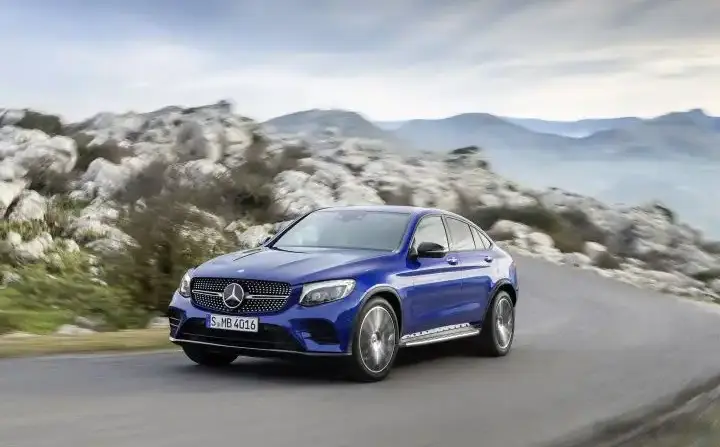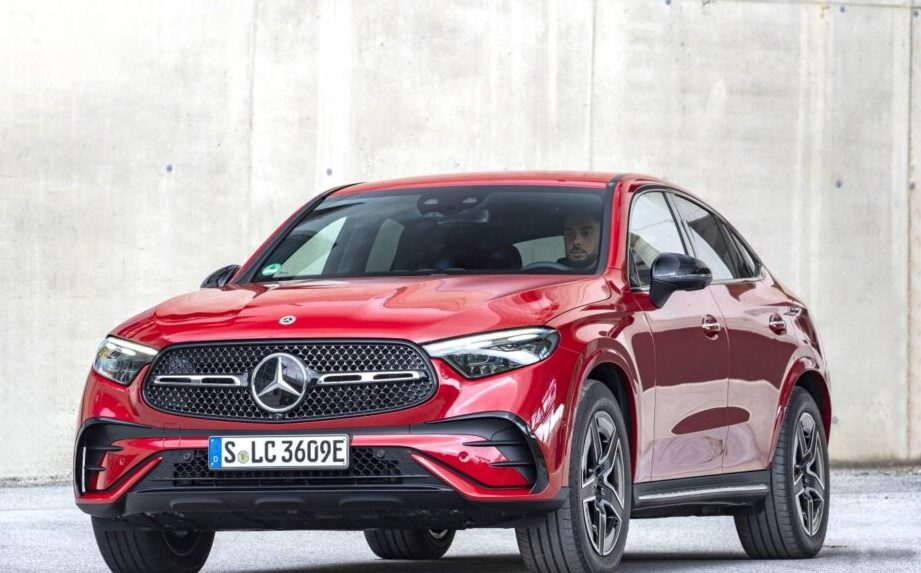
The Mercedes-Benz GLC 300de 4MATIC, introduced in July 2023, represents a plug-in hybrid variant within the C254 GLC Coupe series. Positioned as a premium offering, it combines a diesel engine with an electric motor to deliver both efficiency and performance. This model is primarily targeted towards European markets, where diesel-electric hybrids are popular due to stringent emissions regulations and incentives for eco-friendly vehicles. The 300de utilizes the latest Mercedes-Benz hybrid technology, aiming to provide a balance between all-electric range for daily commutes and the extended range of a conventional powertrain for longer journeys. It builds upon the foundation of the broader GLC Coupe range, offering a sportier aesthetic compared to the standard GLC SUV.
Technical Specifications
| Brand | Mercedes-Benz |
| Model | GLC |
| Generation | GLC Coupe (C254) |
| Type | GLC 300de (333 Hp) Plug-in Hybrid 4MATIC 9G-TRONIC |
| Start of production | July, 2023 |
| Powertrain Architecture | PHEV (Plug-in Hybrid Electric Vehicle) |
| Body type | Coupe, SUV |
| Seats | 5 |
| Doors | 5 |
| Combined fuel consumption (WLTP) | 0.4-0.5 l/100 km (588 – 470.4 US mpg, 706.2 – 565 UK mpg, 250 – 200 km/l) |
| CO2 emissions (WLTP) | 10-13 g/km |
| Fuel Type | Diesel / electricity |
| Acceleration 0 – 100 km/h | 6.4 sec |
| Acceleration 0 – 62 mph | 6.4 sec |
| Acceleration 0 – 60 mph | 6.1 sec |
| Maximum speed | 219 km/h (136.08 mph) |
| Emission standard | Euro 6d-ISC-FCM |
| Weight-to-power ratio | 7.2 kg/Hp, 139.6 Hp/tonne |
| Weight-to-torque ratio | 3.2 kg/Nm, 314.5 Nm/tonne |
| Gross battery capacity | 31.2 kWh |
| Battery technology | Lithium-ion (Li-Ion) |
| Battery location | Inside the trunk |
| All-electric range (WLTP) | 113-130 km (70.21 – 80.78 mi) |
| Average Energy consumption (WLTP) | 20.3-22.7 kWh/100 km (32.67 – 36.53 kWh/100 mi, 103 – 92 MPGe, 4.9 – 4.4 km/kWh, 3.1 – 2.7 mi/kWh) |
| Max speed (electric) | 140 km/h (86.99 mph) |
| Electric motor power | 136 Hp |
| Electric motor Torque | 440 Nm (324.53 lb.-ft.) |
| Electric motor location | Between the combustion engine and the transmission |
| Electric motor type | Synchronous |
| System power | 333 Hp |
| System torque | 750 Nm (553.17 lb.-ft.) |
| Power | 197 Hp @ 3600 rpm |
| Torque | 440 Nm @ 1800-2800 rpm (324.53 lb.-ft. @ 1800-2800 rpm) |
| Engine layout | Front, Longitudinal |
| Engine Model/Code | OM 654 M |
| Engine displacement | 1993 cm3 (121.62 cu. in.) |
| Number of cylinders | 4 |
| Engine configuration | Inline |
| Number of valves per cylinder | 4 |
| Fuel injection system | Diesel Commonrail |
| Engine aspiration | Twin-Turbo, Intercooler |
| Valvetrain | DOHC |
| Kerb Weight | 2385 kg (5258.02 lbs.) |
| Max. weight | 2875 kg (6338.29 lbs.) |
| Max load | 490 kg (1080.27 lbs.) |
| Trunk (boot) space – minimum | 390 l (13.77 cu. ft.) |
| Trunk (boot) space – maximum | 1335 l (47.15 cu. ft.) |
| Fuel tank capacity | 62 l (16.38 US gal | 13.64 UK gal) |
| Permitted trailer load with brakes (12%) | 2000 kg (4409.25 lbs.) |
| Permitted towbar download | 100 kg (220.46 lbs.) |
| Length | 4769 mm (187.76 in.) |
| Width | 1920 mm (75.59 in.) |
| Width including mirrors | 2076 mm (81.73 in.) |
| Height | 1606 mm (63.23 in.) |
| Wheelbase | 2888 mm (113.7 in.) |
| Front track | 1628 mm (64.09 in.) |
| Rear (Back) track | 1642 mm (64.65 in.) |
| Front overhang | 848 mm (33.39 in.) |
| Rear overhang | 1033 mm (40.67 in.) |
| Ride height (ground clearance) | 158 mm (6.22 in.) |
| Minimum turning circle (turning diameter) | 10.9 m (35.76 ft.) |
| Front brakes | Ventilated discs |
| Rear brakes | Ventilated discs |
| Number of gears and type of gearbox | 9 gears, automatic transmission G-TRONIC |
Powertrain & Engine Architecture
The GLC 300de utilizes a 2.0-liter inline-four cylinder diesel engine (OM 654 M) paired with a 136 hp electric motor. The diesel engine produces 197 hp at 3600 rpm and 440 Nm (324.53 lb-ft) of torque between 1800-2800 rpm. The engine features a twin-turbocharger setup with an intercooler, enhancing both power and efficiency. Fuel is delivered via a diesel commonrail direct injection system. The electric motor, a synchronous type, is positioned between the engine and the 9G-TRONIC automatic transmission. The combined system output reaches 333 hp and 750 Nm (553.17 lb-ft) of torque. The 31.2 kWh lithium-ion battery pack is located under the trunk floor, impacting cargo space. The 9G-TRONIC transmission is a nine-speed automatic, optimized for smooth shifting and efficient power delivery in both electric and hybrid modes.
Driving Characteristics
The GLC 300de offers a refined driving experience. In electric-only mode, it provides near-silent operation and brisk acceleration for urban driving. The all-electric range of 113-130 km (70-81 miles) is sufficient for many daily commutes. When the diesel engine engages, the transition is generally seamless. The combined power output delivers strong acceleration, with a 0-100 km/h (0-62 mph) time of 6.4 seconds. The 9G-TRONIC transmission contributes to smooth gear changes, and the hybrid system intelligently manages power delivery to optimize fuel efficiency. Compared to the petrol-powered GLC 300, the 300de offers superior torque and fuel economy, albeit with a slightly higher curb weight due to the battery pack. The driving experience is noticeably different from higher-performance GLC variants like the AMG models, prioritizing comfort and efficiency over outright sportiness.
Equipment & Trim Levels
The GLC 300de typically comes well-equipped as standard. Features include Mercedes-Benz’s MBUX infotainment system with a large touchscreen display, digital instrument cluster, leather upholstery, automatic climate control, and a comprehensive suite of safety features like adaptive cruise control, lane keeping assist, and automatic emergency braking. Optional extras include premium sound systems, panoramic sunroof, head-up display, and various interior trim upgrades. The specific trim levels and available options can vary depending on the market. Generally, the 300de sits towards the higher end of the GLC Coupe range, offering a more luxurious and technologically advanced experience than the base models.
Chassis & Braking
The GLC 300de utilizes a fully independent suspension system, featuring steel springs and adaptive dampers. The suspension is tuned to provide a comfortable ride while maintaining good handling characteristics. Ventilated disc brakes are fitted on all four wheels, providing ample stopping power. The vehicle is equipped with ABS (Anti-lock Braking System), electronic stability control, and other advanced braking assistance systems. Due to the added weight of the battery pack, the suspension components may be slightly reinforced compared to lighter GLC variants. The 4MATIC all-wheel-drive system provides excellent traction in various weather conditions.
Market Reception & Comparison
The GLC 300de has been generally well-received by automotive critics, praised for its fuel efficiency, refined driving experience, and luxurious interior. Its ability to travel significant distances on electric power is a major selling point, particularly in urban environments. Compared to other GLC variants, the 300de offers a compelling alternative for buyers seeking a more environmentally friendly option. While the initial purchase price is higher than the petrol-powered models, the potential fuel savings and tax incentives can offset the cost over time. Reliability reports are still emerging, but Mercedes-Benz’s reputation for build quality suggests that the 300de should prove to be a durable and dependable vehicle.
Legacy
The GLC 300de represents Mercedes-Benz’s commitment to electrification and sustainable mobility. As plug-in hybrid technology continues to evolve, the 300de is likely to be remembered as an important step in the transition towards a fully electric future. The long-term reliability of the hybrid powertrain remains to be seen, but the robust design and quality components suggest that it should provide years of trouble-free service. On the used car market, the 300de is expected to hold its value well, particularly as demand for plug-in hybrids continues to grow.