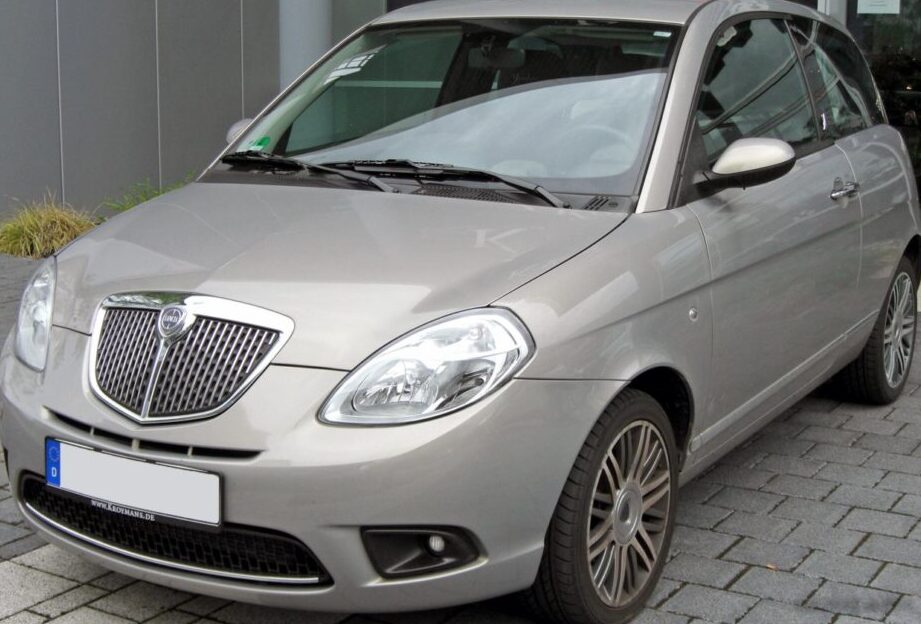
The Lancia Ypsilon (843) 1.2 i, producing 60 horsepower, was a key entry point into the third generation of Lancia’s popular city car, sold primarily in the European market from 2003 to 2006. Positioned as the most affordable variant of the 843 series, it aimed to provide economical and practical transportation for urban drivers. This model represented a significant departure from its predecessors, sharing its platform – the Fiat/Lancia ‘Mini’ platform – with the Fiat Panda and later, the Fiat 500. The Ypsilon 843 sought to blend Italian styling with a focus on interior space and comfort, characteristics traditionally associated with the Lancia brand.
Technical Specifications
| Brand | Lancia |
| Model | Ypsilon |
| Generation | Ypsilon (843) |
| Type (Engine) | 1.2 i (60 Hp) |
| Start of production | 2003 |
| End of production | 2006 |
| Powertrain Architecture | Internal Combustion engine |
| Body type | Hatchback |
| Seats | 5 |
| Doors | 3 |
| Fuel consumption (urban) | 7.7 l/100 km (30.5 US mpg) |
| Fuel consumption (extra urban) | 5 l/100 km (47 US mpg) |
| Fuel consumption (combined) | 6 l/100 km (39.2 US mpg) |
| Fuel Type | Petrol (Gasoline) |
| Acceleration 0 – 100 km/h | 16.8 sec |
| Acceleration 0 – 62 mph | 16.8 sec |
| Acceleration 0 – 60 mph | 16 sec |
| Maximum speed | 153 km/h (95.07 mph) |
| Weight-to-power ratio | 15.8 kg/Hp |
| Weight-to-torque ratio | 9.3 kg/Nm |
| Power | 60 Hp @ 5000 rpm |
| Torque | 102 Nm @ 2500 rpm (75.23 lb.-ft. @ 2500 rpm) |
| Engine layout | Front, Transverse |
| Engine Model/Code | 188 A4.000 |
| Engine displacement | 1242 cm3 (75.79 cu. in.) |
| Number of cylinders | 4 |
| Engine configuration | Inline |
| Cylinder Bore | 70.8 mm (2.79 in.) |
| Piston Stroke | 78.86 mm (3.1 in.) |
| Compression ratio | 9.8:1 |
| Number of valves per cylinder | 2 |
| Fuel injection system | Multi-port manifold injection |
| Engine aspiration | Naturally aspirated engine |
| Valvetrain | OHC |
| Engine oil capacity | 2.7 l (2.85 US qt | 2.38 UK qt) |
| Coolant capacity | 4.8 l (5.07 US qt | 4.22 UK qt) |
| Kerb Weight | 945 kg (2083.37 lbs.) |
| Trunk (boot) space – minimum | 215 l (7.59 cu. ft.) |
| Fuel tank capacity | 47 l (12.42 US gal | 10.34 UK gal) |
| Length | 3778 mm (148.74 in.) |
| Width | 1704 mm (67.09 in.) |
| Height | 1530 mm (60.24 in.) |
| Wheelbase | 2388 mm (94.02 in.) |
| Front track | 1450 mm (57.09 in.) |
| Rear track | 1440 mm (56.69 in.) |
| Minimum turning circle | 9.8 m (32.15 ft.) |
| Drivetrain Architecture | Front wheel drive |
| Number of gears | 5 |
| Gearbox type | Manual transmission |
| Front suspension | Spring Strut |
| Rear suspension | Torsion |
| Front brakes | Disc |
| Rear brakes | Drum |
| Assisting systems | ABS (Anti-lock braking system) |
| Steering type | Steering rack and pinion |
| Tires size | 185/65 R14 |
Introduction
The Lancia Ypsilon 843 1.2 i, launched in 2003, represented a significant shift for the Ypsilon model line. It was built on the Fiat/Lancia ‘Mini’ platform, a collaborative effort designed to underpin several small cars within the Fiat Group. This generation aimed to modernize the Ypsilon, offering a more spacious and comfortable interior while retaining the brand’s focus on style. The 1.2-liter engine variant served as the entry-level option, targeting budget-conscious buyers and those primarily using the vehicle for city commuting. Production of this specific configuration continued until 2006, when it was superseded by updated versions within the 843 range.
Powertrain & Engine Architecture
At the heart of the Ypsilon 1.2 i lies the 188 A4.000 engine, a naturally aspirated, inline-four cylinder petrol engine displacing 1242 cc. This engine, a common unit within the Fiat/Lancia portfolio, featured a single overhead camshaft (OHC) valvetrain with two valves per cylinder. Fuel delivery was managed by a multi-port fuel injection system, providing adequate, though not exceptional, performance. The engine produced 60 horsepower at 5000 rpm and 102 Nm (75.23 lb-ft) of torque at 2500 rpm. The engine’s relatively simple design prioritized reliability and ease of maintenance. The Ypsilon 1.2 i was exclusively offered with a five-speed manual transmission, designed to maximize fuel efficiency and provide acceptable acceleration for urban driving. The transmission was a standard configuration for this class of vehicle, offering smooth shifts but lacking the sophistication of more modern automatic gearboxes.
Driving Characteristics
The Ypsilon 1.2 i’s driving experience was characterized by its focus on comfort and ease of use. With only 60 horsepower, acceleration was modest, taking approximately 16.8 seconds to reach 62 mph (100 km/h). The engine felt strained at higher speeds, making it less suitable for extended highway journeys. However, within city limits, the engine provided sufficient power for navigating traffic and performing everyday maneuvers. The five-speed manual transmission allowed drivers to keep the engine within its optimal power band, maximizing efficiency. The gear ratios were relatively long, prioritizing fuel economy over outright performance. Compared to higher-spec Ypsilons equipped with larger engines (like the 1.4-liter), the 1.2 i felt noticeably slower and less refined. However, its lighter weight and simpler mechanicals contributed to a more nimble and forgiving driving experience.
Equipment & Trim Levels
The Ypsilon 1.2 i typically came with a basic, yet functional, level of equipment. Standard features generally included power steering, central locking, and front airbags. Interior upholstery was typically cloth, with a simple dashboard layout. Air conditioning was often an optional extra, as were electric windows and a radio/CD player. The trim level was generally considered the base model, designed to appeal to buyers seeking an affordable and practical city car. Optional extras allowed buyers to personalize their vehicle, but the focus remained on providing a cost-effective transportation solution. The interior, while not luxurious, was designed to be durable and easy to clean, reflecting the car’s intended use as a practical urban vehicle.
Chassis & Braking
The Ypsilon 843 featured a front-wheel-drive layout with a MacPherson strut suspension at the front and a torsion beam suspension at the rear. This suspension setup provided a comfortable ride quality, absorbing bumps and imperfections in the road surface effectively. The front brakes were disc brakes, offering adequate stopping power, while the rear brakes were drum brakes, a cost-saving measure common in this segment. Anti-lock Braking System (ABS) was standard, enhancing safety by preventing wheel lockup during emergency braking. The chassis was designed to be lightweight, contributing to the car’s overall fuel efficiency and agility. The steering was a rack and pinion system, providing precise and responsive handling.
Market Reception & Comparison
The Lancia Ypsilon 1.2 i was generally well-received as an affordable and stylish city car. Critics praised its comfortable ride, spacious interior, and distinctive Italian design. However, the engine’s lack of power was a common criticism, particularly when compared to competitors offering more potent engines. In terms of fuel economy, the Ypsilon 1.2 i performed competitively, achieving around 39.2 US mpg on a combined cycle. Compared to other trims in the Ypsilon lineup, such as the 1.4-liter variants, the 1.2 i offered a more economical purchase price and lower running costs, but at the expense of performance. It competed with other small hatchbacks like the Fiat Panda, Renault Clio, and Peugeot 206, offering a unique blend of style and practicality.
Legacy
The Lancia Ypsilon 843 1.2 i has proven to be a relatively reliable vehicle, with the 188 A4.000 engine known for its durability. However, like any older vehicle, regular maintenance is crucial to prevent issues. Common problems include wear and tear on suspension components and potential issues with the fuel injection system. In the used car market, the Ypsilon 1.2 i remains an affordable option for those seeking a stylish and economical city car. Its simple mechanicals make it relatively easy and inexpensive to repair, appealing to budget-conscious buyers. While it may not offer the performance or features of more modern vehicles, the Ypsilon 1.2 i continues to hold a niche appeal for those who appreciate its Italian charm and practicality.