
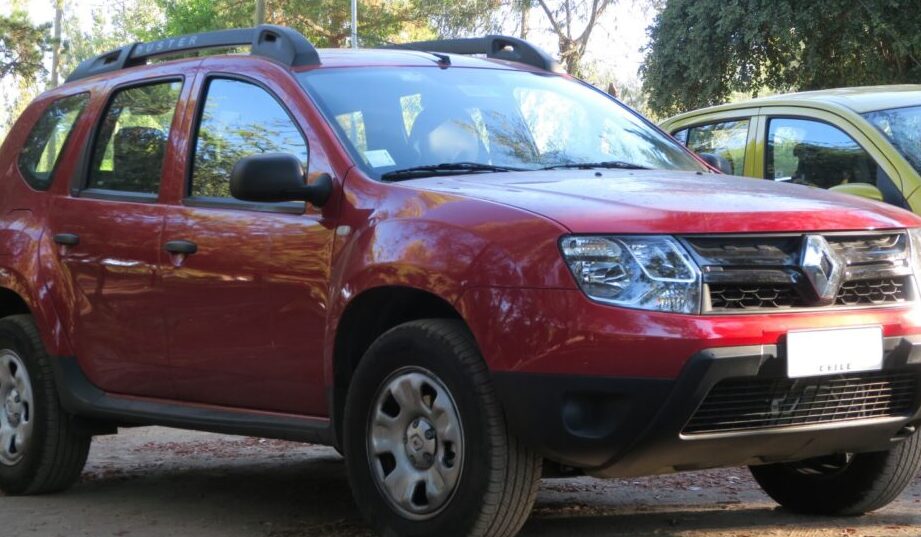
The Renault Duster I (facelift 2015) 1.5 dCi 85 hp variant was a key offering in Renault’s budget-focused SUV lineup, produced from June 2015 to May 2021. Positioned as an entry-level option within the Duster range, it aimed to provide affordable and practical transportation, particularly in European and emerging markets. This version of the Duster, built on the B0 platform (also known as the 1HX0 platform), represented a significant update to the original Duster, with revised styling and improved interior features. The 1.5 dCi engine, a mainstay of Renault’s small diesel offerings, was paired with a five-speed manual transmission in this configuration, prioritizing fuel efficiency over outright performance.
Technical Specifications
| Brand | Renault |
| Model | Duster |
| Generation | Duster I (facelift 2015) |
| Type (Engine) | 1.5 dCi (85 Hp) |
| Start of production | June, 2015 |
| End of production | May, 2021 |
| Powertrain Architecture | Internal Combustion engine |
| Body type | SUV |
| Seats | 5 |
| Doors | 5 |
| Fuel consumption (urban) | 5.7 l/100 km (41.3 US mpg, 49.6 UK mpg, 17.5 km/l) |
| Fuel consumption (extra urban) | 4.9 l/100 km (48 US mpg, 57.6 UK mpg, 20.4 km/l) |
| Fuel consumption (combined) | 5.1 l/100 km (46.1 US mpg, 55.4 UK mpg, 19.6 km/l) |
| CO2 emissions | 135 g/km |
| Fuel Type | Diesel |
| Acceleration 0 – 100 km/h | 14.6 sec |
| Acceleration 0 – 62 mph | 14.6 sec |
| Acceleration 0 – 60 mph | 13.9 sec |
| Maximum speed | 155 km/h (96.31 mph) |
| Emission standard | Euro 4 |
| Weight-to-power ratio | 14.2 kg/Hp, 70.5 Hp/tonne |
| Weight-to-torque ratio | 6 kg/Nm, 166 Nm/tonne |
| Power | 85 Hp @ 3750 rpm |
| Power per litre | 58.2 Hp/l |
| Torque | 200 Nm @ 1750 rpm (147.51 lb.-ft. @ 1750 rpm) |
| Engine layout | Front, Transverse |
| Engine Model/Code | K9K |
| Engine displacement | 1461 cm3 (89.16 cu. in.) |
| Number of cylinders | 4 |
| Engine configuration | Inline |
| Cylinder Bore | 76 mm (2.99 in.) |
| Piston Stroke | 80.5 mm (3.17 in.) |
| Compression ratio | 17.6:1 |
| Number of valves per cylinder | 2 |
| Fuel injection system | Diesel Commonrail |
| Engine aspiration | Turbocharger, Intercooler |
| Valvetrain | DOHC |
| Engine oil capacity | 4.5 l (4.76 US qt | 3.96 UK qt) |
| Coolant | 4.5 l (4.76 US qt | 3.96 UK qt) |
| Kerb Weight | 1205 kg (2656.57 lbs.) |
| Max. weight | 1755 kg (3869.11 lbs.) |
| Max load | 550 kg (1212.54 lbs.) |
| Trunk (boot) space – minimum | 475 l (16.77 cu. ft.) |
| Trunk (boot) space – maximum | 1636 l (57.77 cu. ft.) |
| Fuel tank capacity | 50 l (13.21 US gal | 11 UK gal) |
| Permitted trailer load with brakes (12%) | 1200 kg (2645.55 lbs.) |
| Permitted trailer load without brakes | 640 kg (1410.96 lbs.) |
| Length | 4315 mm (169.88 in.) |
| Width | 1822 mm (71.73 in.) |
| Width including mirrors | 2000 mm (78.74 in.) |
| Height | 1695 mm (66.73 in.) |
| Wheelbase | 2674 mm (105.28 in.) |
| Front track | 1559 mm (61.38 in.) |
| Rear (Back) track | 1560 mm (61.42 in.) |
| Front overhang | 816 mm (32.13 in.) |
| Rear overhang | 825 mm (32.48 in.) |
| Ride height (ground clearance) | 205 mm (8.07 in.) |
| Minimum turning circle | 10.76 m (35.3 ft.) |
| Approach angle | 29.3° |
| Departure angle | 34.9° |
| Ramp-over angle | 23° |
| Drivetrain Architecture | The Internal combustion engine (ICE) drives the front wheels of the vehicle. |
| Drive wheel | Front wheel drive |
| Number of gears and type of gearbox | 5 gears, manual transmission |
| Front suspension | Independent, type McPherson with coil spring and anti-roll bar |
| Rear suspension | Semi-independent, coil spring |
| Front brakes | Ventilated discs |
| Rear brakes | Drum |
| Assisting systems | ABS (Anti-lock braking system) |
| Steering type | Steering rack and pinion |
| Power steering | Electric Steering |
| Tires size | 215/65 R16 |
| Wheel rims size | 6.5J x 16 |
Powertrain & Engine Architecture
The heart of this Duster variant is the Renault K9K 1.5-liter four-cylinder diesel engine. This engine, a member of Renault’s widely used K-series diesels, is known for its robustness and fuel efficiency. The K9K engine in the 85 hp guise utilizes a turbocharger with an intercooler to boost power output. Fuel is delivered via a Diesel Commonrail direct injection system, contributing to improved combustion efficiency and reduced emissions. The engine features a double overhead camshaft (DOHC) valvetrain with two valves per cylinder. The 17.6:1 compression ratio is typical for a diesel engine, maximizing thermal efficiency. The five-speed manual transmission was the sole gearbox option for this trim level, chosen for its simplicity and contribution to fuel economy.
Driving Characteristics
The 1.5 dCi 85 hp Duster is not a performance-oriented vehicle. Acceleration is modest, with a 0-62 mph (0-100 km/h) time of around 14.6 seconds. The engine delivers its peak torque of 200 Nm (147.51 lb.-ft.) at 1750 rpm, providing adequate pulling power for everyday driving and moderate loads. The five-speed gearbox is geared for economy, meaning higher gears are engaged at lower speeds. Compared to higher-output versions of the Duster, such as those with the 110 hp engine, this variant feels noticeably slower, particularly when overtaking or climbing hills. However, the lower power output also contributes to better fuel economy and reduced stress on the engine components.
Equipment & Trim Levels
The 85 hp 1.5 dCi Duster typically came with a basic level of equipment, reflecting its position as an entry-level model. Standard features generally included power steering, central locking, electric front windows, and an ABS anti-lock braking system. Interior upholstery was typically cloth, and the dashboard featured a functional, if somewhat basic, design. Optional extras could include air conditioning, a radio with CD player, and alloy wheels. Higher trim levels within the Duster range offered more luxurious features, such as leather upholstery, automatic climate control, and a more sophisticated infotainment system.
Chassis & Braking
The Duster’s chassis is based on a robust ladder-frame construction, providing good durability and off-road capability. The front suspension utilizes an independent McPherson strut setup with a coil spring and anti-roll bar, while the rear suspension is a semi-independent coil spring arrangement. This setup provides a reasonable balance between ride comfort and handling. The braking system features ventilated discs on the front wheels and drum brakes on the rear. The drum brakes on the rear were a cost-saving measure common in entry-level trims.
Market Reception & Comparison
The Renault Duster I (facelift 2015) 1.5 dCi 85 hp was generally well-received as an affordable and practical SUV. Critics praised its spacious interior, good ground clearance, and fuel efficiency. However, the engine’s modest power output was often noted as a drawback. Compared to the 110 hp diesel version, the 85 hp model offered significantly less performance, but at a lower price point. The 85 hp variant appealed to buyers who prioritized economy and practicality over outright speed.
Legacy
The K9K 1.5 dCi engine, in its various iterations, has proven to be a reliable and durable powerplant. The 85 hp version, while not the most powerful, is known for its longevity and relatively low maintenance costs. In the used car market, these Dusters represent a good value proposition for buyers seeking an affordable and capable SUV. However, potential buyers should be aware of the typical wear and tear associated with diesel engines, such as potential issues with the turbocharger and fuel injectors. Overall, the Renault Duster I (facelift 2015) 1.5 dCi 85 hp remains a popular choice for those seeking a budget-friendly and practical vehicle.


