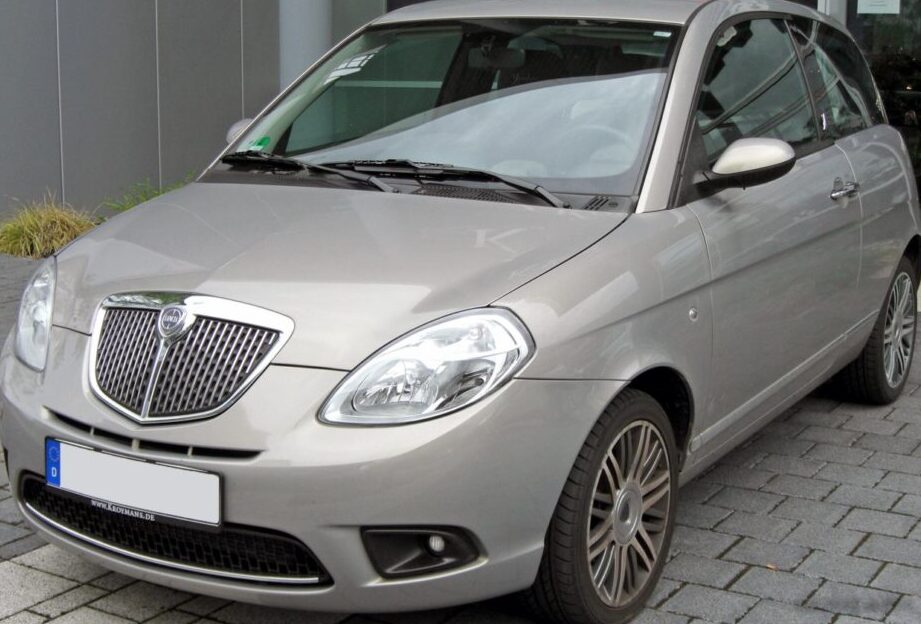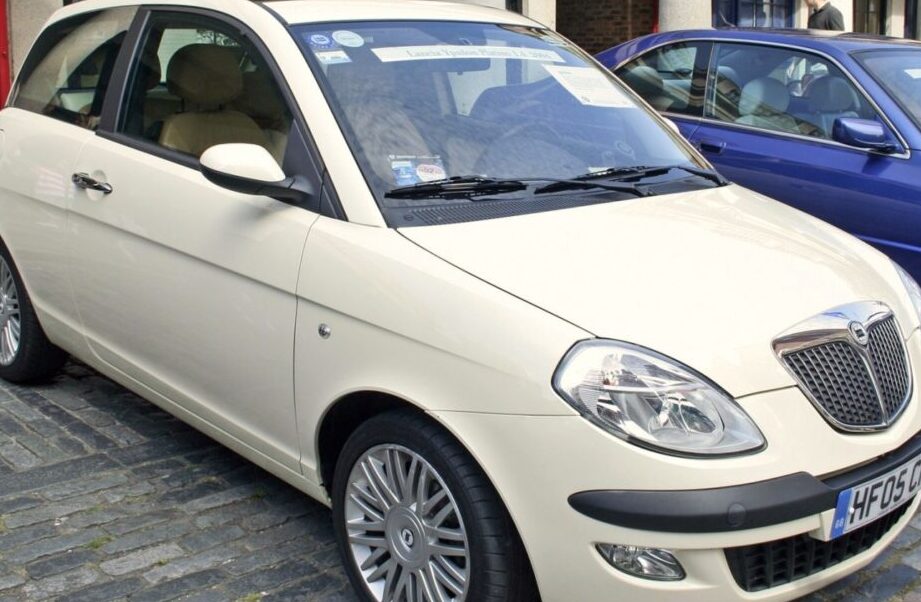
The Lancia Ypsilon (843) 1.3 16V CDRi Multijet, producing 70 horsepower, was a key variant in the second generation of the Ypsilon, produced from 2003 to 2006. Positioned as an entry-level offering within the 843 series – which shared its platform (the 1HX0/A3 platform) with the Fiat Punto and Alfa Romeo Mito – this model aimed to provide economical and practical transportation, particularly within the European market. It represented Lancia’s attempt to blend style and affordability in the supermini segment, appealing to buyers seeking a more premium alternative to mainstream competitors.
Technical Specifications
| Brand | Lancia |
| Model | Ypsilon |
| Generation | Ypsilon (843) |
| Type (Engine) | 1.3 16V CDRi Multijet (70 Hp) |
| Start of production | 2003 |
| End of production | 2006 |
| Powertrain Architecture | Internal Combustion engine |
| Body type | Hatchback |
| Seats | 5 |
| Doors | 3 |
| Fuel consumption (urban) | 5.7 l/100 km (41.3 US mpg, 49.6 UK mpg, 17.5 km/l) |
| Fuel consumption (extra urban) | 3.9 l/100 km (60.3 US mpg, 72.4 UK mpg, 25.6 km/l) |
| Fuel consumption (combined) | 4.6 l/100 km (51.1 US mpg, 61.4 UK mpg, 21.7 km/l) |
| Fuel Type | Diesel |
| Acceleration 0 – 100 km/h | 15.1 sec |
| Acceleration 0 – 62 mph | 15.1 sec |
| Acceleration 0 – 60 mph | 14.3 sec |
| Maximum speed | 165 km/h (102.53 mph) |
| Weight-to-power ratio | 14.9 kg/Hp, 67 Hp/tonne |
| Weight-to-torque ratio | 5.8 kg/Nm, 172.2 Nm/tonne |
| Power | 70 Hp @ 4000 rpm |
| Power per litre | 56 Hp/l |
| Torque | 180 Nm @ 1750 rpm (132.76 lb.-ft. @ 1750 rpm) |
| Engine layout | Front, Transverse |
| Engine Model/Code | 188 A9.000 |
| Engine displacement | 1251 cm3 (76.34 cu. in.) |
| Number of cylinders | 4 |
| Engine configuration | Inline |
| Cylinder Bore | 69.6 mm (2.74 in.) |
| Piston Stroke | 82 mm (3.23 in.) |
| Compression ratio | 18:1 |
| Number of valves per cylinder | 4 |
| Fuel injection system | Diesel Commonrail |
| Engine aspiration | Turbocharger, Intercooler |
| Valvetrain | DOHC |
| Engine oil capacity | 3 l (3.17 US qt | 2.64 UK qt) |
| Coolant | 6.8 l (7.19 US qt | 5.98 UK qt) |
| Kerb Weight | 1045 kg (2303.83 lbs.) |
| Trunk (boot) space – minimum | 215 l (7.59 cu. ft.) |
| Fuel tank capacity | 47 l (12.42 US gal | 10.34 UK gal) |
| Length | 3778 mm (148.74 in.) |
| Width | 1705 mm (67.13 in.) |
| Height | 1530 mm (60.24 in.) |
| Wheelbase | 2388 mm (94.02 in.) |
| Front track | 1450 mm (57.09 in.) |
| Rear (Back) track | 1440 mm (56.69 in.) |
| Minimum turning circle | 9.8 m (32.15 ft.) |
| Drivetrain Architecture | The Internal combustion engine (ICE) drives the front wheels of the vehicle. |
| Drive wheel | Front wheel drive |
| Number of gears and type of gearbox | 5 gears, manual transmission |
| Front suspension | Spring Strut |
| Rear suspension | Torsion |
| Front brakes | Disc |
| Rear brakes | Drum |
| Assisting systems | ABS (Anti-lock braking system) |
| Steering type | Steering rack and pinion |
| Tires size | 185/65 R14 |
Powertrain & Engine Architecture
The heart of this Ypsilon variant was the 1.3-liter, 16-valve, turbocharged diesel engine, designated the 188A9.000. This engine was a member of Fiat’s Multijet family, utilizing common-rail direct injection technology. The Multijet system allowed for multiple injections per combustion cycle, improving efficiency, reducing noise, and enhancing driveability. The engine featured a fixed-geometry turbocharger with an intercooler to increase air density and boost power output. The engine’s DOHC (Double Overhead Camshaft) valvetrain further contributed to its efficiency and responsiveness. The 70 horsepower and 180 Nm (132.76 lb-ft) of torque were delivered at relatively low engine speeds, making it suitable for urban driving. The engine was paired with a five-speed manual transmission, chosen for its simplicity and cost-effectiveness in this entry-level model.
Driving Characteristics
The 1.3 Multijet 70 hp Ypsilon offered modest performance. Acceleration from 0-60 mph took around 14.3 seconds, and top speed was approximately 102.53 mph. While not particularly quick, the engine provided sufficient power for everyday driving, especially in city environments. The turbocharger provided a noticeable boost in power at lower RPMs, aiding in overtaking maneuvers. The five-speed manual transmission was well-matched to the engine’s characteristics, offering reasonable gear spacing. Compared to higher-output versions of the Ypsilon, such as those equipped with the 1.9-liter diesel or the 1.4-liter petrol engines, this variant felt noticeably slower. However, it excelled in fuel economy, making it an attractive option for drivers prioritizing efficiency.
Equipment & Trim Levels
The 70 hp 1.3 Multijet Ypsilon typically came with a basic level of equipment. Standard features generally included power steering, central locking, electric front windows, and an ABS anti-lock braking system. Interior upholstery was typically cloth, and the dashboard featured a functional, if somewhat basic, design. Optional extras included air conditioning, alloy wheels, a radio/CD player, and upgraded interior trim. The trim level was generally positioned as the entry point to the Ypsilon range, appealing to budget-conscious buyers. It was often marketed towards younger drivers or those seeking a practical and economical city car.
Chassis & Braking
The Ypsilon 843 utilized a relatively simple chassis design. Front suspension consisted of MacPherson struts, while the rear employed a torsion beam setup. This configuration provided a comfortable ride quality, although it wasn’t particularly sporty. The front brakes were disc brakes, providing adequate stopping power, while the rear brakes were drums, a cost-saving measure common in this segment. The steering was a rack and pinion system, offering reasonable precision and feedback. The relatively lightweight construction of the vehicle (1045 kg / 2303.83 lbs) helped to offset the modest power output.
Market Reception & Comparison
The Lancia Ypsilon 1.3 Multijet 70 hp was generally well-received for its fuel efficiency and practicality. Critics praised its economical engine and comfortable ride. However, some reviewers noted its lack of outright performance compared to competitors. Compared to other trims in the Ypsilon lineup, such as the 1.4 petrol or the 1.9 diesel, this variant offered the lowest running costs but also the slowest acceleration. Its main competitors included the Fiat Punto, Renault Clio, and Peugeot 206, all of which offered similar levels of practicality and economy. The Ypsilon’s more stylish design and perceived higher quality interior gave it an edge over some of its rivals.
Legacy
The 1.3 Multijet engine proved to be a reliable and durable unit, and many examples of the Ypsilon 843 with this engine are still on the road today. While not known for its blistering performance, the engine’s fuel efficiency and relatively low maintenance costs have contributed to its longevity. In the used car market, this variant represents an affordable and practical option for buyers seeking a small, economical city car. However, potential buyers should be aware of the age of the vehicle and the potential for wear and tear on components such as the turbocharger and fuel injection system. The Ypsilon 843, particularly this 1.3 Multijet variant, remains a testament to Lancia’s ability to create stylish and practical vehicles for the European market.