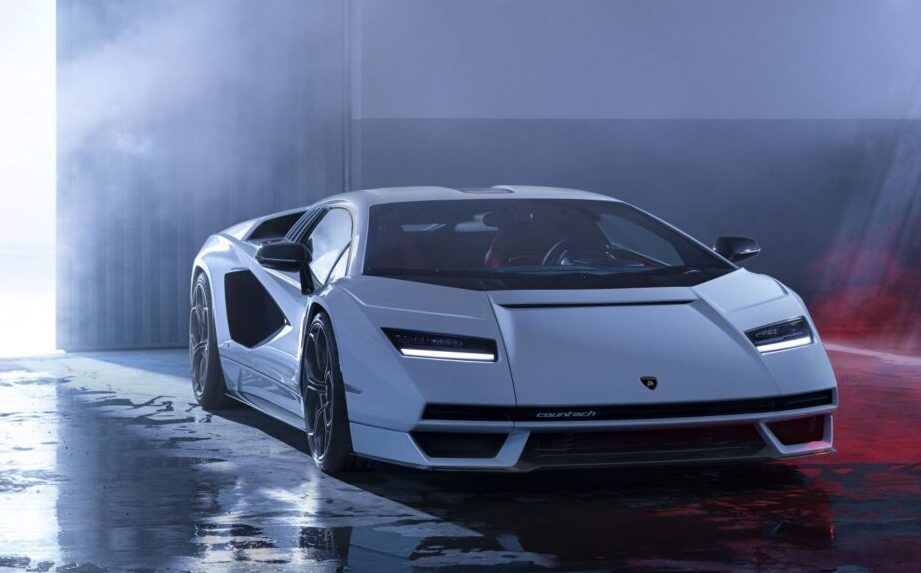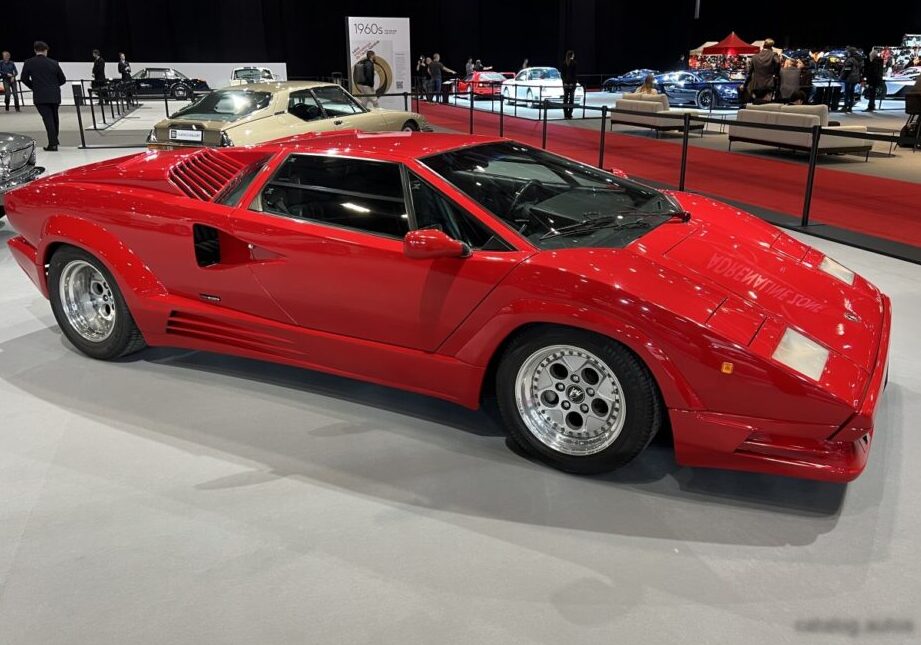
The Lamborghini Countach LP400, produced from 1974 to 1978, represents the initial iteration of the iconic Countach model, and the first production version of the car. It served as the foundation for the entire Countach lineage, establishing the dramatic styling and high-performance characteristics that would define the model for nearly two decades. The LP400 was a pivotal vehicle for Lamborghini, signaling a departure from the earlier Miura and showcasing a radical, wedge-shaped design penned by Marcello Gandini at Bertone. It was intended to replace the Miura, and represented a significant leap forward in both aesthetics and engineering for the Italian automaker.
Technical Specifications
| Brand | Lamborghini |
| Model | Countach |
| Generation | Countach |
| Type (Engine) | LP400 (375 Hp) |
| Start of production | 1974 |
| End of production | 1978 |
| Powertrain Architecture | Internal Combustion engine |
| Body type | Coupe |
| Seats | 2 |
| Doors | 2 |
| Fuel Type | Petrol (Gasoline) |
| Acceleration 0 – 100 km/h | 5.7 sec |
| Acceleration 0 – 62 mph | 5.7 sec |
| Acceleration 0 – 60 mph | 5.4 sec |
| Maximum speed | 315 km/h (195.73 mph) |
| Weight-to-power ratio | 2.8 kg/Hp, 352.1 Hp/tonne |
| Weight-to-torque ratio | 3 kg/Nm, 339 Nm/tonne |
| Power | 375 Hp @ 7500 rpm |
| Power per litre | 95.4 Hp/l |
| Torque | 361 Nm @ 5500 rpm (266.26 lb.-ft. @ 5500 rpm) |
| Engine layout | Middle, Longitudinal |
| Engine Model/Code | L 406 |
| Engine displacement | 3929 cm3 (239.76 cu. in.) |
| Number of cylinders | 12 |
| Engine configuration | V-engine |
| Cylinder Bore | 82 mm (3.23 in.) |
| Piston Stroke | 62 mm (2.44 in.) |
| Compression ratio | 10.5:1 |
| Fuel injection system | Carburettor |
| Engine aspiration | Naturally aspirated engine |
| Coolant | 17 l (17.96 US qt | 14.96 UK qt) |
| Kerb Weight | 1065 kg (2347.92 lbs.) |
| Fuel tank capacity | 120 l (31.7 US gal | 26.4 UK gal) |
| Length | 4140 mm (162.99 in.) |
| Width | 1890 mm (74.41 in.) |
| Height | 1070 mm (42.13 in.) |
| Wheelbase | 2450 mm (96.46 in.) |
| Front track | 1500 mm (59.06 in.) |
| Rear track | 1520 mm (59.84 in.) |
| Front overhang | 933 mm (36.73 in.) |
| Rear overhang | 757 mm (29.8 in.) |
| Ride height (ground clearance) | 125 mm (4.92 in.) |
| Minimum turning circle | 13.0 m (42.65 ft.) |
| Drivetrain Architecture | Rear wheel drive |
| Number of gears and type of gearbox | 5 gears, manual transmission |
| Front brakes | Disc |
| Rear brakes | Disc |
| Steering type | Steering rack and pinion |
| Tires size | Front wheel tires: 205/70 R14 Rear wheel tires: 215/70 R14 |
| Wheel rims size | R14 |
Powertrain & Engine Architecture
The heart of the LP400 is the Lamborghini L406, a 3.9-liter (3929 cc) naturally aspirated V12 engine. This engine, a 60-degree V12, produced 375 horsepower at 7,500 rpm and 361 Nm (266 lb-ft) of torque at 5,500 rpm. Unlike later Countach models that transitioned to fuel injection, the LP400 utilized six Weber 40 DCNF carburetors, contributing to its raw and somewhat temperamental character. The engine featured a single overhead camshaft per cylinder bank, operating four valves per cylinder. The engine was mounted longitudinally in a mid-engine configuration, contributing to the car’s exceptional balance. Power was transmitted to the rear wheels via a five-speed manual transmission. The transmission was a fully synchronized unit, designed to handle the engine’s substantial output.
Driving Characteristics
The LP400 offered a driving experience that was both exhilarating and demanding. Its relatively lightweight construction (approximately 2,348 lbs) combined with the potent V12 engine resulted in impressive acceleration – 0 to 60 mph in around 5.4 seconds and a top speed of 195.73 mph. However, the car’s lack of electronic aids and the raw power delivery required a skilled driver. The steering, while direct, lacked power assistance, demanding significant physical effort, especially at lower speeds. The suspension, while providing a relatively comfortable ride for a supercar of the era, was firm and focused on handling. The five-speed manual transmission had a relatively short throw, but required precise shifting to maximize performance. Compared to later, fuel-injected Countach models, the LP400 felt more visceral and less refined, offering a more direct connection to the mechanicals.
Equipment & Trim Levels
The LP400 was relatively spartan in terms of standard equipment, reflecting its focus on performance. The interior featured leather seats, a leather-wrapped steering wheel, and basic instrumentation. Air conditioning was an optional extra, as were power windows. The dashboard layout was simple and functional, prioritizing essential information. The early LP400s featured a distinctive “periscopio” rear-view mirror system, which utilized a series of mirrors to provide the driver with a view behind the car. This system was later replaced with a more conventional rear-view mirror. Interior trim was generally limited to black leather, although other colors were available on request.
Chassis & Braking
The Countach LP400 utilized a tubular steel chassis, providing a rigid and lightweight foundation for the car. The suspension consisted of independent double wishbones with coil springs and anti-roll bars at the front and rear. Braking was provided by disc brakes on all four wheels, although the rear brakes were smaller than the front. The braking system lacked anti-lock brakes (ABS), which was typical for supercars of the era. The car’s relatively wide track and low center of gravity contributed to its excellent handling characteristics. The tires were 205/70 R14 at the front and 215/70 R14 at the rear, mounted on 14-inch wheels.
Market Reception & Comparison
The Lamborghini Countach LP400 was met with widespread acclaim upon its release. Critics praised its radical styling, impressive performance, and overall driving experience. However, some criticized its lack of refinement and the demanding nature of its controls. Compared to other supercars of the era, such as the Ferrari Daytona, the Countach offered a more extreme and visually striking design. The LP400’s carbureted engine, while providing a unique driving experience, was less fuel-efficient and more difficult to maintain than the fuel-injected engines found in later Countach models. Its relatively simple construction, however, made it somewhat easier to work on compared to the more complex later iterations.
Legacy
The Lamborghini Countach LP400 holds a significant place in automotive history as the progenitor of the Countach legend. It established the design language and performance benchmarks that would define the model for years to come. Today, the LP400 is highly sought after by collectors, representing the purest and most original expression of the Countach concept. While maintenance can be costly due to the age and complexity of the car, the LP400 remains a reliable and rewarding machine for those willing to invest the time and effort. Its enduring appeal lies in its combination of stunning aesthetics, exhilarating performance, and a raw, unfiltered driving experience that is increasingly rare in modern supercars. The LP400 is a testament to Lamborghini’s commitment to pushing the boundaries of automotive design and engineering.