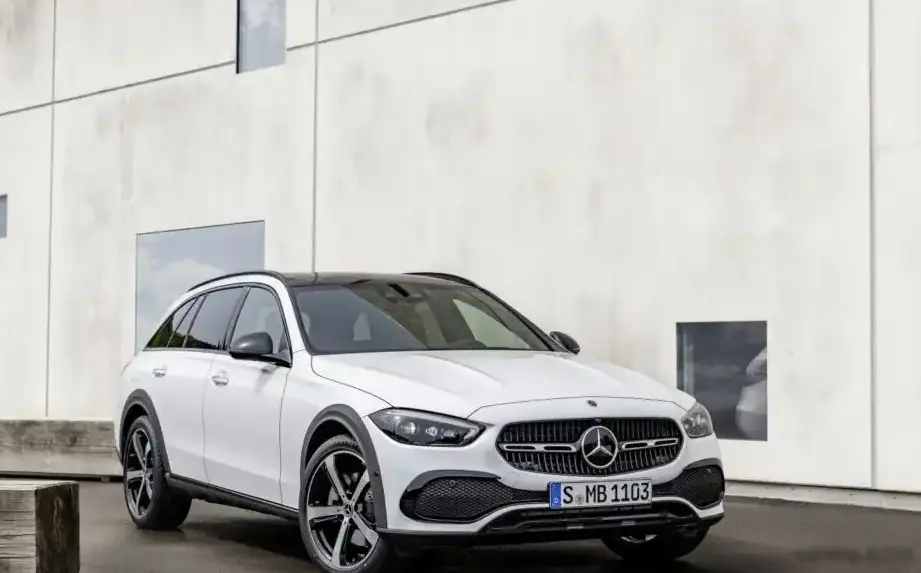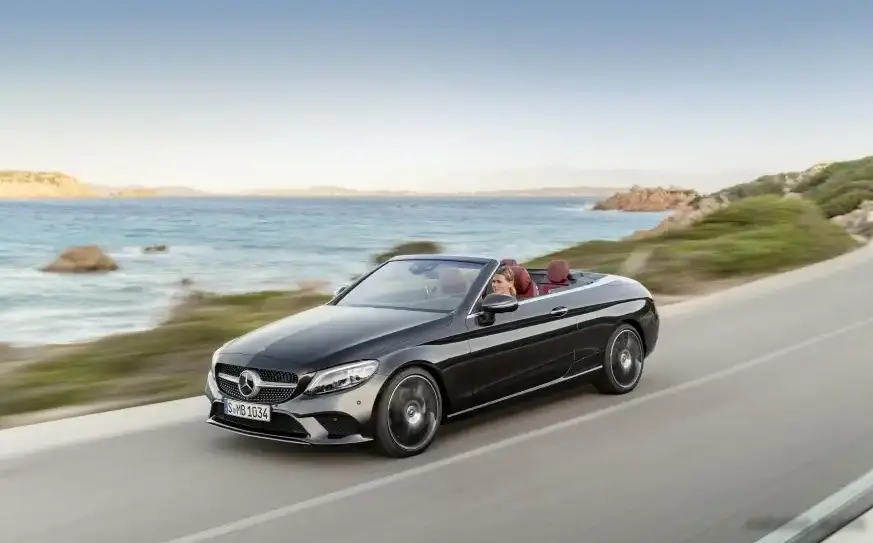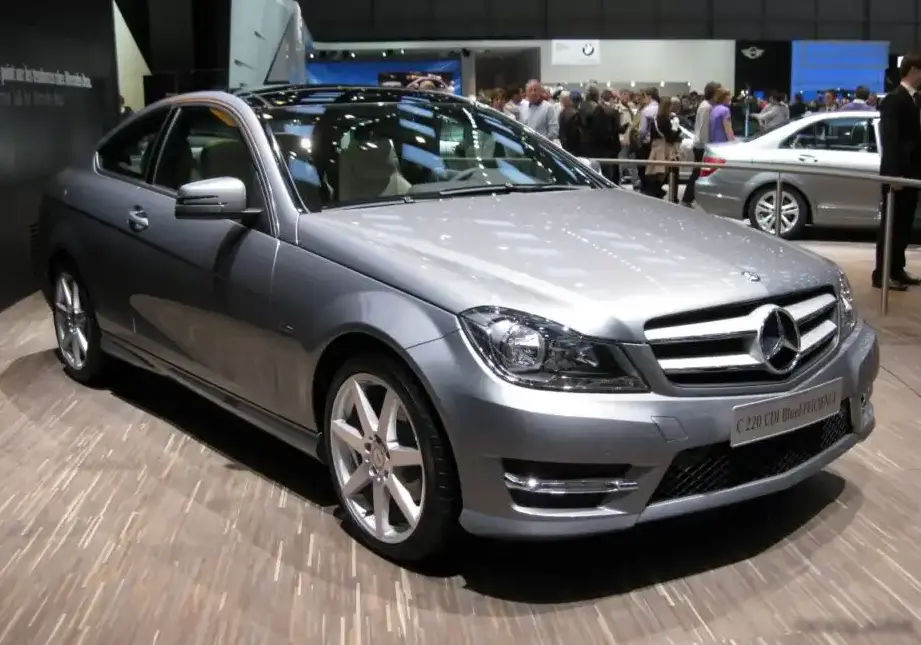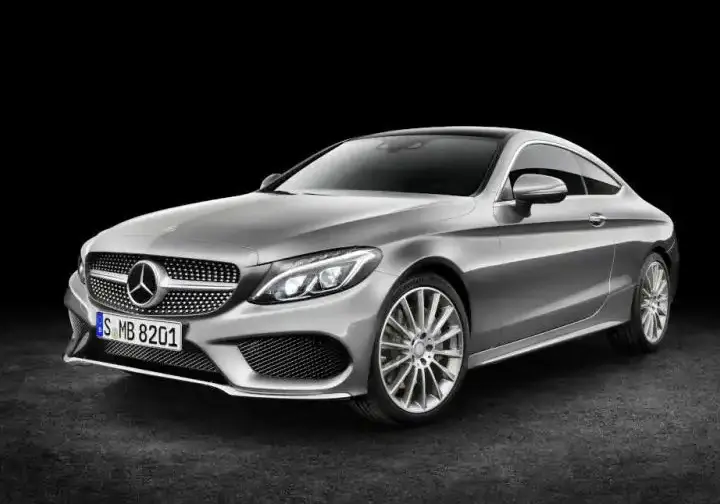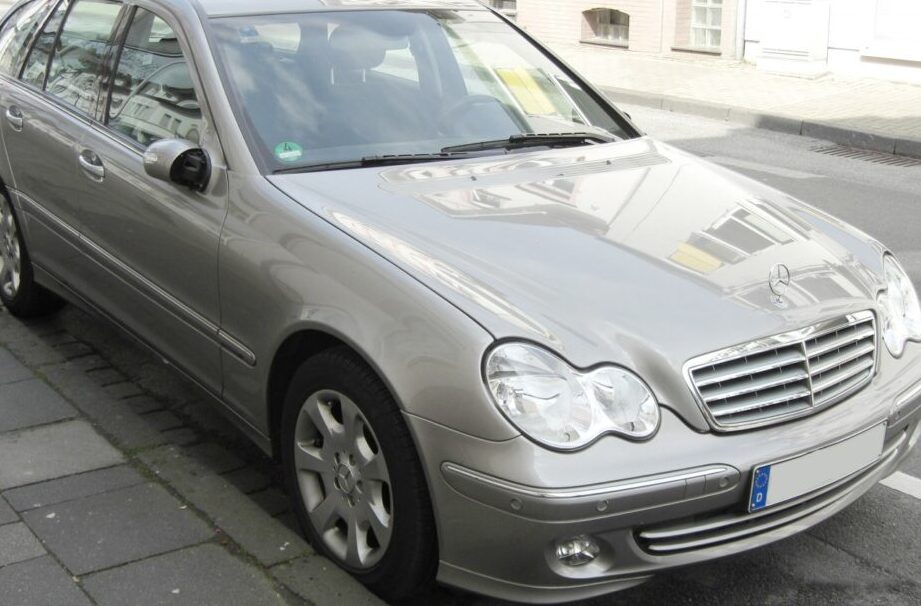
The Mercedes-Benz C-Class T-modell (S203) facelift, specifically the C 230 V6 variant with the 7G-TRONIC automatic transmission, was produced from June 2005 to May 2007. This model represented a mid-cycle refresh of the second-generation C-Class estate, offering a blend of practicality, comfort, and performance within the premium compact segment. Positioned as a mid-range offering, the C 230 V6 bridged the gap between the more economical four-cylinder models and the higher-performance C 320 or AMG variants. It aimed to appeal to buyers seeking a refined driving experience with ample space and a more powerful engine than the base models.
Technical Specifications
| Brand | Mercedes-Benz |
| Model | C-Class |
| Generation | C-Class T-modell (S203, facelift 2004) |
| Type (Engine) | C 230 V6 (204 Hp) 7G-TRONIC |
| Start of production | June, 2005 |
| End of production | May, 2007 |
| Powertrain Architecture | Internal Combustion engine |
| Body type | Station wagon (estate) |
| Seats | 5 |
| Doors | 5 |
| Fuel consumption (urban) | 13.4-13.7 l/100 km (17.6 – 17.2 US mpg, 21.1 – 20.6 UK mpg, 7.5 – 7.3 km/l) |
| Fuel consumption (extra urban) | 7.3-7.6 l/100 km (32.2 – 30.9 US mpg, 38.7 – 37.2 UK mpg, 13.7 – 13.2 km/l) |
| Fuel consumption (combined) | 9.5-9.8 l/100 km (24.8 – 24 US mpg, 29.7 – 28.8 UK mpg, 10.5 – 10.2 km/l) |
| CO2 emissions | 226-233 g/km |
| Fuel Type | Petrol (Gasoline) |
| Acceleration 0 – 100 km/h | 9.1 sec |
| Acceleration 0 – 62 mph | 9.1 sec |
| Acceleration 0 – 60 mph | 8.6 sec |
| Maximum speed | 228 km/h (141.67 mph) |
| Emission standard | Euro 4 |
| Weight-to-power ratio | 7.5 kg/Hp, 133.8 Hp/tonne |
| Weight-to-torque ratio | 6.2 kg/Nm, 160.7 Nm/tonne |
| Power | 204 Hp @ 6100 rpm |
| Power per litre | 81.7 Hp/l |
| Torque | 245 Nm @ 2900-5500 rpm (180.7 lb.-ft. @ 2900-5500 rpm) |
| Engine layout | Front, Longitudinal |
| Engine Model/Code | M 272.920 |
| Engine displacement | 2496 cm3 (152.32 cu. in.) |
| Number of cylinders | 6 |
| Engine configuration | V-engine |
| Cylinder Bore | 88 mm (3.46 in.) |
| Piston Stroke | 68.4 mm (2.69 in.) |
| Compression ratio | 11.2:1 |
| Number of valves per cylinder | 4 |
| Fuel injection system | Multi-port manifold injection |
| Engine aspiration | Naturally aspirated engine |
| Valvetrain | DOHC |
| Engine oil capacity | 8 l (8.45 US qt | 7.04 UK qt) |
| Coolant | 7 l (7.4 US qt | 6.16 UK qt) |
| Kerb Weight | 1525 kg (3362.05 lbs.) |
| Max. weight | 2105 kg (4640.73 lbs.) |
| Max load | 580 kg (1278.68 lbs.) |
| Trunk (boot) space – minimum | 470 l (16.6 cu. ft.) |
| Trunk (boot) space – maximum | 1384 l (48.88 cu. ft.) |
| Fuel tank capacity | 62 l (16.38 US gal | 13.64 UK gal) |
| Max. roof load | 100 kg (220.46 lbs.) |
| Permitted trailer load with brakes (12%) | 1800 kg (3968.32 lbs.) |
| Permitted trailer load without brakes | 750 kg (1653.47 lbs.) |
| Length | 4541 mm (178.78 in.) |
| Width | 1728 mm (68.03 in.) |
| Width including mirrors | 1980 mm (77.95 in.) |
| Height | 1466 mm (57.72 in.) |
| Wheelbase | 2715 mm (106.89 in.) |
| Front track | 1505 mm (59.25 in.) |
| Rear track | 1476 mm (58.11 in.) |
| Front overhang | 755 mm (29.72 in.) |
| Rear overhang | 1071 mm (42.17 in.) |
| Drag coefficient (Cd) | 0.31 |
| Minimum turning circle | 10.76 m (35.3 ft.) |
| Drivetrain Architecture | The Internal combustion engine (ICE) drives the rear wheels of the vehicle. |
| Drive wheel | Rear wheel drive |
| Number of gears and type of gearbox | 7 gears, automatic transmission |
| Front suspension | Independent type McPherson, Transverse stabilizer |
| Rear suspension | Independent multi-link suspension, Transverse stabilizer |
| Front brakes | Ventilated discs |
| Rear brakes | Disc |
| Assisting systems | ABS (Anti-lock braking system) |
| Steering type | Steering rack and pinion |
| Power steering | Hydraulic Steering |
| Tires size | 205/55 R 16 |
| Wheel rims size | 7 J x 16 H 2 |
Powertrain & Engine Architecture
The C 230 V6 was powered by the M272.920 engine, a 2.5-liter naturally aspirated V6. This engine was a significant departure from the earlier inline-six engines used in the C-Class, offering improved smoothness and refinement. The M272 featured all-aluminum construction, three valves per cylinder (two intake, one exhaust), and a double overhead camshaft (DOHC) design. Fuel delivery was handled by a multi-port fuel injection system. The engine produced 204 horsepower at 6,100 rpm and 245 Nm (180.7 lb-ft) of torque between 2,900 and 5,500 rpm. Paired with this engine was the 7G-TRONIC automatic transmission, a seven-speed unit that offered smoother shifts and improved fuel efficiency compared to the previous five-speed automatic. The 7G-TRONIC allowed for closer gear ratios, keeping the engine within its optimal power band more frequently.
Driving Characteristics
The C 230 V6 Automatic provided a comfortable and refined driving experience. While not overtly sporty, the V6 engine delivered adequate power for everyday driving and highway cruising. Acceleration from 0 to 60 mph took approximately 8.6 seconds, and the car had a top speed of 228 km/h (141.67 mph). The 7G-TRONIC transmission contributed to smooth gear changes, although it could sometimes feel hesitant during quick downshifts. Compared to the manual transmission versions of the C 230, the automatic offered less driver engagement but greater convenience. Against the more powerful C 320 models, the C 230 V6 felt noticeably less potent, particularly during overtaking maneuvers. However, the V6 offered a better balance between performance and fuel economy than the larger engine.
Equipment & Trim Levels
The C 230 V6 T-modell typically came standard with features such as automatic climate control, power windows and locks, a multi-function steering wheel, and an audio system. Upholstery was usually a cloth or leatherette combination, with full leather available as an option. Optional extras included a sunroof, navigation system, premium sound system, and parking sensors. The facelifted S203 models also benefited from revised interior trim and updated exterior styling cues, including new headlights and taillights.
Chassis & Braking
The C 230 V6 T-modell featured an independent suspension system, with McPherson struts at the front and a multi-link setup at the rear. This provided a comfortable ride quality and decent handling characteristics. Brakes consisted of ventilated discs at the front and solid discs at the rear. Anti-lock Braking System (ABS) was standard. The suspension was tuned for comfort rather than outright sportiness, prioritizing ride quality over sharp handling. Stabilizer bars were fitted to both the front and rear axles to reduce body roll during cornering.
Market Reception & Comparison
The C 230 V6 T-modell was generally well-received by automotive critics as a practical and comfortable estate car. It was praised for its refined engine, smooth transmission, and spacious interior. However, some reviewers noted that the performance was not particularly exciting compared to rivals. Fuel economy was considered reasonable for a V6 engine, but not class-leading. Compared to the C 180 Kompressor or C 200 CDI models, the C 230 V6 offered a significant performance upgrade, but at a higher price point. Against competitors like the Audi A4 Avant and BMW 3 Series Touring, the C 230 V6 held its own in terms of quality and features, but often lagged behind in terms of driving dynamics.
Legacy
The M272 engine family, including the 2.5-liter V6 used in the C 230, is generally considered to be a reliable powerplant. However, like all engines, it is susceptible to certain issues with age, such as oil leaks and timing chain wear. The 7G-TRONIC transmission is also generally reliable, but can sometimes experience issues with the valve body or conductor plate. Today, the C 230 V6 T-modell is a relatively affordable used car, offering a good balance of practicality, comfort, and reliability. It remains a popular choice for buyers seeking a well-built and spacious estate car from a premium brand.